




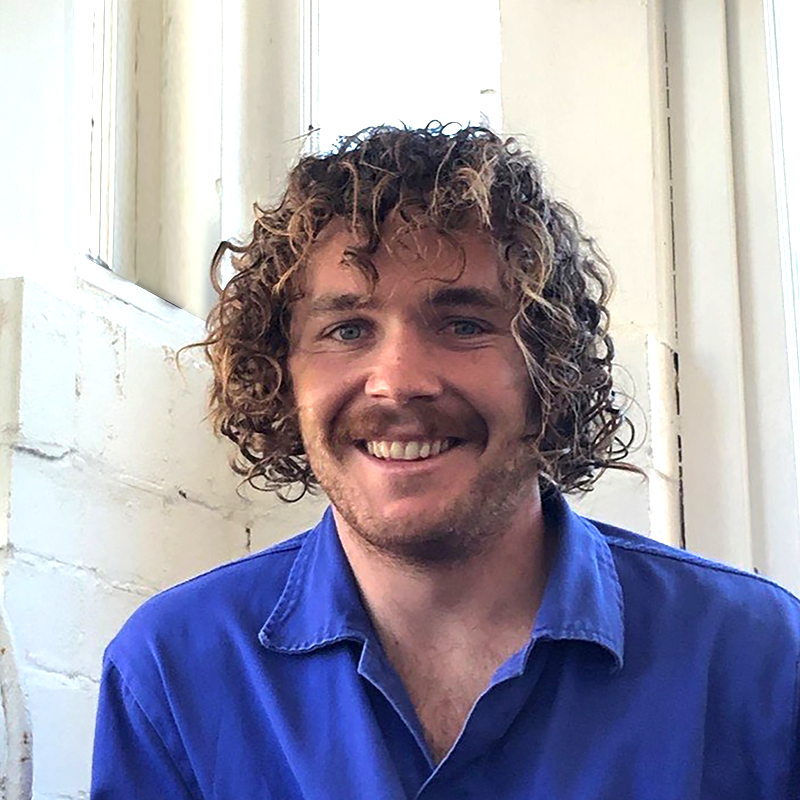

Among the hundreds of artworks on the walls at The Torch's major annual exhibition are stories of healing, journey and lives truly changed.
They're also stories brought forward within a stark reality that can't be ignored; the extreme overrepresentation of Australia's First Peoples in the prison system.
Confined 17 showcases the work of 424 First Nations artists contributing around 500 pieces at Glen Eira City Council Gallery in Naarm.
Flick Chafer-Smith says she was once identified by her crime, by her corrections reference number and her surname.
"But now I have my own identity, I am creative, I am an artist, I am Flick," the Ngarrindjeri artist told National Indigenous Times.
"When I used to put my name into google, news reports of the bad choices I've made in my life would appear. But now, I have things that I'm proud of, because I am a part of The Torch program."
The Torch is a Victorian statewide program engaging with First Nations people who have lived experience of incarceration; both in prison and in the community, utilising art for rehabilitation, cultural connection and identity, and financial income from sales.
100 per cent of sales goes directly back to artists. For those currently incarcerated, 70 per cent is withheld for when they transition back into community.
Ms Chafer-Smith knows all sides of the program.
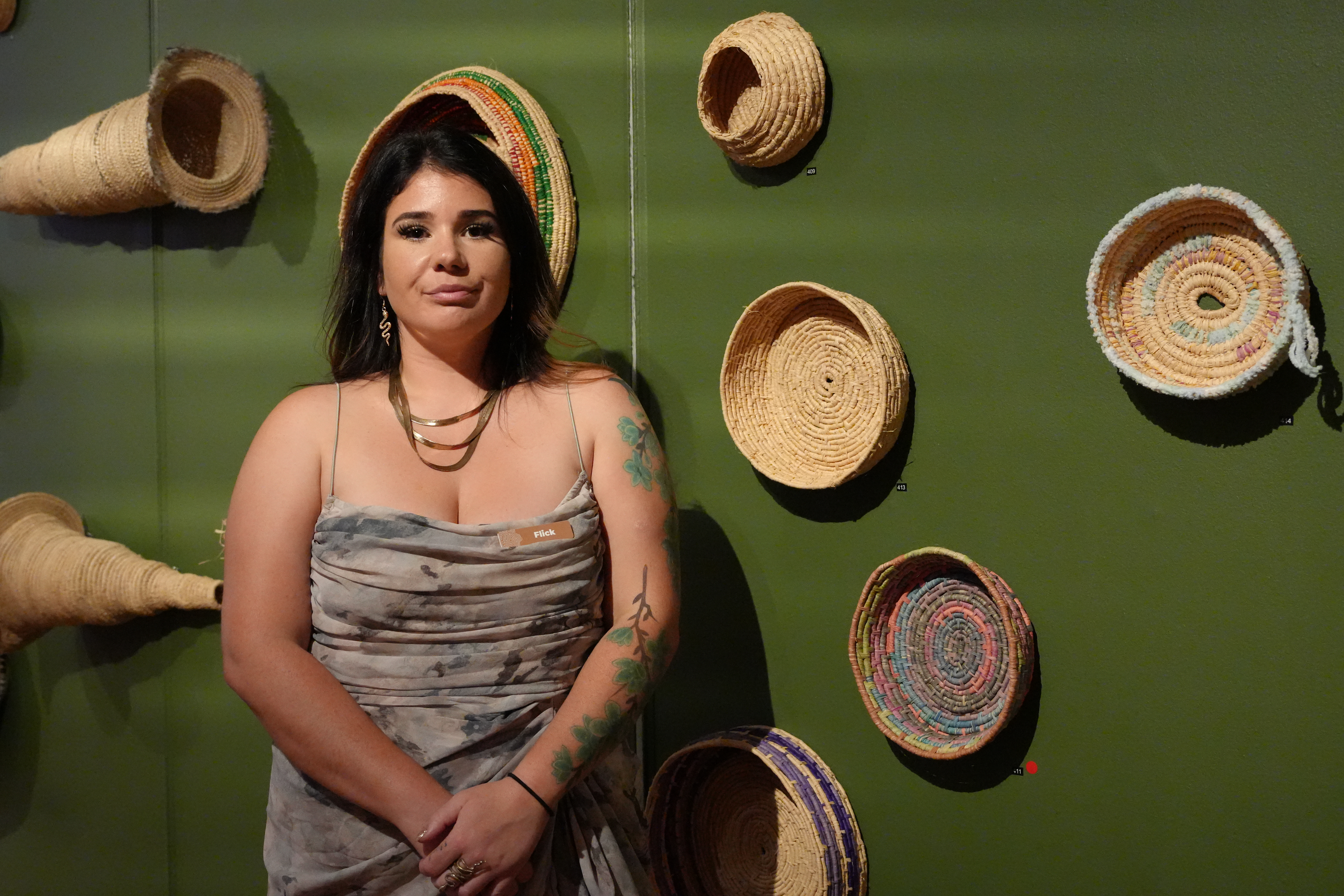
She first engaged with The Torch while serving a sentence in 2018. She later joined as staff in operations and accounts before moving into her current role as a First Peoples Art Mentor going into prisons, as well as continuing on with art of her own.
Confined 17 features two of her works.
Ms Chafer-Smith spent a number of years in-and-out of prison. During her last sentence The Torch gave her a platform to get seriously engaged in art, and connect back with culture.
The Torch truely changes lives, she said, it's "a safe place to call home".
"I love my job. I love being able to connect with the women on a personal level, because I've been through what they're going through. I understand it, and being able to see them change their lives, the way that I've changed mine, is so wholesome. It fills my cup every day," she told National Indigenous Times.
"It really gives people an avenue to be able to make money, to connect to the arts industry, to have a healthy coping mechanism when you know things go wrong, when usually they would turn to negative things."
2026 is the seventeenth annual Confined exhibition.
Since 2009 the series has been a platform for First Peoples to express their experiences, their story, and their art.
The exhibition officially opened on Friday May 1 and continues through to June 14.
72 hours in, over 150 of the 501 works for sale — traversing kinship and belonging, Country, waterways, animals and more on canvas, in weaving works, carvings and other mediums — have already sold.
Tupun Wultatinyeri is another artist featured in Confined 17.
He was introduced to The Torch while on remand in late 2022.
"Therapeutic. That's the first thing I can think of. Therapeutic," he says of what The Torch has been for him.
Painting was a totally new practice to Tupun Wultatinyeri, his artist name, and offered another avenue to his connection to culture.
It's also often a way to find community inside, he added.
The money which can come from sales of artwork makes a genuine difference, Tupun Wultatinyer said. It's not the whole story, but undeniably a benefit when it's difficult to earn income in prison, when you're not well supported.
In addition to himself, he knows the impact The Torch, and Confined 17, has for others.
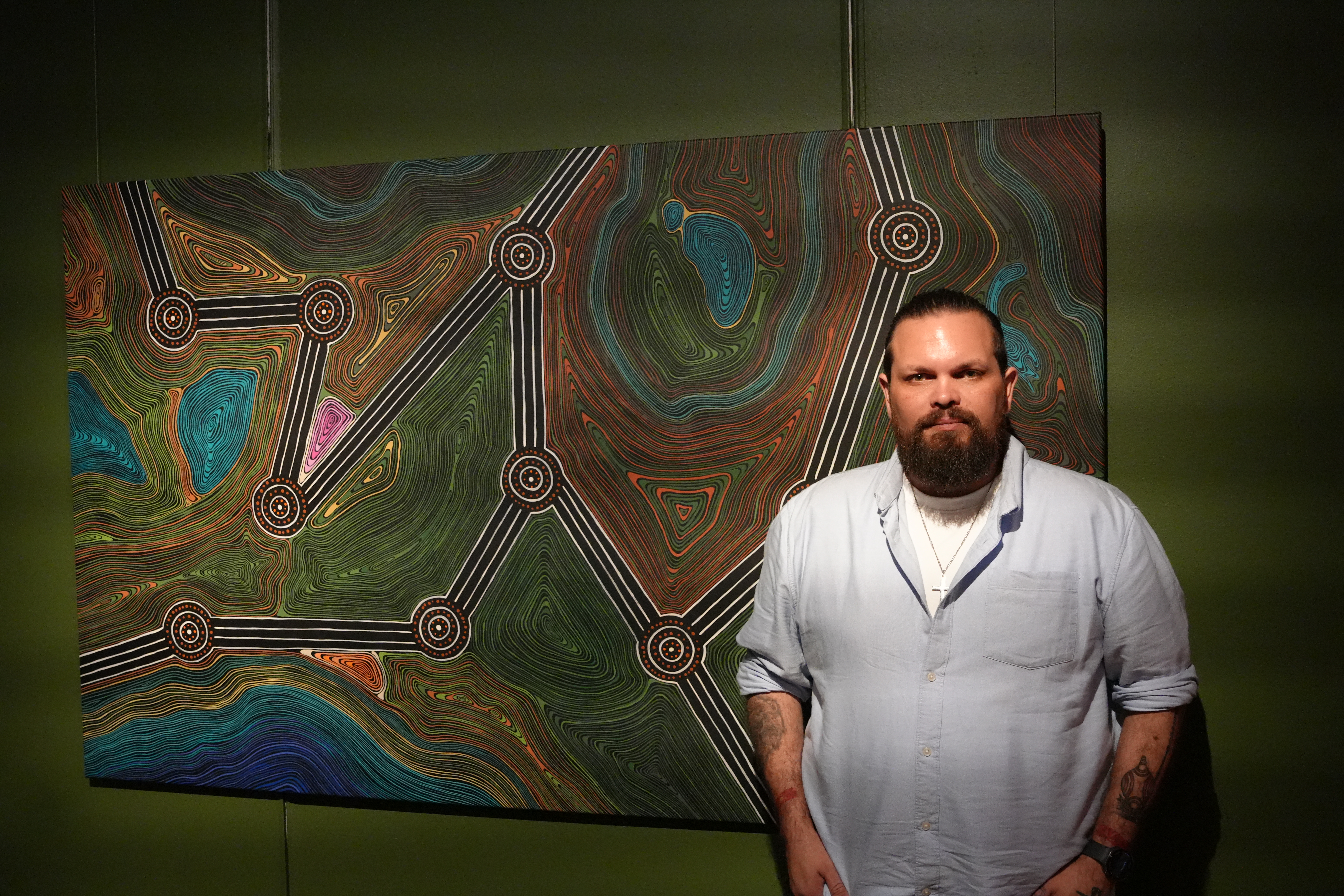
"In terms of the initiative itself, the cultural resources the guys get; they learn more about themselves. They learn more about their culture. They get to paint. People on the outside get to hear their voice through their art. All of that together is incredible, so important," he said.
His contribution to the exhibition is a story of healing - being away from where you want to be, who he wants to be around and experiencing a feeling of being lost.
There's tough days, but he's on the journey to where he wants to be and what he is longing for, Tupun Wultatinyeri added.
Painting helps with this.
"Built by those in it": 10 years of policy helping First Nations artists earns millions
Kent Morris is a Barkinji man, highly respected artist, director of The Torch and its former chief executive.
In a better world, they wouldn't have to exist as a program and initiative, he said.
"We know things aren't changing. The gap is not closing. No one's doing anything," he told National Indigenous Times.
Nationally, First Nations adults are around 14 times more likely to be incarcerated in comparison to non-Indigenous adults. Overrepresentation rates in Victoria fall in line with the national snapshot.
National Agreement to Close the Gap targets to reduce incarceration rates by 15 per cent by 2031 are not on track.
"A lot of our community are working hard to create that change," Mr Morris said, but "it's getting worse" without the right action and responsibility being taken by leadership.
With this reality, The Torch is making a difference. There's a need for the work they're doing, Mr Morris said.
"It's such a unique mode, but it shouldn't be, because it was built by those in it," he added, saying from the start the program was informed through discussions and input from people with lived experience of incarceration.
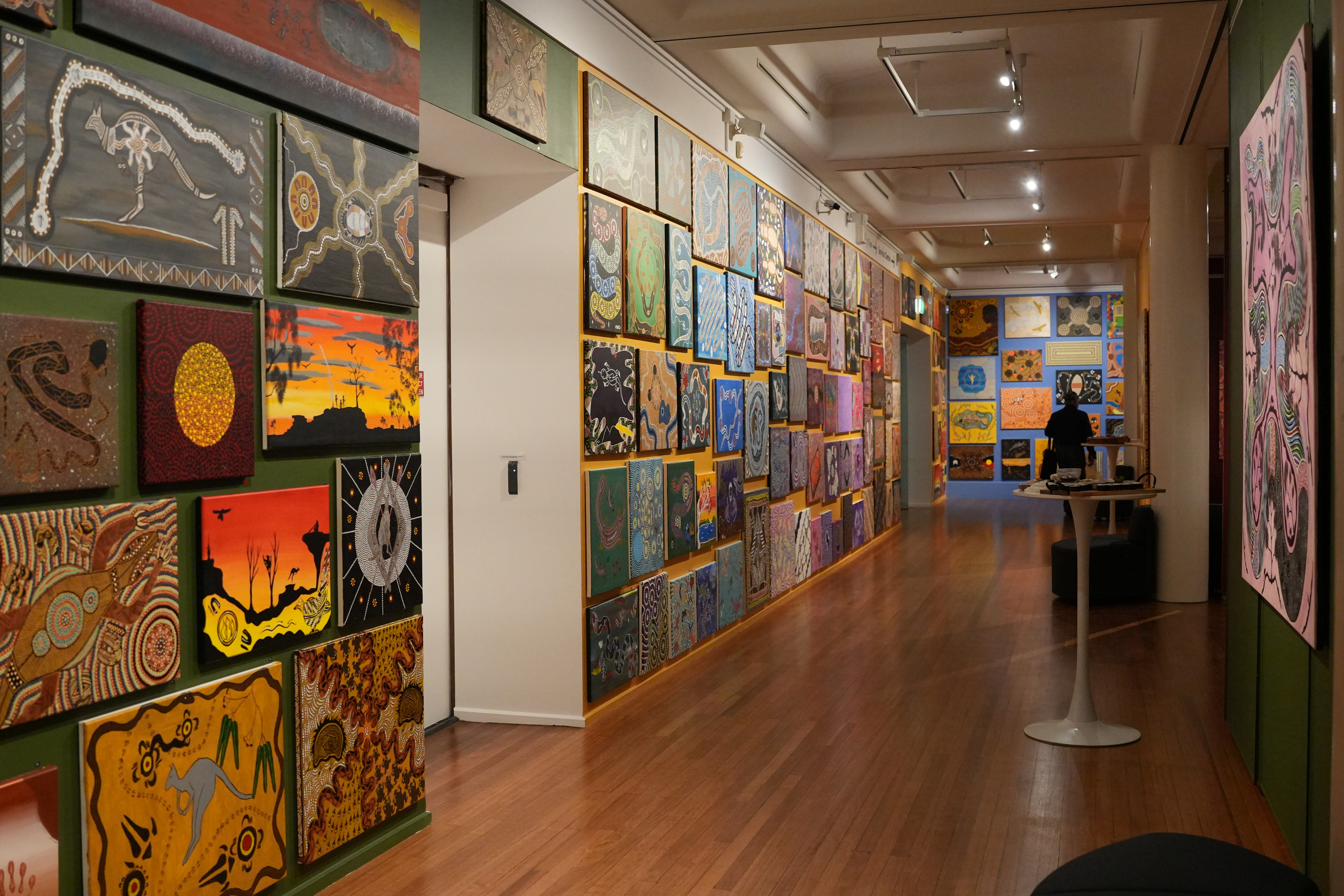
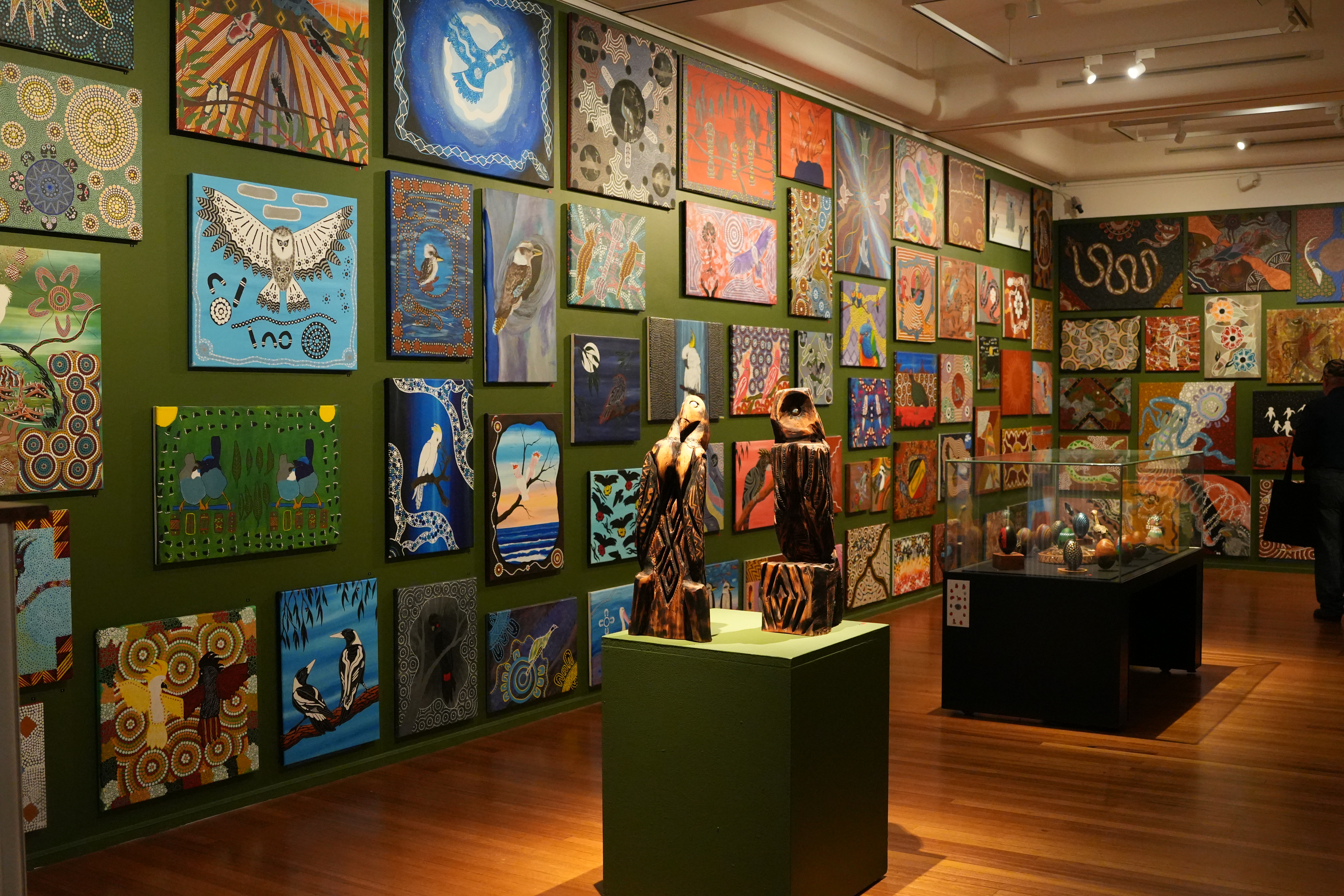
Confined 17 exhibition aligns with the 10 year anniversary of Victoria's Aboriginal Art Policy, allowing First Nations prisoners to earn income from sales of their artwork.
Since 2016, with The Torch, more than 1000 artists have earned over $6 million collectively.
The policy model came after more than 40 years of advocacy for something of its kind.
Benson Saulo is chair of the project, and the first Indigenous person to be appointed an Australian Consul-General with the Australian Trade and Investment Commission.
"We often talk about the work that we do at The Torch around providing that cultural and artistic support, but actually the fundamental element here that really supports our artists is the ability to earn an income", he said.
"And it's not just through selling art...but it's also the ability to self determine, to have an economical, financial foundation, to be able to make decisions for their lives, and also to be able to support family whilst they're on the outside as well as while they're on the inside.
"There's pieces here that should be hanging in the National Gallery."
Confined regularly sells 50-60 per cent of its exhibited works.
"That's really what we seek to showcase here; that people's situation and past and experiences shouldn't determine what their future looks like. And I think that really encapsulates what we stand for at The Torch," Mr Saulo added.
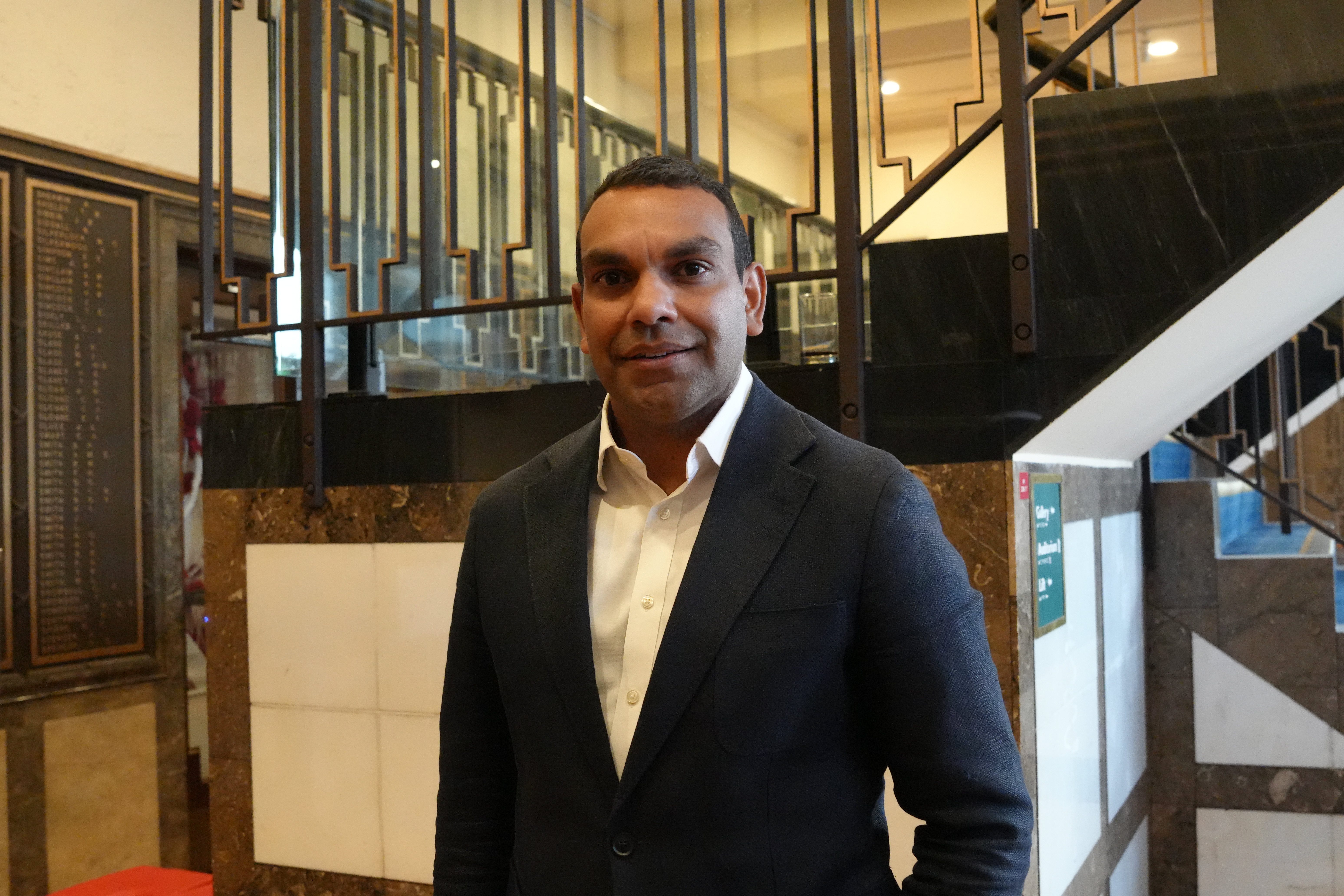
Both Mr Saulo and Mr Morris are hopeful of expanding outside of Victoria to a national scale.
Ms Chafer-Smith stated the the program and an artist's first sale is "life-changing", particularly if they're still incarcerated at the time, and a significant factor in breaking recidivism cycles.
"Seeing women pick up a paintbrush for the first time, make their first sale, receive their first commission and feel that sense of worth and identity as an artist, is incredibly powerful," she said.
"I know how life-changing that moment is."
Confined 17 is open at Glen Eira City Council Gallery in Caulfield until June 14.
Weaving workshops, live music, floor talks and Q&A sessions are being held throughout the coming weeks.