





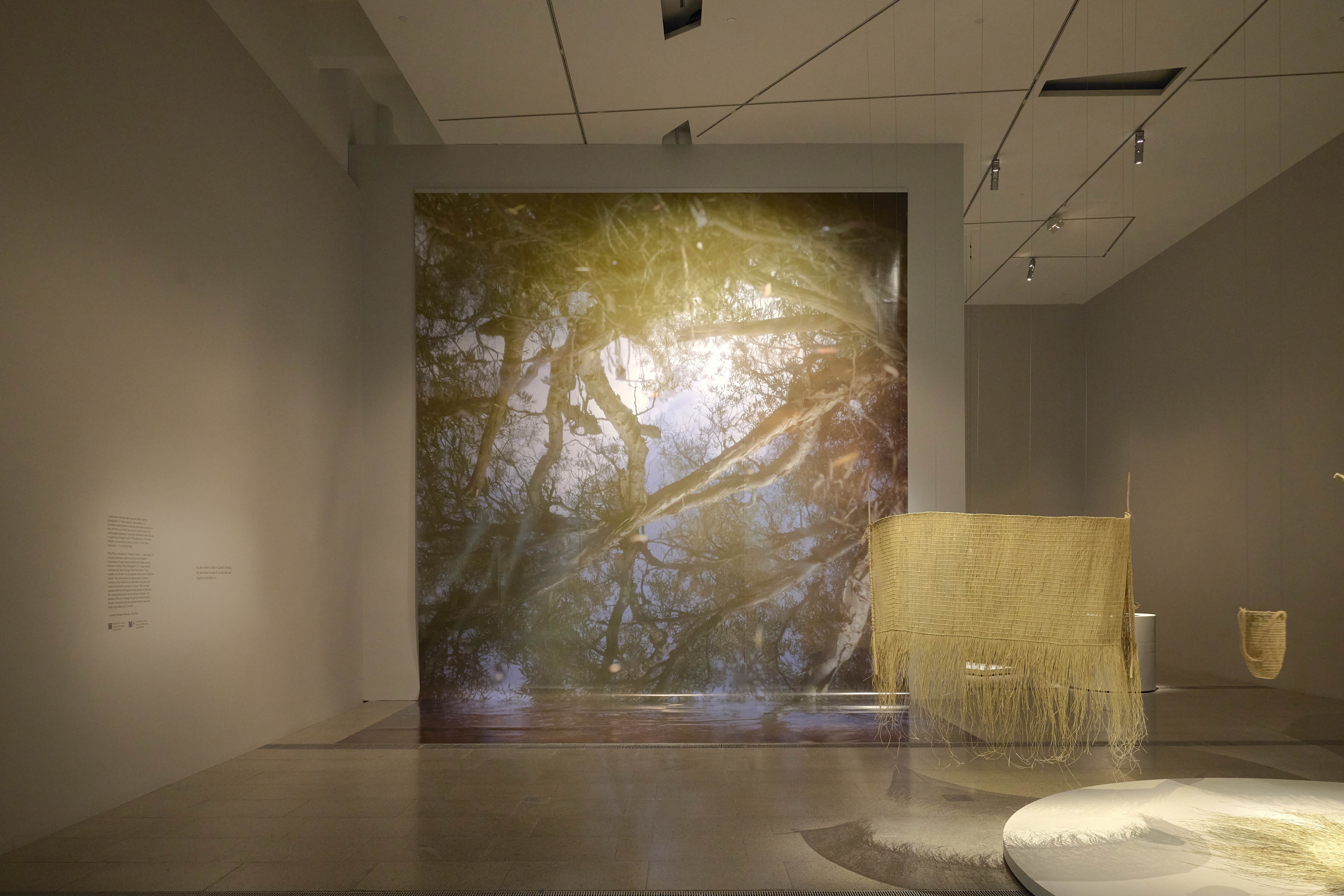
For Jahkarli Felicitas Romanis, the marks left by those who walk over part of her artwork will only add to it.
Ms Romanis is one of eight artists exhibited at FUTURE COUNTRY in the National Gallery of Victoria's Ian Potter Centre, on display from March 20.
It's the second installment of the NGV's First Nations Commissions partnership with Australian fashion label Country Road, pairing artists from each state and territory with mentors to produce the works exhibited in Naarm.
Ms Romanis is Victoria's contributor with a large-scale photograph of a "main artery" waterway which flows through Pitta Pitta Country where her ancestral ties connect her.
Viewers are invited to interact with the artwork, literally leaving their footprints to only reflect on, but confront as they contribute to destruction of Country.
"I hope people walk on Country, and I hope that they understand that wherever they walk in this place, now known as Australia, they're on Country, and we have a responsibility to future generations to care for place and for Country," she told National Indigenous Times.
"That awareness is really important."
%20-%20PPOWELL.JPG)
In FUTURE COUNTRY respected artists have the autonomy to choose they artists they'll work with,
Ms Romanis was selected by contemporary, interdisciplinary artist and Wiradjuri man Brook Andrew.
She said being a part of the exhibition's 2026 cohort, and working with Mr Andrew is an honour and privilege.
FUTURE COUNTRY includes works and mediums from weaving and stitching to installation, sculpture, sound and moving image.
It follows 2024's MY COUNTRY
NGV describes the exhibition as a celebration of land, legacy and community presenting themes of ancestral memory, re-storying, truth-telling and future-making presenting deeply personal work affirming strength, resilience, language, culture and Aboriginal and Torres Strait Islander sovereignty.
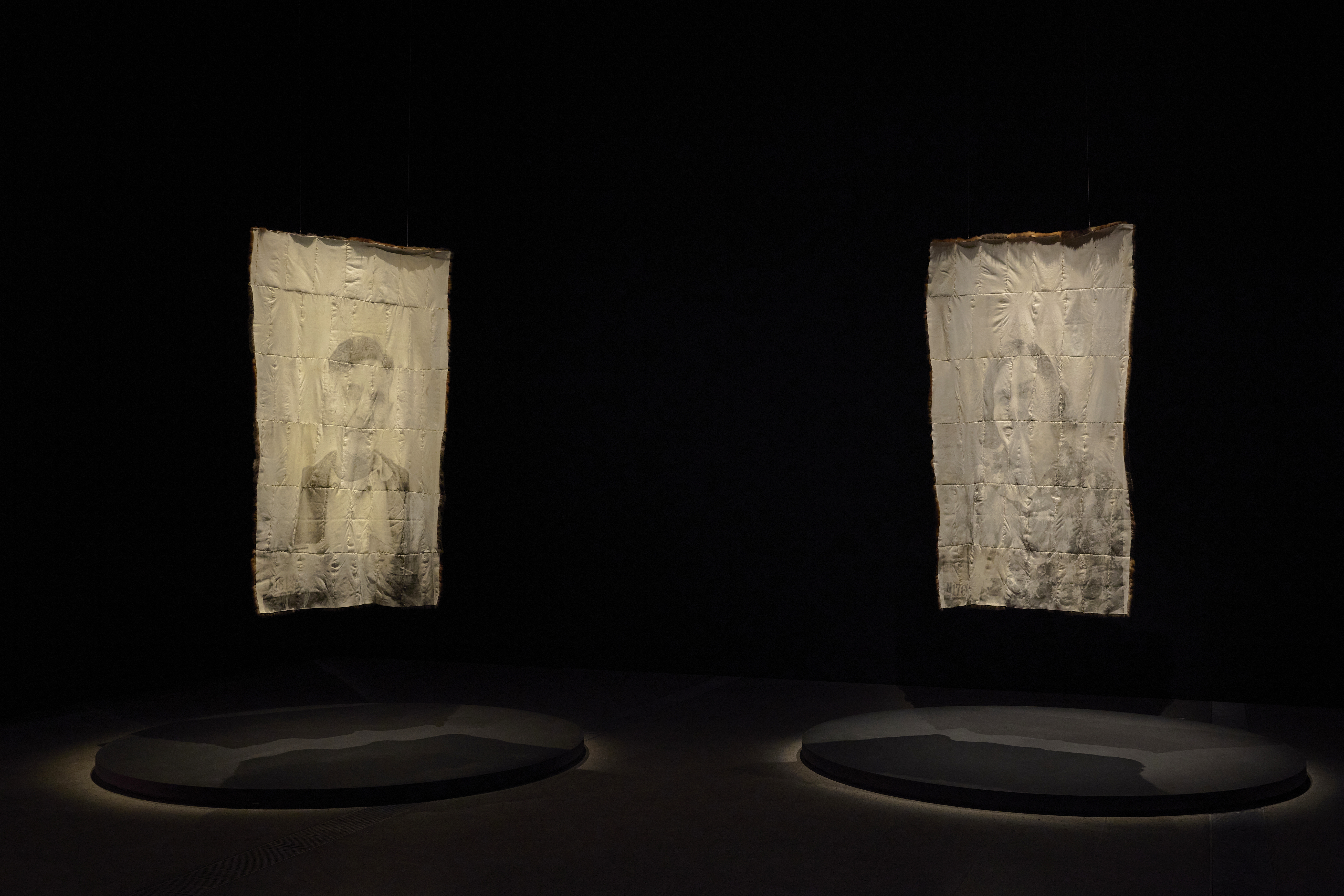
Carly Tarkari Dodd set out to bring warmth back to a family photo taken within a context of colonial displacement.
'Mission mugshots' of her great grandparents feature upon possum cloaks her family joined her in hand-stitching.
The work challenges the time these photos were taken, and, as Ms Dodd explained, the pervasive and extensive documentation of Aboriginal people - the most of any peoples in the world.
Telling vulnerable stories is an intimidating practice, the Kaurna, Narungga and Ngarrindjeri artist said.
"It's like a hug, in a way — bringing them back to Country, new life and bringing love back to them as well. The images are archival images that anthropologists have taken of them at the Raukkan mission. The images are quite eerie and cold. Printing them on the cloaks brings that warmth back to what a family photo should be."
In the creative process, Ms Dodd and her mentor, Kokatha and Nukunu glass Yhonnie Scarce discovered they are related.
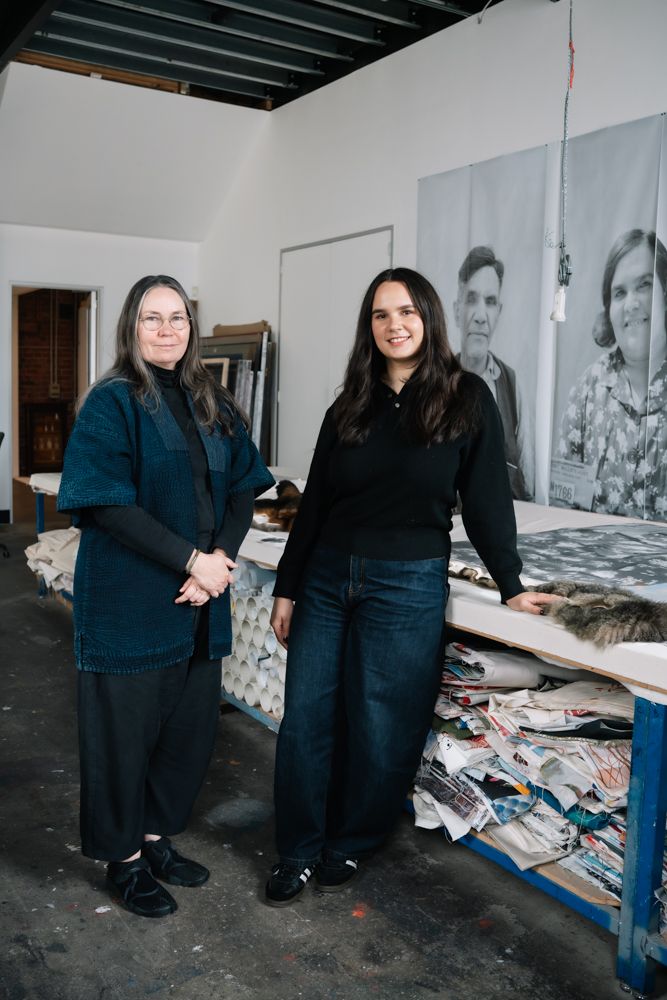
NGV senior curator of First Nations art Dr Jessica Clarke, FUTURE COUNTRY "is about what's at stake now".
Country Road managing director Helen Wright added said the exhibition presents emotional, deep and powerful works.
Palawa and Walpiri artist Nunami Sculthorpe-Green was mentored by who she described as the most senior living shell stringer on lutruwita (Tasmania), Trawlwoolway woman Lola Greeno, in creating a suspension of hand-painted, scaled up slip-cast marina shells.
Ms Scunthorpe-Green said the work sets out to honour women, cultural practice and Country and the 'unbroken sting' which connects her people to a long-held custom. It also recognises a traumatic history subjected to Aboriginal Tasmanians and land never properly returned to them.
"I've used local harvested granite, clay ochre and ash to make the surface decorations for almost 200 slip cast marina shells as a homage to our people, our women, who've carried this practice and a call for the return of our country in the northeast of lutruwita/Tasmania," she said.
"To get to work with Aunty Lola, whose practice I've respected for a really long time, and have her support my work and advise me on my journey and this work has been a real pleasure and a real gift."
Paul Girrawah House is an Ngambri, Ngunnawal and Wiradjuri man.
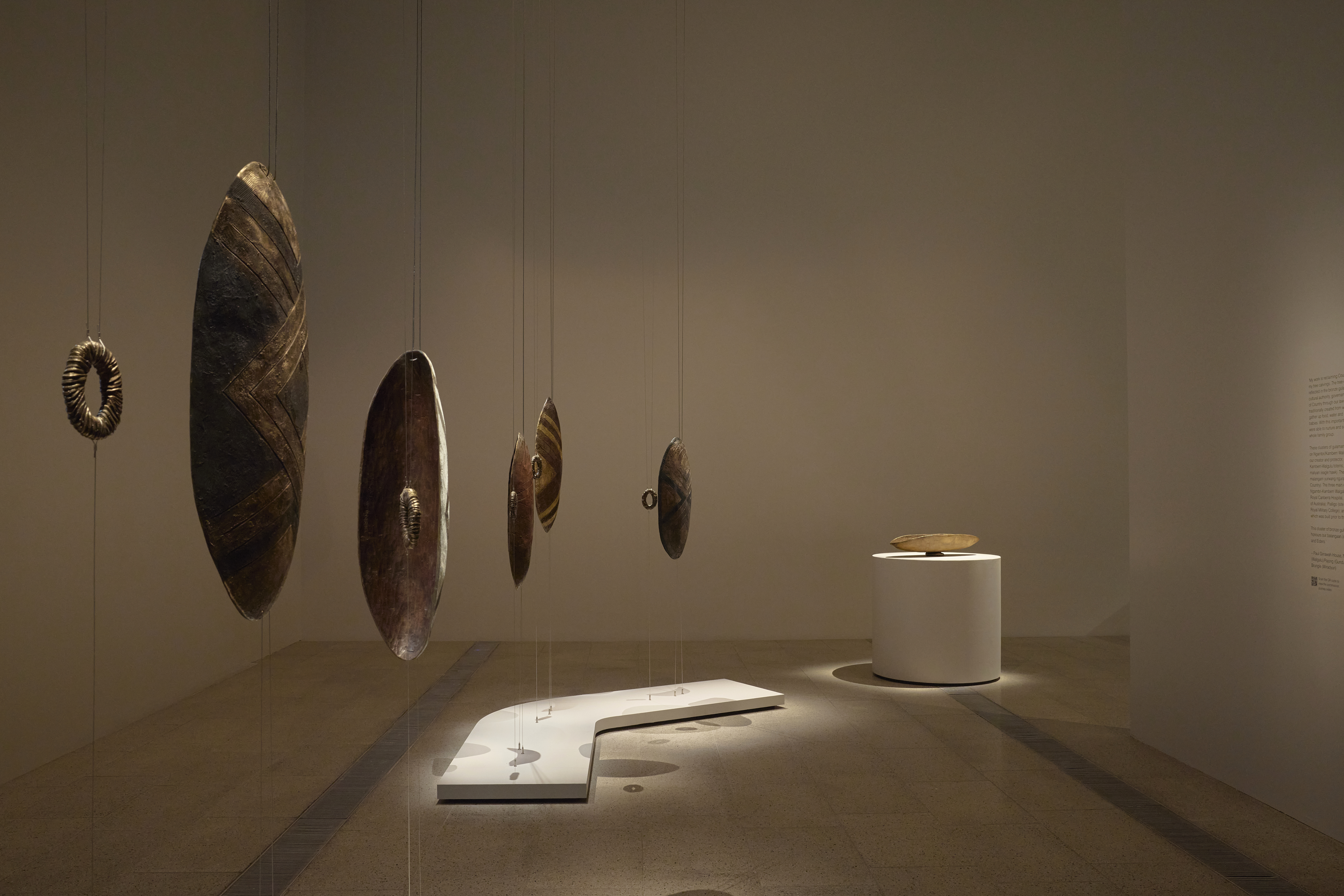
For FUTURE COUNTRY his work is about "acknowledgement, respecting and honoring our old people".
Combined with a soundscape of language and song, he brings seven seven bronze-cast coolamons (traditional containers/carrying vessels) each inscribed his cultural markings.
He said it tells the story of warriors, matriarchs and their legacy living through to the present, created with mentor Brenda L Croft, with whom the pair have years long relationship.
FUTURE COUNTRY is on display, and free to the public from Friday March 20 to September 13 at NGV's Ian Potter Centre.
FUTURE COUNTRY artists and mentors
NSW: Charlotte Allingham (Coffinbirth) and Karla Dickens (mentor) - Maggie Doll! a sculptural work featuring ball-jointed doll, reflecting on how First Nations women are often depicted, with an accompanying life-size doll box
WA: Katie West and Clothilde Bullen (mentor) - video work honouring the artist's grandmother and representing what life and dreams might have looked like, also incorporating 1960s music and fashion
Queensland: Boneta-Marie Mabo and Megan Cope (mentor) - 238 white cotton ragdolls, each representing one year since colonisation, within a rusted iron antique cot inspired by the intersection of incarceration and child protection system, and policies which have seperated families
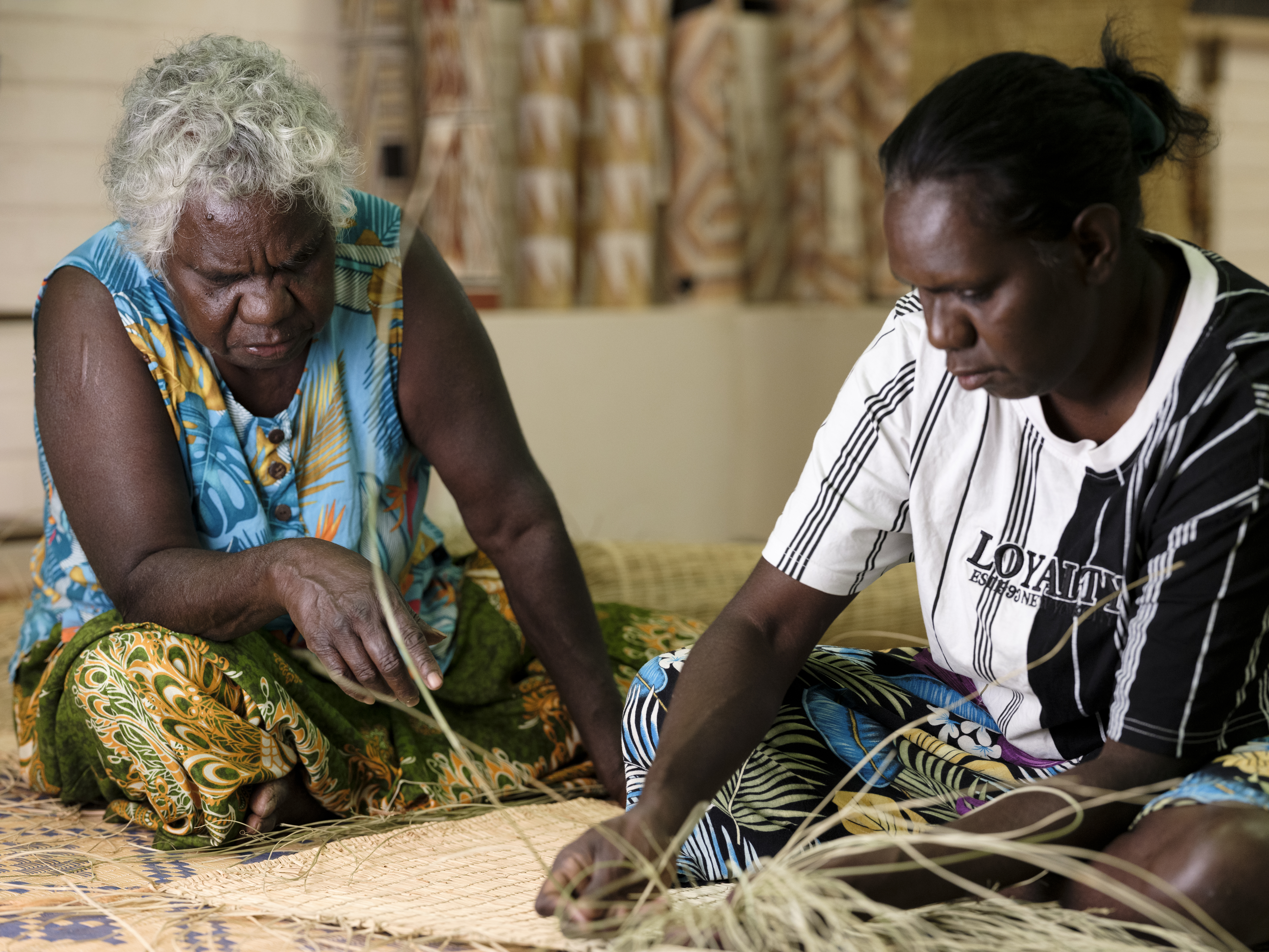
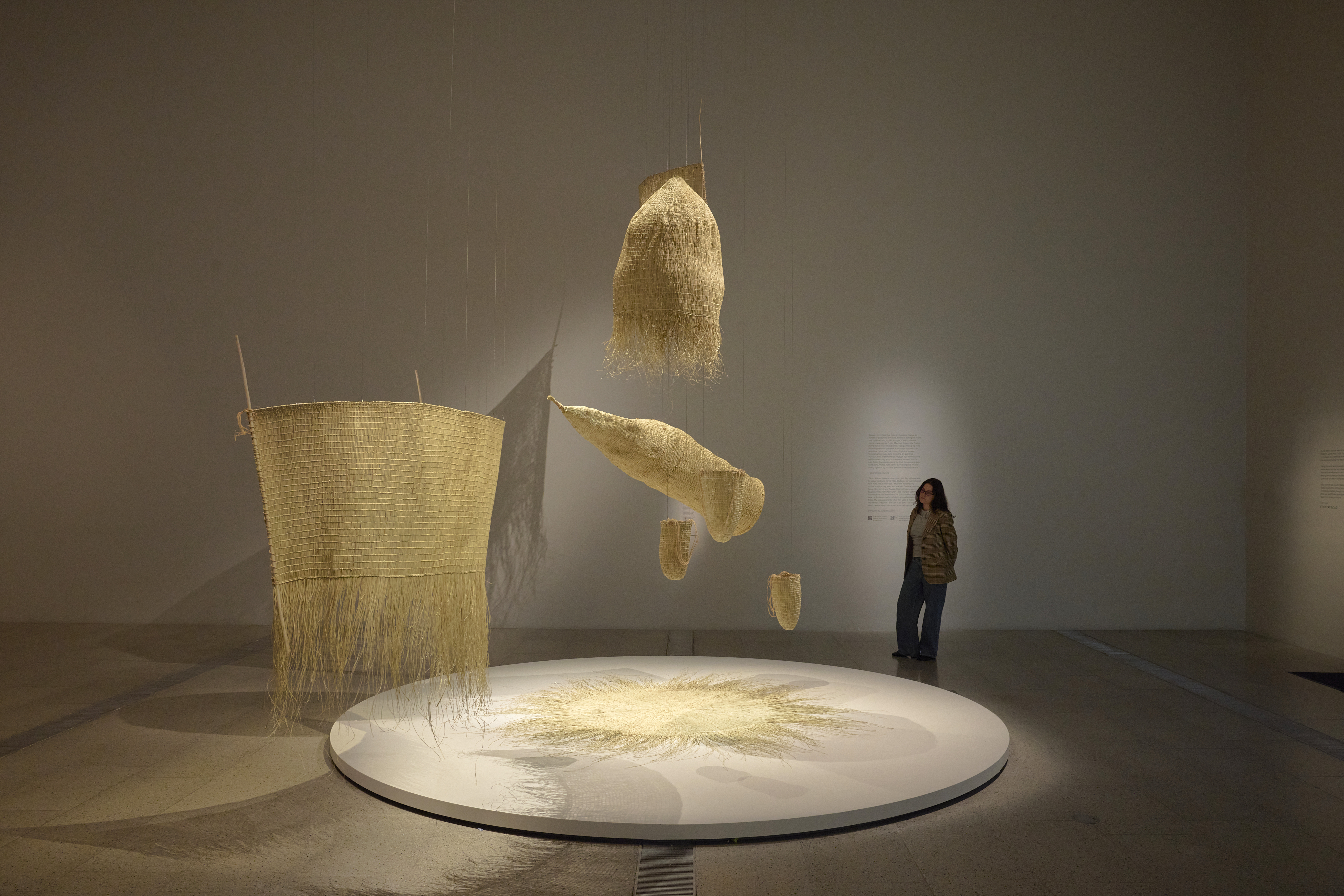
NT: Stephanie Ali and her mother Doreen Jinggarrabarra (mentor) - Suspended, handwoven installation representing passing down of knowledge cultural objects like dilly bags, fish traps and fish fences, made from pandanus.
Victoria: Jahkarli Felicitas Romanis and Brook Andrew (mentor)
SA: Carly Tarkari Dodd and Yhonnie Scarce
Tasmania: Nunami Sculthorpe-Green and Lola Greeno (mentor)
ACT: Paul Girrawah House and Brenda L Croft (mentor)