






Archie Moore's large-scale installation 'kith and kin' has opened at the Queensland Art Gallery | Gallery of Modern Art (QAGOMA).
The work won the Golden Lion for Best National Participation at the 2024 Venice Biennale, and this is the first time it has been exhibited in Australia since its debut in Venice.
Mr Moore, a Bigambul and Kamilaroi artist, said the installation was made as a place of memory and reflection.
"The work's intended to be a shrine or a memorial, a place for quiet reflection and contemplation about family, colonialism, Aboriginal peoples' time, about cosmological time, about Western Indigenous ideas of time and Western Indigenous ideas of family and how we are all connected on Earth," he told National Indigenous Times.
"If we go back 3000 years we all have a common ancestor," he said.
The installation traces his Kamilaroi and Bigambul ancestry across more than 65,000 years, extending to common ancestors, animals, plants and landforms.
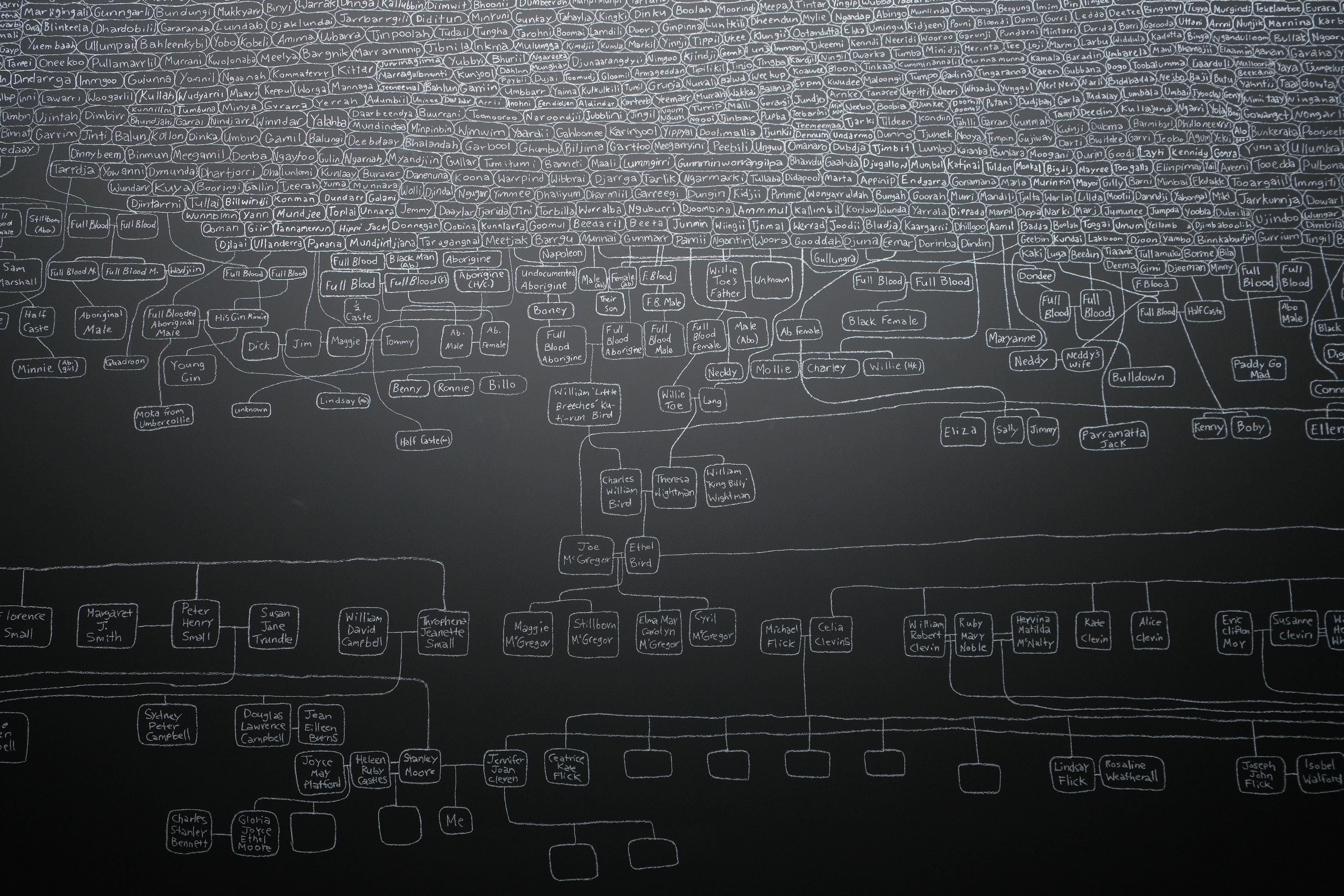
Names written in chalk on blackboard walls show the fragility of memory and the importance of sharing Indigenous histories and languages.
A reflective pool sits in the centre that functions as a memorial for Indigenous people who have passed away in police custody.
Around it are coronial inquest documents acting as official markers of those lives with their memory reflected in the water alongside thousands of family names.
Mr Moore said the project took years of research and careful planning.
"It was a huge undertaking with the two months install in Venice and a bit shorter here but it requires redoing the work each time, writing on the walls, building a pool and creating the table, printing the documents out, placing them on the documents," he said.
"There's also a year of planning before the original work was made so had researchers involved looking in archives, finding material on my family to include in the work."
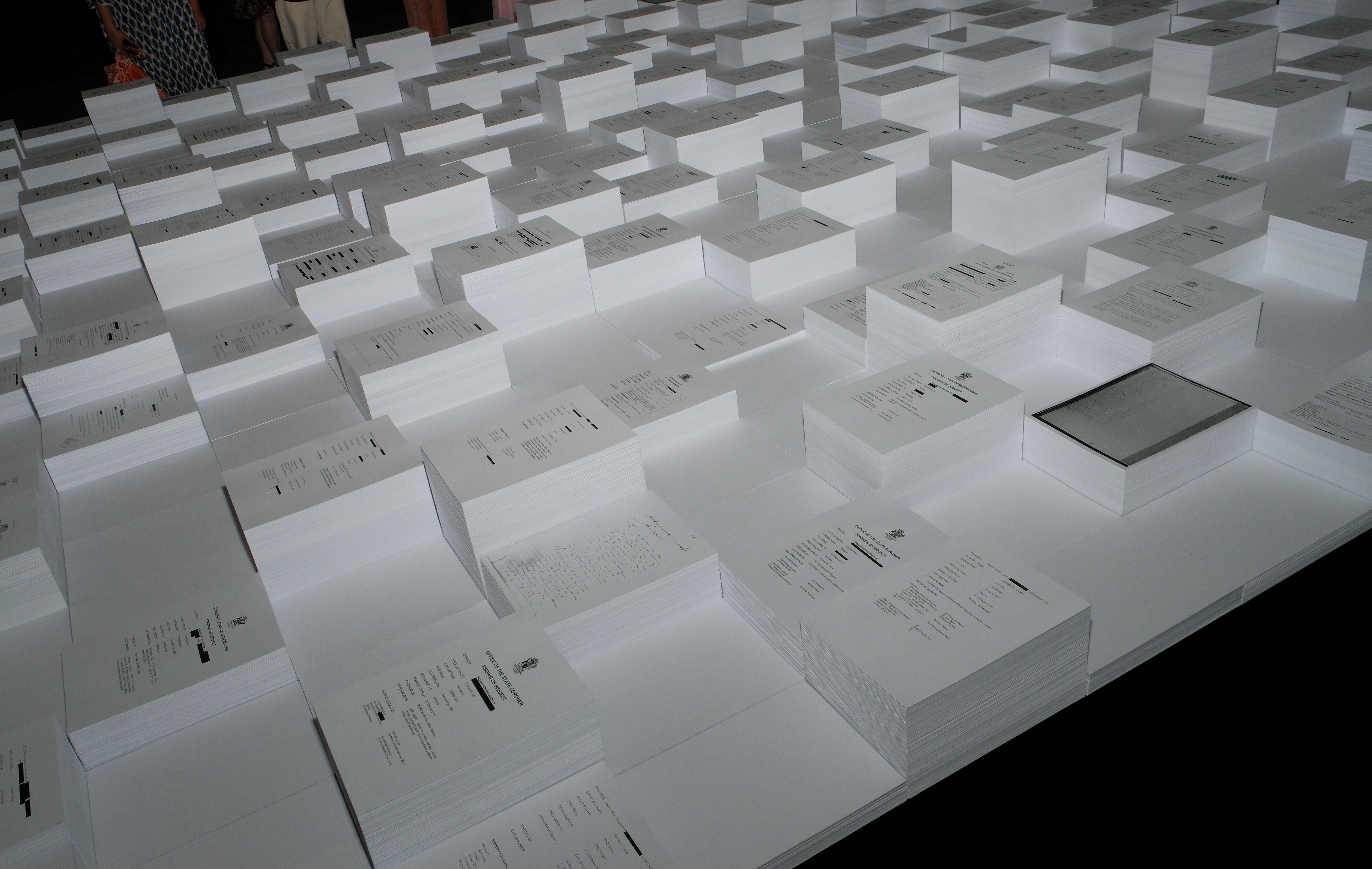
Documents at the centre are coronial inquests, serving as official records of First Nations people who died in custody. (Image: Joseph Guenzler)
Winning international recognition at the Biennale was a career highlight, though he noted it sits within much older traditions.
"It was amazing to get the acknowledgement and recognition on what they call the longest running cultural event in the world, the Venice Biennale," he told National Indigenous Times.
"But I'm sure there's Aboriginal cultural events that are longer."
When questioned what he hopes audiences take away, Mr Moore said the work carries a message of shared humanity and responsibility.
"We're all people on Earth, we're all human beings," he said.
"As Indigenous people had the environment and natural features and animals and plants and the whole landscape was part of a larger kinship system.
"It's about care and responsibility to that place about other people."
He added that this vision looks to the future as much as the past.
"So it's about realising we're all one big global family and to treat each other with respect and hoping for a more peaceful future," he said.
By drawing together tens of thousands of years of ancestry on a single continuum, the installation reflects a Kamilaroi understanding of time where past, present and future exist together.
'kith and kin' was gifted to QAGOMA and Tate by Creative Australia on behalf of the Australian Government in 2024.