





Chicago-based multidisciplinary Lakota, Dakota and Shoshone artist Chelsea Bighorn is preparing new work shaped by beadwork, pleatwork, family memory and city architecture.
Ms Bighorn, who recently won the Walker Youngbird Foundation award for emerging Native American artists, plans to create pleatwork featuring buildings she sees from the train in Chicago's Loop, including Tribune Tower, Harold Washington Library and Fisher Building.
Originally from Arizona, her interest is focused on the craft and detail in older city buildings, particularly masonry and architectural form.
Ms Bighorn sees a clear difference between those buildings and more recent design.
"It's not just a slab of something," she said. "Like, 'Today, we'll just make a glass wall, glass window, steel whatever.'"
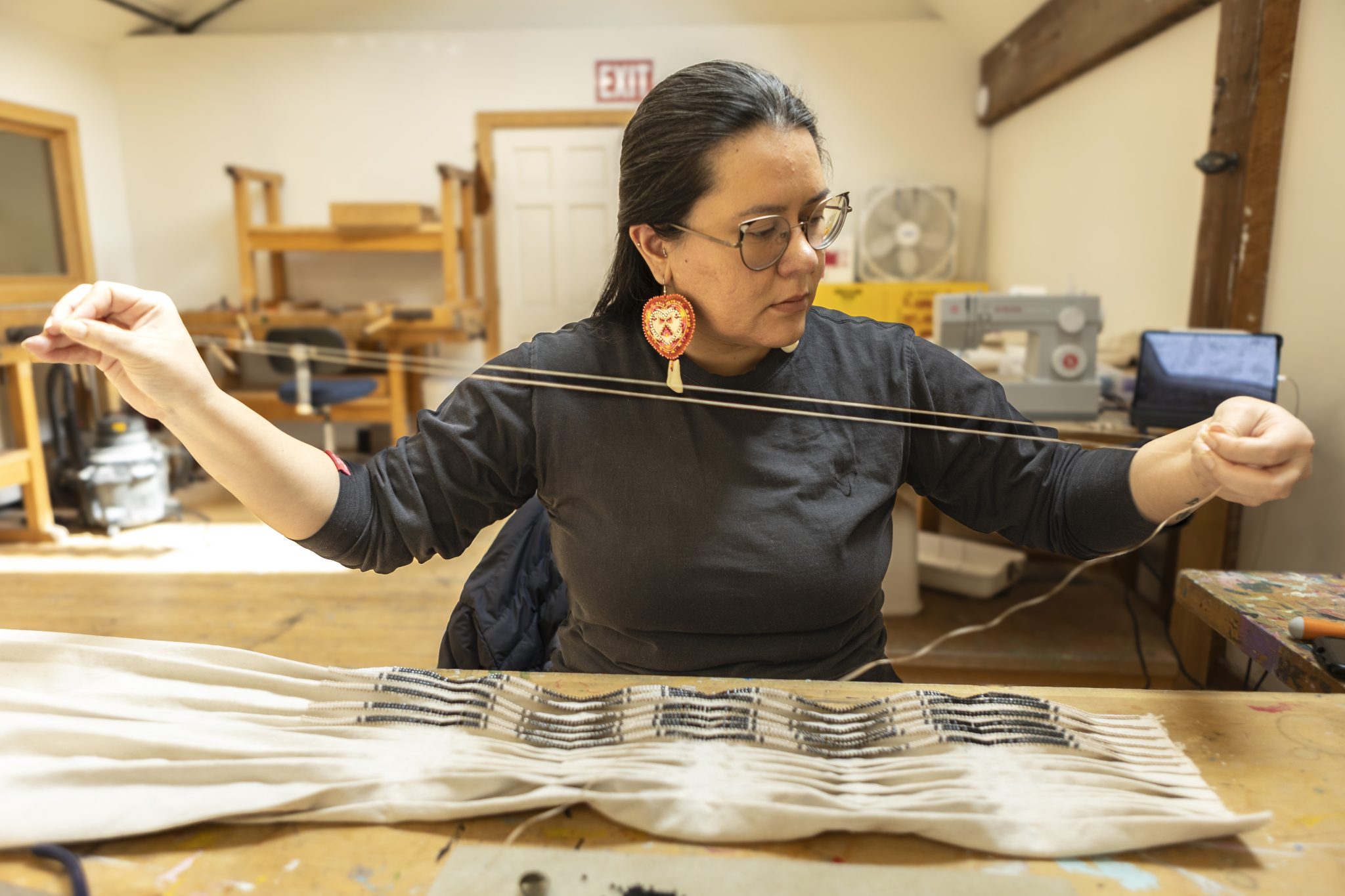
The work builds on a practice that moves across fabric, beadwork, paper and sculptural forms.
Beading remains central to her process and is also part of her everyday life, with Ms Bighorn saying she owns about 100 pairs of earrings.
She draws inspiration from art markets and from earrings and regalia made by Indigenous artists, then applies those ideas to her own pleat, fabric and beadwork.
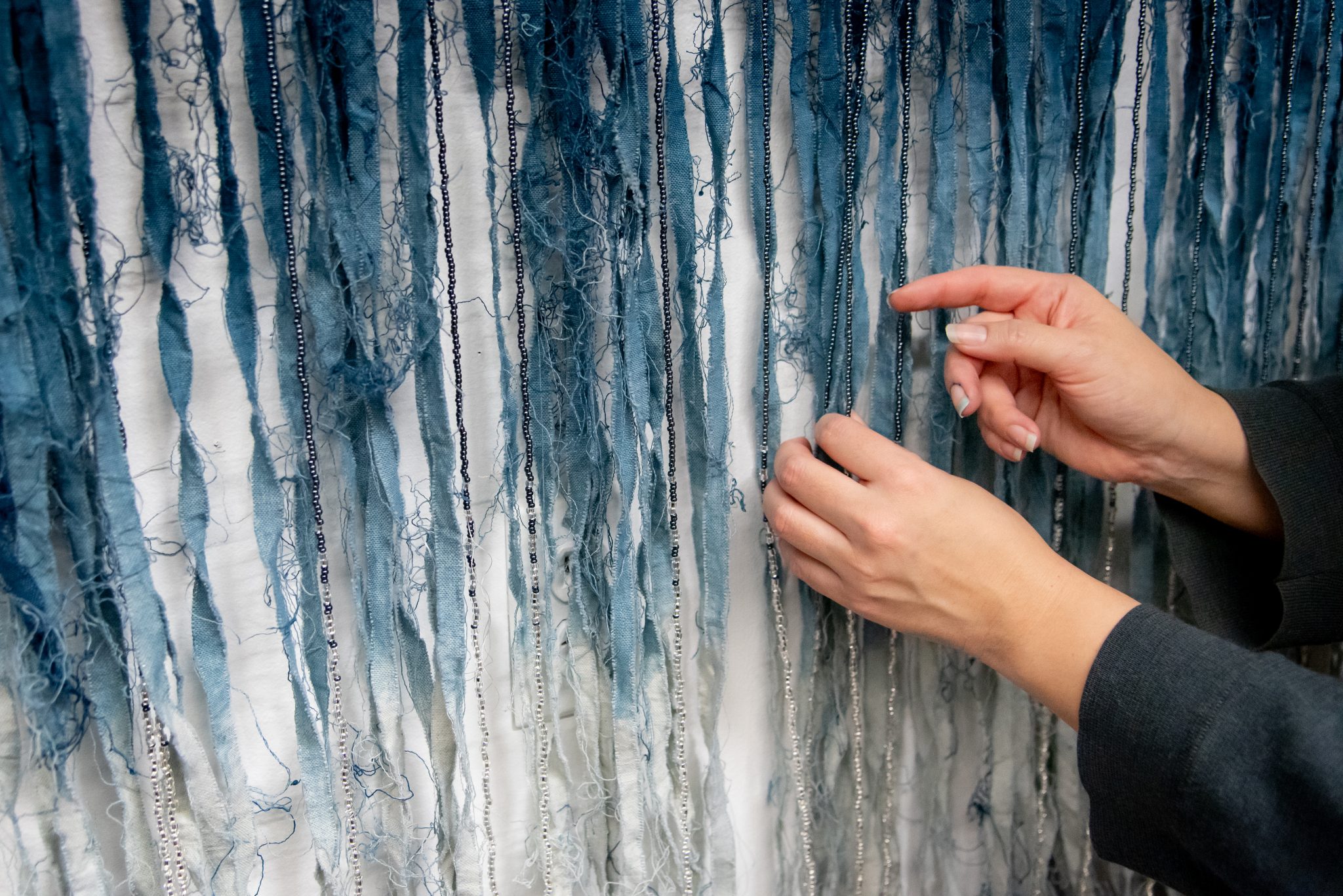
Her approach is slow and deliberate.
"I like to say each piece is made just one bead at a time," Ms Bighorn said.
"Being intentional is important... I have fun making the work."
Ms Bighorn was raised by a Catholic mother and a Native American father, and her work reflects both sides of her background.
Her practice includes references to church windows, jingle cones, beadwork and family items, including moccasins connected to her paternal grandmother.
She has also explored chain mail made with jingle cones, an idea she first tested with her sister while studying for her MFA at the School of the Art Institute of Chicago.
Ms Bighorn's connection to jingle cones is personal.
As a toddler, she wore a pink jingle dress for her naming ceremony, and the memory now informs the large-scale works she makes.
"My work is very symmetrical, uniform, and I think that also draws me to them—like nice things that just repeat, repeat, repeat," Ms Bighorn said.
"I like that connection to the memory of me as a little baby wearing a tiny pink jingle dress; now here I am incorporating them into these massive art pieces."
Before committing to art full time, Ms Bighorn taught art at the Boys & Girls Club in Arizona.
While encouraging young people to follow their artistic goals, she realised she was not doing the same herself.
She later returned to study, completing a BFA at the Institute of American Indian Arts.
During the pandemic, she worked on her senior thesis project from her Santa Fe apartment and spent more time thinking about family, heritage and reconnection.
Ms Bighorn said she did not begin asking more direct questions about her Native heritage until adulthood, but saw the process as part of reconnecting rather than rebellion.
"I see it as reconnecting, and as a celebration of me and my family," she said.
Her mentor, beading artist Erica Lord, also influenced that path.
Ms Lord, who is Finnish and Native, was Ms Bighorn's thesis adviser and later employed her as a studio assistant.
That work helped deepen Ms Bighorn's interest in beading and shaped her move into the practice she is now developing in Chicago.
Chelsea Bighorn: A Bead at a Time is showing at De Boer Gallery in Los Angeles until May 30.