





Gail Harradine's award-winning artwork captures a moment of reflection - of the past, present and future - and her connection to a place recently at the centre of tension.
Ms Harradine is a Wotjobaluk, Jadawadjali, Djubagalk painter, photographer and printmaker.
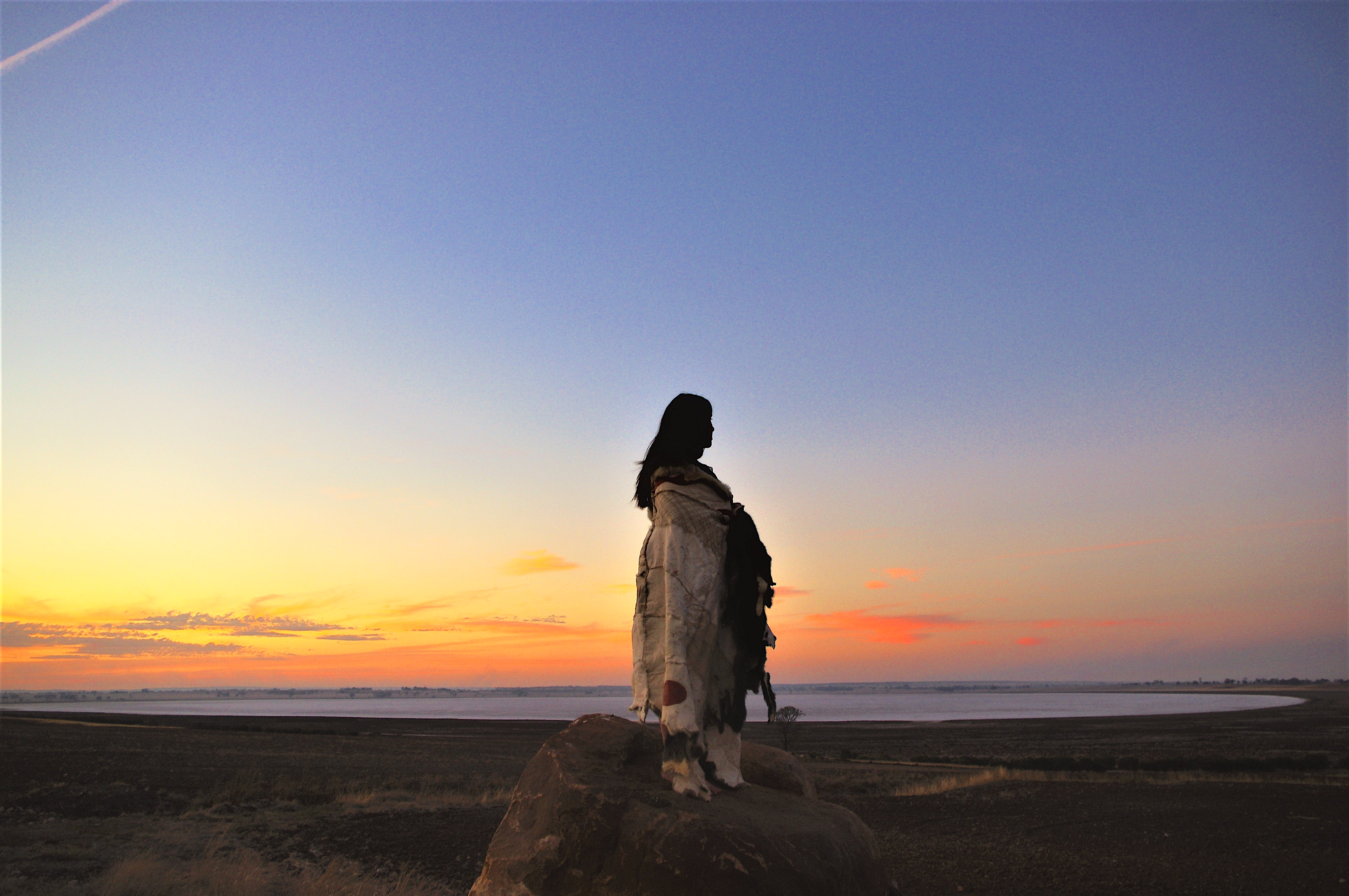
Her photograph, Djurite rocks, climbing and Jadawadjali was recently named the top award winner of this year's Wyndham Art Prize, handed out by the local City Council covering Melbourne's south-western edges and regional setting towards Geelong.
The image, captured in 2020, came back into her attention when going through old photography collections before moving to Geelong.
Hailing from Dimboola, on Wotjobaluk Country, it's images like these, over her home, which are able to "refresh my spirit and connection despite not being there everyday", Ms Harradine wrote in her artist statement.
Ms Harradine is Curatorial Manager at Koorie Heritage Trust, and was last year appointed the inaugural First Nations Representative on the Public Galleries Association of Victoria board.
Her winning shot, perched from on top of the landscape, overlooks Mitre Lake at sunset. Its setting in the Dyurrite Cultural Landscape (Mount Arapiles-Tooan State Park) has been in recent years one of "division" within the local area.
Barengi Gadjin Land Council, the appointed Registered Aboriginal Party for the Wotjobaluk Nations in Victoria's north-west, call the mountain "a place of deep cultural, spiritual and historical significance for the Wotjobaluk, Jaadwa, Jadawadjali, Wergaia and Jupagulk Peoples".
"This landscape holds tens of thousands of years of stories, knowledge, ceremony, food practices, tools and cultural law," BGLC states.
"For our Peoples, Dyurrite is a living cultural landscape. It is Ancestors, it is Lore, it is memory, and it continues to hold meaning and responsibility today."
It's also been a popular and renowned recreational spot for climbers.
In recent years, tension came to the fore between the demand to continue using the site for recreational purposes and the development of cultural management plans.
In 2020, tens of thousands of artefacts, scarred trees, ancient rock art over 3,000 years old, one of Australia's largest Indigenous stone quarry complexes, and threatened plants including the Skeleton Fork Fern (Psilotum nudum) and Western Pellitory (Parietaria australis) were "rediscovered", Engage Victoria and Parks Victoria reported, and climbing bans in the area followed.
A community and stakeholder feedback process open between November 2024 and February 2025, saw more than 1,000 surveys were completed, over 500 submissions made and close to 400 people join an online information session.
The process remains ongoing.
"This area - Chicken Boulder, Dyurrite - contains Aboriginal cultural heritage that is extremely important to Traditional Owners, who have occupied Dyurrite - known as Mount Arapiles - for thousands of years," a notice from Parks Victoria from 2025 reads.
"While Parks Victoria and Barengi Gadjin Land Council determine a longer term management response, and out of respect for this significant cultural landscape, visitors are requested to not enter this area."
A joint statement issued in September from involved groups, including BGLC, Parks Victoria, Climbing Victoria and Horsham Rural City Council, outlined member intent to create more access opportunity to the site, to support community economic and social benefit opportunities and "protect and celebrate the area's cultural, social and environmental value".
In her artwork statement, Ms Harradine said "I have been grappling with the divisions happening back home".
Ms Harradine directly acted to address misunderstanding and sentiment in her hometown, which she described as discriminatory against Traditional Owners, expressed in the form of opposition to the climbing bans protecting a culturally significant place.
She also took part in a reconciliation-healing event at Djurite which welcomed all locals.
Winning the Wyndham Art Prize, Ms Harradine told National Indigenous Times she was "thrilled" her work, an expression of her love of Country, received the recognition.
"It is an eloquent heartfelt image that encourages people to consider their impact and their footsteps and the need for healing to overcome a lack of understanding of Traditional Owners connection to the land and country," she said of Djurite rocks, climbing and Jadawadjali.
More than 700 artworks were submitted for the prize.
The award also came with a $15,000 prize.
The Wyndham Art Prize exhibition is on display at the Wyndham Art Gallery until March 22.