





On April 30, 1986, a leather-clad bushman swaggered onto the silver screen and changed the Northern Territory forever.
As Kakadu National Park celebrates the 40th anniversary of Crocodile Dundee, the film's legacy remains undeniable.
It transformed Australia's fledgling outback tourism industry overnight, turning a rugged, largely unsealed wilderness into a global phenomenon.
The film grossed more than $328 million worldwide and was the highest grossing film of its time. Beyond the Hollywood bottom line lies a deeper story of cultural collaboration and enduring pride for the Traditional Owners of the land.
The spectacular scenery played a starring role alongside Hollywood actors.
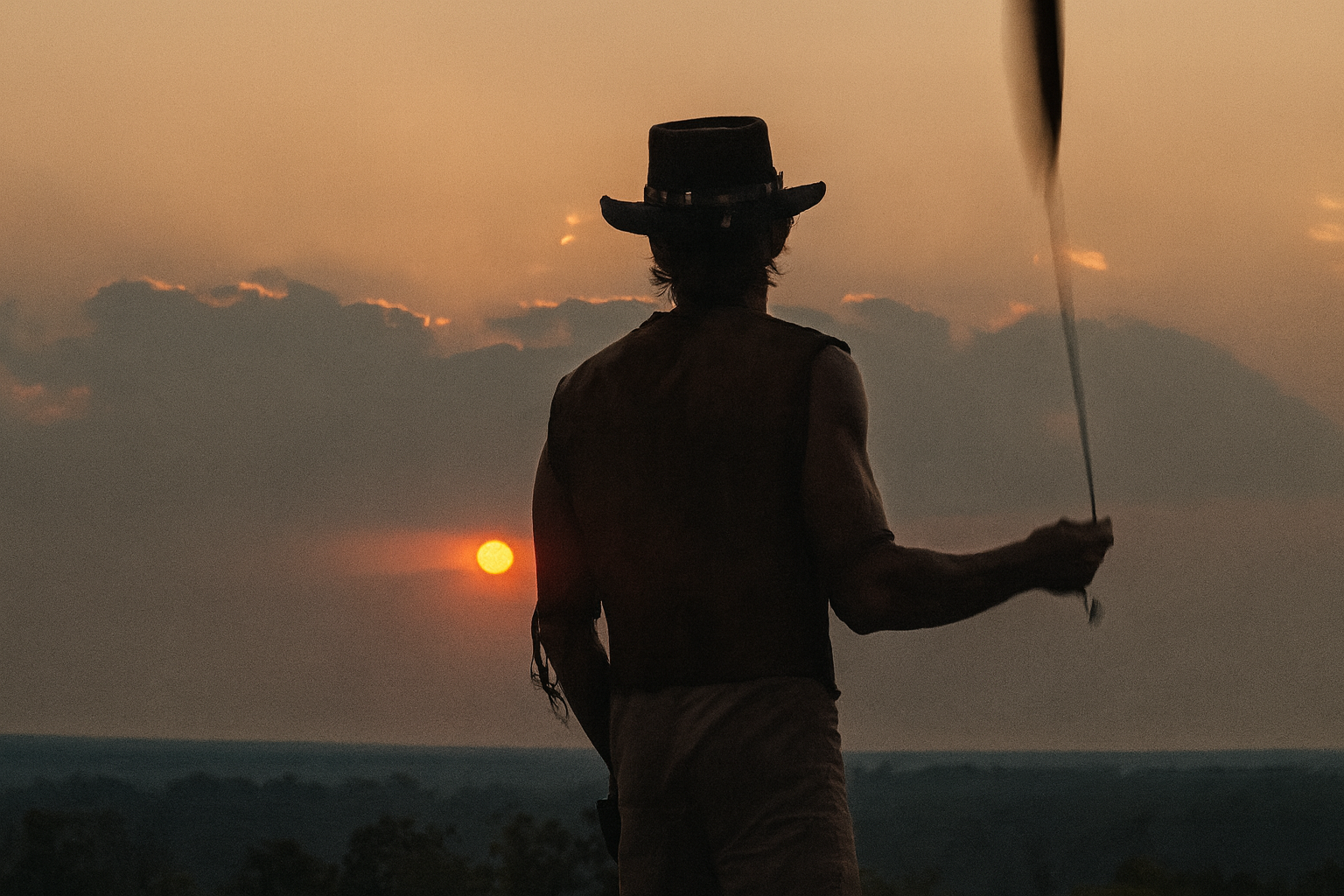
Crocodile Dundee catapulted the career of Australian Paul Hogan who played Mick Dundee, with co-star Linda Kozlowski who played journalist Sue Charlton. Their love blossomed in Kakadu and they went on to marry in real life.
Before Hogan's iconic character threw his hunting knife into the global consciousness, Kakadu was perhaps better known for uranium mining than international holidays.
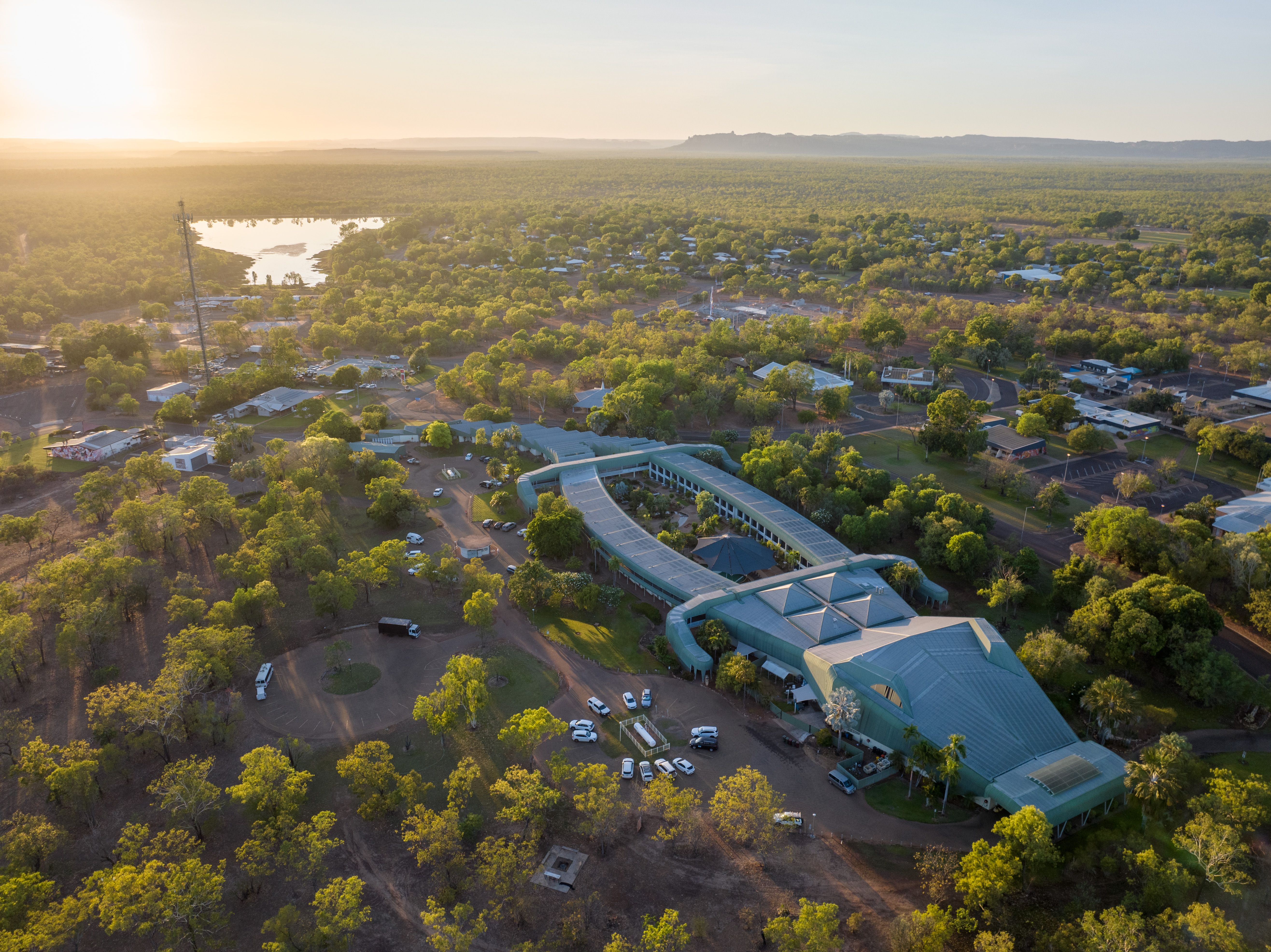
The film's immense success supercharged local tourism, leading the local Indigenous Gagudju people to develop the Mercure Kakadu Crocodile Hotel, built uniquely in the shape of a crocodile, or ginga.
Kakadu, crocodiles and Indigenous culture and experiences became instant tourism drawcards.
Today, the Top End's inclusion in the New York Times' 52 Places to Go in 2026 proves this allure hasn't faded, prompting Kakadu Tourism to launch new self-guided and 4WD discovery tours tracing Mick Dundee's footsteps.
Bessie Coleman, a senior Traditional Owner of the Jawoyn, Bolmo, Matjba, and Wurrkbarbar peoples, and a member of the Kakadu National Park Joint Park Management Board, views the film as a vital piece of modern dreaming.
"My heart fills with pride when I think of that balanda (white man) and his lady on my Country, at Gunlom," Ms Coleman said.
"It's the first time a big film star came and worked with my people, proper way. It was really good for the board to approve that movie. It was our voice."
During the film's production the crew actively worked with the community to ensure cultural mindfulness on set.
"Those bushfoods were all harvested with our family members, and were foods from the Gunlom area," Coleman said, noting Hogan was instructed by locals on the correct traditional ways to spear fish and use a bullroarer.
The film famously showcased the breathtaking Ubirr rock art site and Gunlom Falls, the latter of which was previously a restricted sacred site and an early uranium prospectors' camp known as UDP Falls.
Ubirr, the rock formation in Kakadu National Park, is where Mick Dundee climbs to the top, points toward the horizon, and says: "This is my backyard, and over there is the Never Never," while the movie camera panned across the flood plain.
One of the icons of Kakadu, Ubirr's rock art galleries have drawings ranging from the ancient thylacine (also known as the Tasmanian Tiger) to the arrival of Europeans.
"Gunlom is a special place, and through the movie the world got to see our special places and it brought people to Kakadu," Ms Coleman said.
For the Jawoyn people, watching Crocodile Dundee is a way to connect with ancestors captured on film, like a familial time capsule.
"It reminds me that I had a big brother, and for the kids, they get so much happiness from pointing out their big uncle at the Corroboree," Ms Coleman said.
Although Ms Coleman jokes she would love the filmmakers to return, "or at least receive a copy of the film," her ultimate sentiment rings true for all who visit — Kakadu remains as perfect as it was on screen four decades ago, and thanks to Crocodile Dundee, the world continues to fall in love with it.
Visitors are welcomed into the ancient, living movie set on the newly accessible walkways of Gunlom and the ancient galleries of Nourlangie (Burrungkuy) on anniversary tours.
Major adventure operator, Kakadu Adventure Tours, enables visitors to experience the icons of the National Park in off-road 4WD tours from May through to October.
Kakadu Adventure Tours and Yellow Water Cruises operate out of Cooinda, which is open all year round, with restaurants, swimming pools, a service station and shop to provide travelling necessities.
Details of the 'Kakadu Crocodile Dundee Self Guided Discovery Tour' are available online, with a complete guide to visiting Kakadu available via the Kakadu Tourism website.