




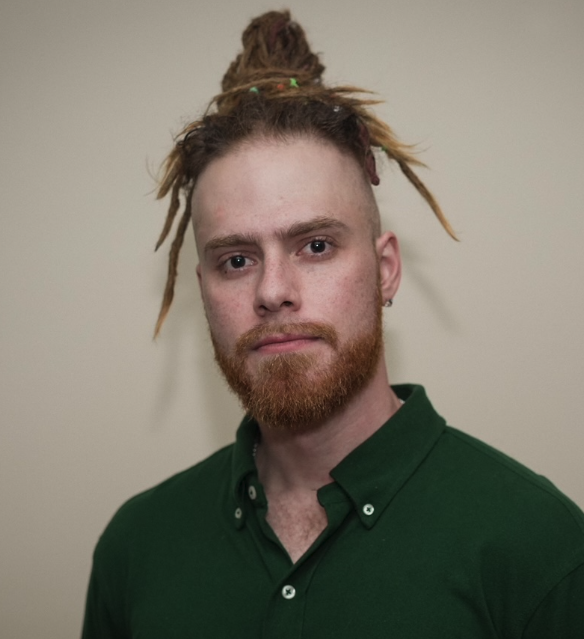

Gudanji, Wakaja and Kalkadoon woman Dr Debra Dank has released her third book, Ankami - a deeply personal work that continues her examination of memory, family and the ongoing impact of colonisation.
The book builds on the success of her debut, We Come with This Place, and reflects her long career in education and storytelling.
Ankami began with a discovery in the archives that reshaped Dr Dank's understanding of her family.
A moment of clarity emerged when she learned her paternal grandmother had four children who were taken.
"It was a really interesting kind of moment because when you learn something really profound and something as big as that, you kind of reflect over what's gone before and what's happened before," she told National Indigenous Times.
"I'd always ask dad, do we have more family somewhere and my dad would always just say no.
"In one of those documents, it said that she had had these other four children and nobody knew where they were."
Dr Dank said the revelation connected many silences she had grown up with.
Her father's repeated denial made sense in hindsight as she recognised the protective layers within her family's history.
"All of those little whispers and silences and gaps and the definite no, even, it all told its own story," she said.
"To find that my dad's mob had been more than a threat, that it had been reality, was just shattering.
"I just sat and wrote and wrote."
The book traces these themes through stories of absence, memory and the way families continue despite profound loss.
Dr Dank said the broader experiences of denial and hidden identity were shared across many Aboriginal families.
"When I was a child, I saw around me a whole host of people who denied who they were," she said.
"That denial shaped so many families who said no, we're not Aboriginal, even though we are.
"There is always something that pulls the soul, that pulls the heart."
She said these stories connect communities through shared experiences across generations.
Her reflections position Ankami within a wider conversation about cultural survival, truth-telling and recovery.
"It doesn't matter what story I tell or what story the person down the road tells because we've lived through all of those stories," she said.
"Our condition around our community has so many similarities with each other.
"We are aligned absolutely in a spiritual sense."
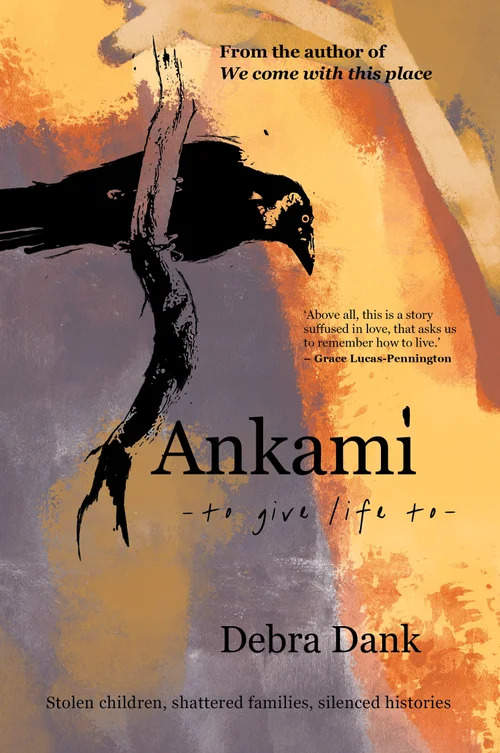
Ankami means "to give life to" in Gudanji language.
Dr Dank said she wanted to honour the children who were taken and ensure their presence was acknowledged in this life.
"I wanted to acknowledge them and I wanted to claim space for them," she said.
"I wanted to give life to those four in articulating the loss and what we've missed by not having their presence."
The cover, designed by her daughter, Rhylie Dank, continues a family collaboration that has shaped all three of her books. The crow holds cultural significance as a messenger and was developed from a photograph taken on Country.
Dr Dank said the design reflects the book's grounding in Country, memory and the stories carried across generations.
"She knows the stories and does something well," she said.
"The crow brings messages and that crow on the cover is developed from a photograph we took at home.
"We wanted to acknowledge the non-human and all the other human that exists with us."
Ankami has now been shortlisted for the 2026 Victorian Premier's Literary Awards in the Non-fiction category.
Dr Dank said she remained surprised by the recognition and the ongoing response to her work.
"I'm amazed. I'm still amazed at what We Come with This Place has done because I actually don't sit down to write a book per se," she said.
"I just sit down to tell a story.
"There's a very real difference between writing a book and telling a story."
The winners will be announced at a ceremony in Melbourne on 25 February 2026.
Ankami is available now through the Echo Publishing website.