





While it might have been a six-year wait for Naarm's Potter Museum at Melbourne University to re-open its doors, the artistic traditions and brilliance of the oldest continuing culture on Earth once spent far longer unaccepted and overlooked, Marcia Langton says.
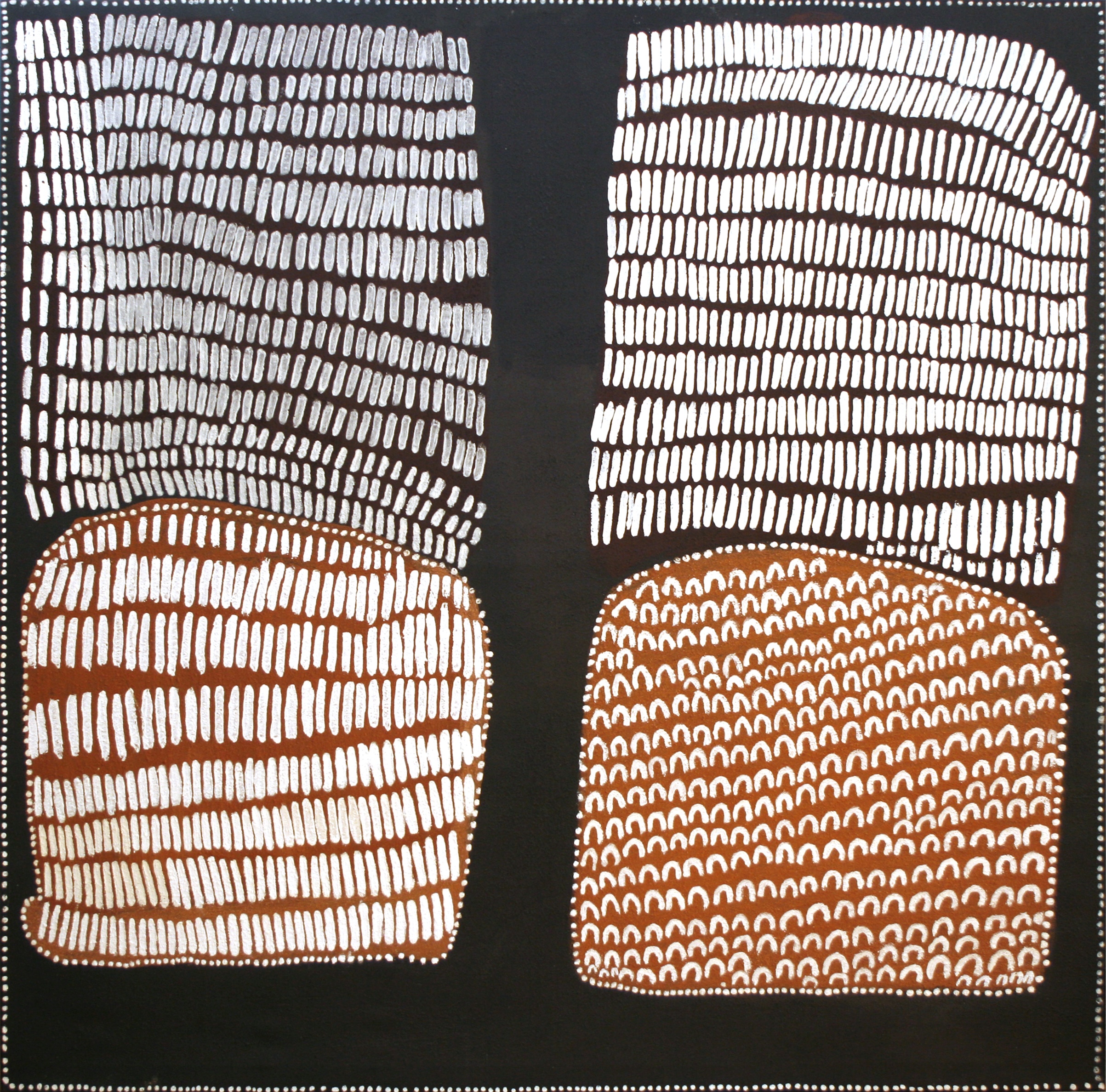
A collection of more than 450 works by Aboriginal and Torres Strait Islander artists will span the museum building's multiple floors for '65,000 Years: A Short History of Australian Art' - the Potter Museum returning exhibition from May.
Co-curated by Professor Langton, Judith Ryan and Shanysa McConville, in consultation with Custodians, pieces created from the time of early colonisation and frontier wars and every period since are displayed - from all corners of what is now Australia.
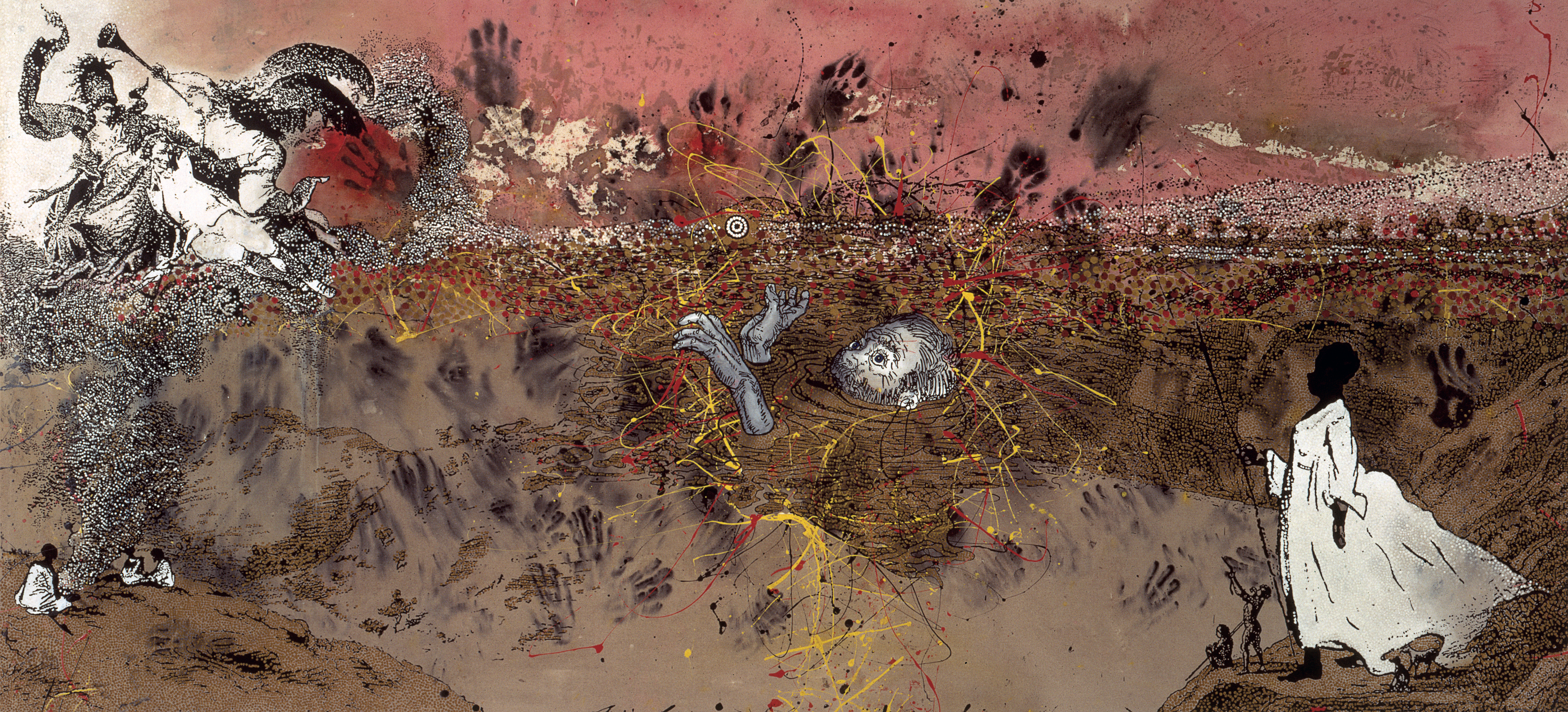
It honours the "extraordinary artistic history of this continent" Professor Langton said at a preview on Wednesday, and in cases, the realities of brutal treatment of First Peoples post-European arrival.
The exhibition's name shines a light on a time when this history was largely silenced.
"The ironic title of this exhibition refers to the belated and reluctant acceptance of Aboriginal and Torres Strait Islander art into the fine art canon by Australian curators, collectors, art critics and historians in the last quarter of the 20th century," she said.
"65,000 Years: A Short History of Australian Art celebrates Indigenous art as it is increasingly recognised in galleries and collections around the world – as the greatest single revolution in Australian art."
Speaking on Wednesday, Professor Langton said: "I've been annoyed for decades about Indigenous work being treated as abstract work."
More than 200 individual artists are included within the collection.
This includes Emily Kam Kngwarray, Albert Namatjira, Judy Watson, Paddy Bedford, Rusty Peters, Gail Mabo and William Barak.
Museum director Charlotte Day said the exhibition comes at an important time.
"Since 1853, the University has collected works of art, cultural objects and records that form a profoundly important archive, and for the first time these Indigenous collections will be exhibited together and interpreted by authoritative Indigenous scholars and other leading experts," Ms Day said.
The co-curators also spoke of the exhibition's strong championing of women's art, particularly weaving practices.
In addition to the University of Melbourne's private collection, 193 loaned works from 77 public and private lenders are included.
Six new commissions to leading contemporary artists will be unveiled when opened on May 30.
Upon entering the ground floor, Kooma artist Brett Leavy's 'Virtual Narrm 1834, 2025' depicts Wurundjeri lands and waterways as they were nearing 200 years ago in this latest virtual songlines project.
Trawlwoolway artists Julie Gough and Vicki West (with separate works), Waradgerie artist Lorraine Connelly-Northey, Dhauwurd Wurrung Gunditjmara artist Sandra Aitken, Aṉangu artists Betty Muffler and Maringka Burton were commissioned alongside Leavy.
Some rooms, like those featuring the works of Yolŋu and Groote Eylandt (Ayangkidarrba) artists, discard blank white or black walls convention for colour reflecting their Country's landscape, their home and often, their inspiration.
"This exhibition bears testament to 65,000 years of knowledge. It encompasses an extraordinary range of artists and works of art that serve as a conceptual map, illustrating our contested shared history and introducing us to some of the Indigenous architects of change," co-curators Judith Ryan and Shanysa McConville said.
"By revealing key moments and turning points in the history of Indigenous art in Australia, we explore diverse art traditions across communities and regions, art forms that emerged post-colonisation, and artistic resistance and innovation."
Ms Ryan was previously senior curator of Indigenous Art at the National Gallery of Victoria.
She and Professor Langston co-edited an accompanying book, featuring the works and essays, sharing the exhibition's name - published by Thames and Hudson.
University of Melbourne's Melitta Hogarth, associate Dean (Indigenous) and Principal and Education faculty principal research fellow Research Fellow in the Faculty of Education, said there will be a symbiotic relationship, including case studies, between the 65,000 Years: A Short History of Australian Art and the Ngarrngga project.
Ngarrngga, led by First Nations educators, empowers Indigenous knowledge as resources into Australian education with evidence-based approach.