





What began as sketches on scraps of paper, receipts, and tissues has grown into a celebrated body of work that challenges the stories Australia tells about itself.
Ballardong Noongar artist Kamsani Bin Salleh's debut solo exhibition is part of the 10 Nights in Port: Walyalup Fremantle Festival, bringing humour and creativity to some of the country's most confronting conversations.
At the heart of the exhibition Nullians, presented at Walyalup Fremantle Arts Centre (Inner Courtyard), is a collection of shapeless, expressive characters that move between identities and perspectives.
Their name draws on the colonial concept of terra nullius, the false premise that Australia was land belonging to no one.
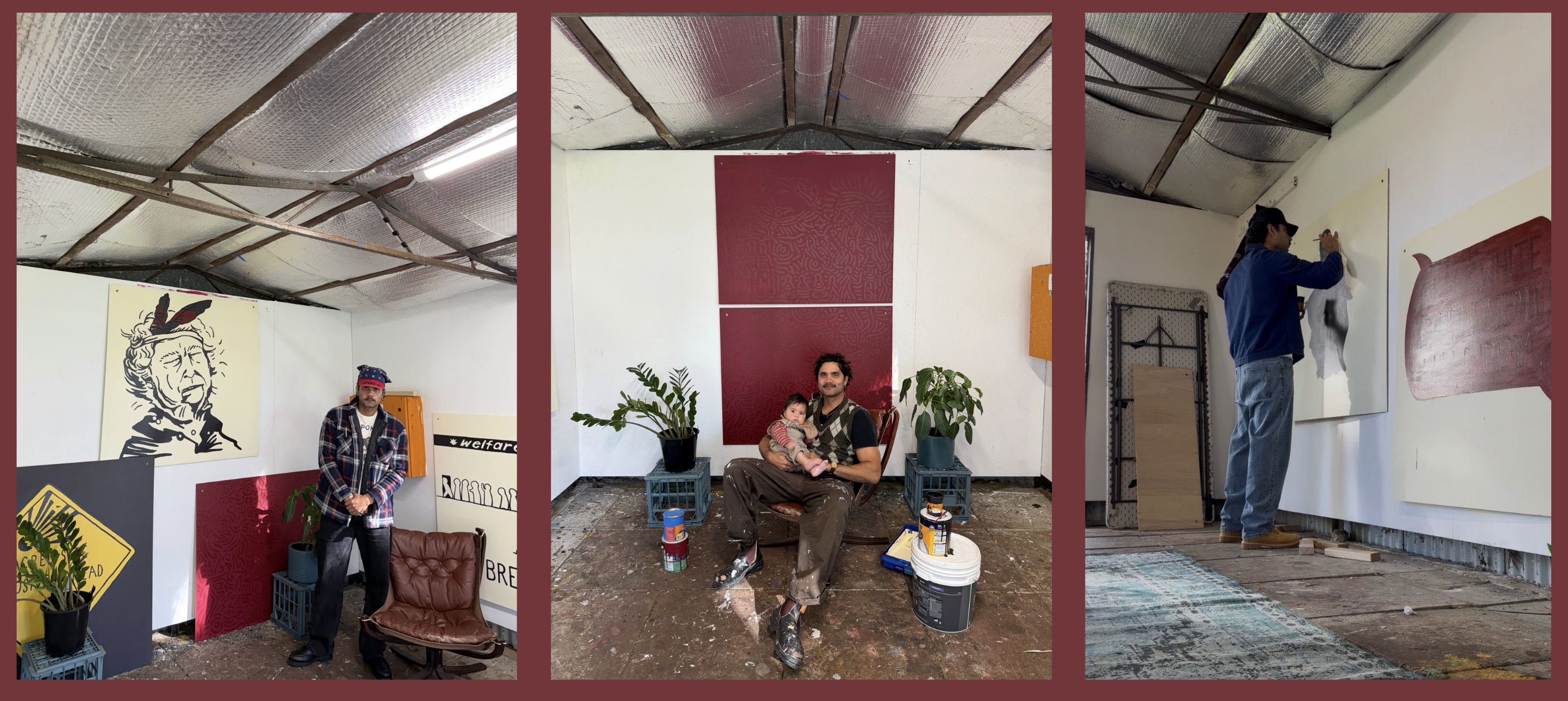
Bin Salleh was first inspired to create his artwork in response to a Sunrise segment that the Australian Communications and Media Authority found had breached racial contempt rules, after airing a non-Indigenous panel discussing the adoption of Indigenous children and child abuse.
"The characters first came about as a response to a Sunrise segment discussing, for lack of better phrasing, a second stolen generation, with an all-white panel," he told Style Up.
"This was back in 2018, a few years after I had graduated from my Communications and Media degree and was working both as an "emerging" artist and as a research assistant in the State Records Office.
"I had graduated before I could research the impact of Social Media on culture while at university but just like anyone with a smartphone, I could witness in real time the power it has.
"What worked especially in a vertical scrolling format, at the time for me, was a bold, easily legible written illustration - something that may have broken through a lot of photos.
"It simply read "let's talk about what's best for whites" with an all-black panel," he said.
Reflecting on the illustration that started it all, Bin Salleh recalled the first piece he remembers gaining significant traction. The work initially drew deliberately on Keith Haring's visual style, using familiarity and nostalgia to make its message more accessible.
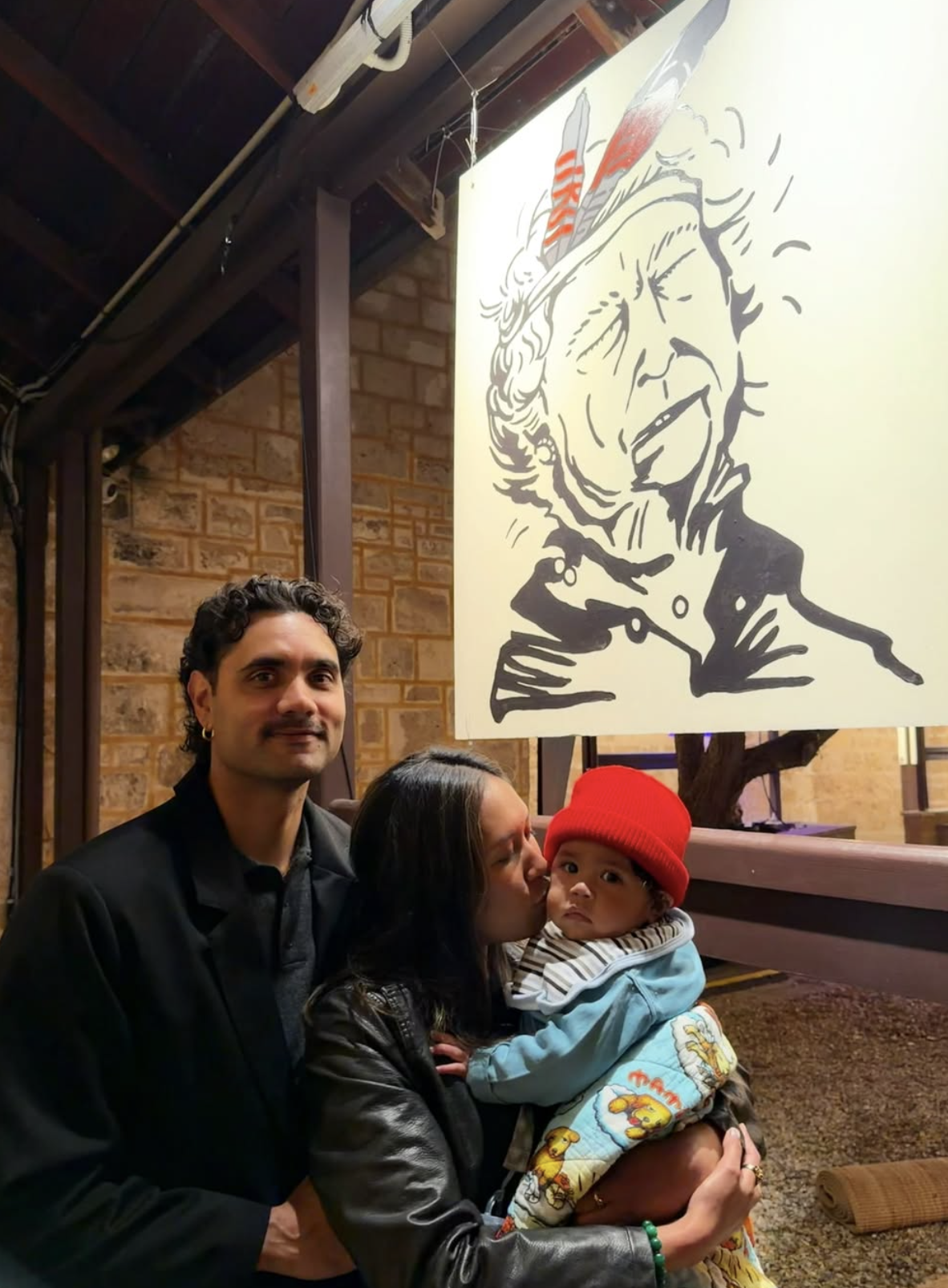
"That was the first illustration I can recall getting any traction, and they did initially (characters and background) imitate the work of Keith Haring," he said.
"Done intentionally to use that sense of nostalgia to drive home this message and playfulness while simultaneously continuing that advocacy for the oppressed.
"Over time, just like Keith was influenced by early cartoonists and created his own style. I would do the same to these characters, making subtle changes to their form.
"Often going back and forth from being an individual character with expression to a slouching pawn involved with these chess-like social debates stripping communities of individuality."
Rather than representing a single group, the characters deliberately blur the lines between First Nations people and settlers, colonisers and colonised, outsiders and the establishment.
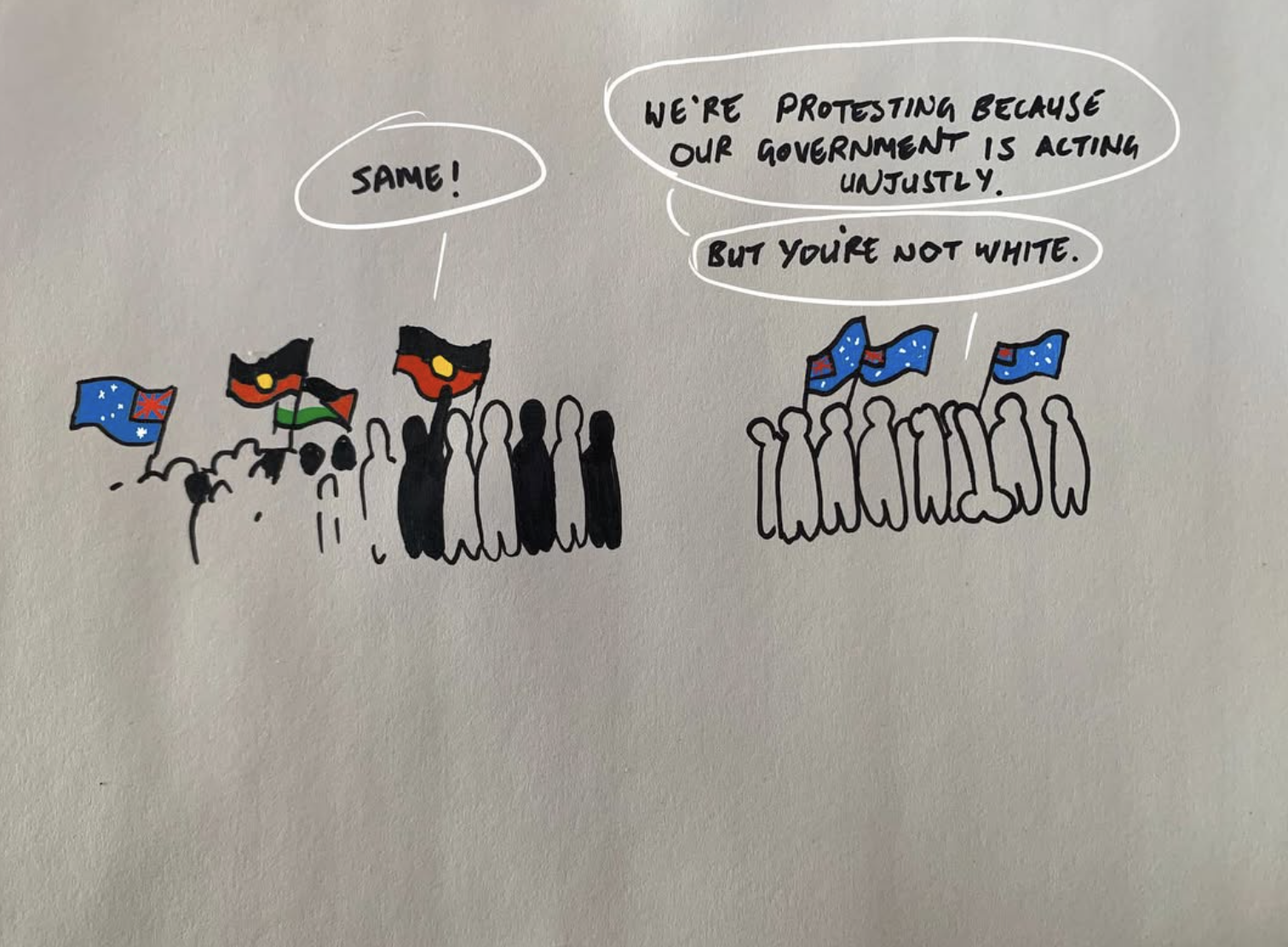
"I've made these characters binary as black and white because although blackness can be seen as a spectrum, whiteness is white," shared Bin Salleh.
"You either are or you are othered.
"Also making reference to the old saying "no matter how much milk, it's still tea", these characters are either black or white."
Through their often witty exchanges, Bin Salleh encourages audiences to question the assumptions and narratives inherited through Australia's colonial history.
"The fact they are cartoons almost drives people to want to understand them all the more, cartoons are simple," he said.
Bin Salleh is passionate about creating work that can not only be used as a catalyst for important conversations. From everyday racism and microaggressions to genocide, Nullians tackles confronting subjects without losing its playful edge.
As an artist, he brings these issues to light with contemporary culture, using comedy not to diminish difficult topics but to create an opening for people to engage with them.
The result is an exhibition that asks audiences to look beyond the joke and consider what sits underneath it.