





When asked about the impact of the documentary Like My Brother on young Indigenous girls with dreams of playing AFL, co-director, Waramunga Luritja woman, Danielle Maclean, emphasised its cultural significance.
"I would describe it as inspiring, truthful, and something that shares the importance of culture and where we're from—but also shows you can dream big," she said.
The film follows the lives of four Tiwi girls—Rina, Frida, Jess, and Juliana—who, through their determination and passion for football, navigate the challenges of leaving their remote community to pursue opportunities in the sport.
Filmed over six years the documentary captures their personal journeys, shining a light on their resilience in the face of overwhelming challenges.
Co-director and producer Sal Balharrie highlights a powerful moment early in the girls' journey.
"When Rina says, 'I imagine myself out there,' while sitting in the crowd, I hope every young Indigenous girl is thinking that too," she said.
"Because that's what this film offers—a moment to imagine themselves in those shoes, even when it's scary."
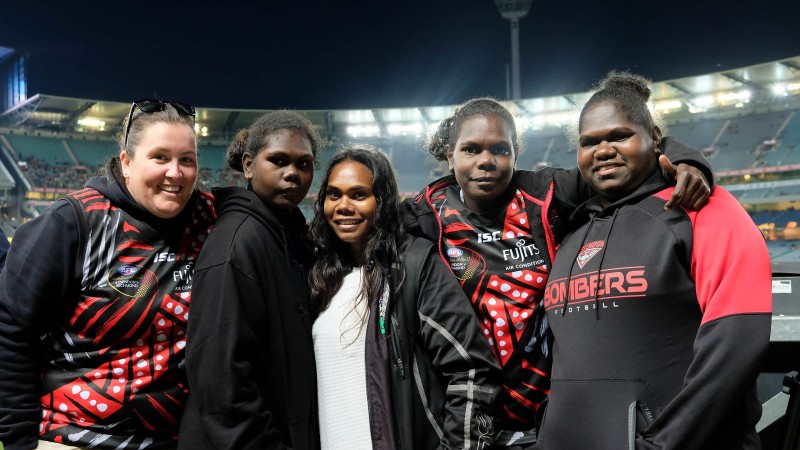
Ms Balharrie said the moment the girls first saw the MCG was life-changing, especially for Rina, who stands out with her confidence and presence both on and off the field.
"Rina, she's got this aura about her," Ms Maclean said.
"You can see it when she's on the field. She moves so naturally with the ball, and you know she could rival most men. But what really stood out to me was how present she was. Whatever she does—football, art—she gives it 150 per cent."
But beyond their talents, these young women faced the daunting challenge of balancing the weight of their aspirations with the pressure to succeed for their families and communities.
"Women have stayed in the shadows of men for years, and that's a cultural thing, but it's true across the world," Ms Maclean said.
"For these girls to step forward in such a male-dominated space took immense courage."
While Like My Brother highlights the girls' passion for football, Ms Balharrie said the film's message goes beyond the sport itself.
"Football's part of their DNA; it's how they express themselves, how they feel good. But this story was always about more than making it to the AFLW," she said.
"It's about growing as human beings, as leaders in their community, and having something to offer the world beyond sport."
A particularly emotional moment in the film comes when the girls are not selected in the AFL draft.
"It was so brave of her to put her hand up like that, knowing how much was riding on it," Ms Maclean said.
"But I think the most important message is that it's okay if you don't make it to the professional level. These girls have already created opportunities for the next generation of aspiring players in their community."
The title Like My Brother speaks to the girls' desires for equality in the opportunities available to their male counterparts.
"Girls don't want more than their brothers; they just want the same," Ms Balharrie said.
"And they're getting there. The conversations around women's footy are growing, and we're seeing more and more young women dreaming big, just like these girls."
While the journey to AFLW stardom may still be ongoing, the four Tiwi girls at the heart of Like My Brother have already made an impact, paving the way for the next generation of Indigenous women to step onto the field and into their own futures.