




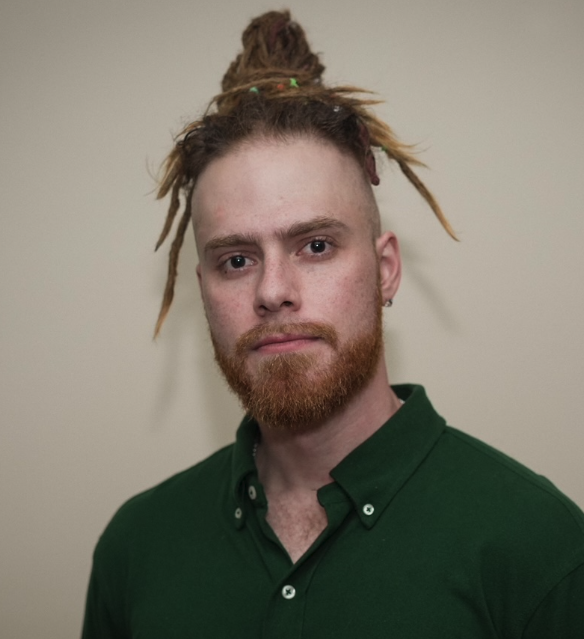

Kurnu-Barkindji and Malyangapa writer Dr Allanah Hunt will explore how crime and violence against Indigenous Australians are portrayed through a new collection of short stories supported by the inaugural AustLit Creative Writing Fellowship.
The Magandjin (Brisbane) based writer, editor and University of Queensland academic is one of two recipients awarded $15,000 through the initiative, established by AustLit in partnership with the Copyright Agency.
Her upcoming project will draw on issues affecting Aboriginal communities, including the portrayal of Indigenous victims in the media and the stereotypes found in Australian crime fiction.
For Dr Hunt, receiving the fellowship is an opportunity to develop a project she has wanted to pursue for some time.
"It feels like a pretty huge honour," she said.
"It was a project that I was very passionate about the thought of doing.
"So to get the chance to actually be supported for that project, for someone else to have faith in it, just feels so wonderful and so affirming for your creative work because you tend to do it a lot in isolation."
Dr Hunt released her debut novel earlier this year and has previously received fellowship support that helped her establish her writing career.
Her latest project was partly inspired by an incident involving two Aboriginal boys who were run down in Mildura, Victoria, where she has cultural connections.
She recalled being struck by the public reaction to the incident and how it differed from responses to violence involving non-Indigenous children.
"A lot of my cultural connections are from Mildura way down in Victoria," Dr Hunt said.
"There was a particular incident in which two Indigenous boys were run down in the Mildura Mall.
"The online reaction to it was just so different when I see other forms of violence happen to children that are not Indigenous."
The experience prompted her to consider how the identity of victims and the perspectives of writers can influence the way crime is represented in Australian literature.
Through a series of short stories, she hopes to examine the treatment of Indigenous communities within crime narratives while challenging conventions that have shaped the genre.
Her work will also draw inspiration from writers such as Philip McLaren, whose fiction explores issues affecting Aboriginal communities.
"That really struck me and it really then made me think about how crime fiction is very different depending on who writes it within Australia," Dr Hunt said.
"I wanted to kind of speak to the specific struggles that affect Indigenous communities, how we're portrayed within media, how that affects the way crime is viewed when it's committed against us.
"And I wanted to tackle a little bit of the tropes and stereotypes that may still creep up within Australian crime fiction."
Dr Hunt believes fellowships play an important role in helping emerging First Nations writers find the time, financial support and confidence to develop their work.
Writing can often be undertaken alongside other employment, making opportunities for dedicated creative time difficult to access.
Having benefited from similar programs throughout her career, she considers that support essential to bringing new Indigenous stories into publication.
"I think they're so important," Dr Hunt said.
"It's been through fellowships that I got to the point of publishing. I don't think I ever would have without that support.
"With the sort of funding for our mob, it allows us time to do something like study and write or cut down on our work hours a bit and have more time to do this."
Dr Hunt also highlighted the importance of recognising writing as professional work, particularly when much of the creative process takes place independently.
"Something like writing, something in the arts, it's not considered, unfortunately, like work," she said.
"So for something like a fellowship, it treats it as work. It gives it that validation.
Another aspect of the AustLit fellowship that Dr Hunt values is its willingness to support different forms of creative writing, including genre fiction.
"I really appreciate AustLit making this space to support a collection of stories that aren't necessarily deemed as literary," Dr Hunt said.
"I appreciate that it's allowing different types of genre fiction to come in, legitimising those different forms of art a bit more."
The fellowship will allow Dr Hunt to begin developing her collection, bringing Indigenous experiences and perspectives into a genre where she believes important stories remain underrepresented.