





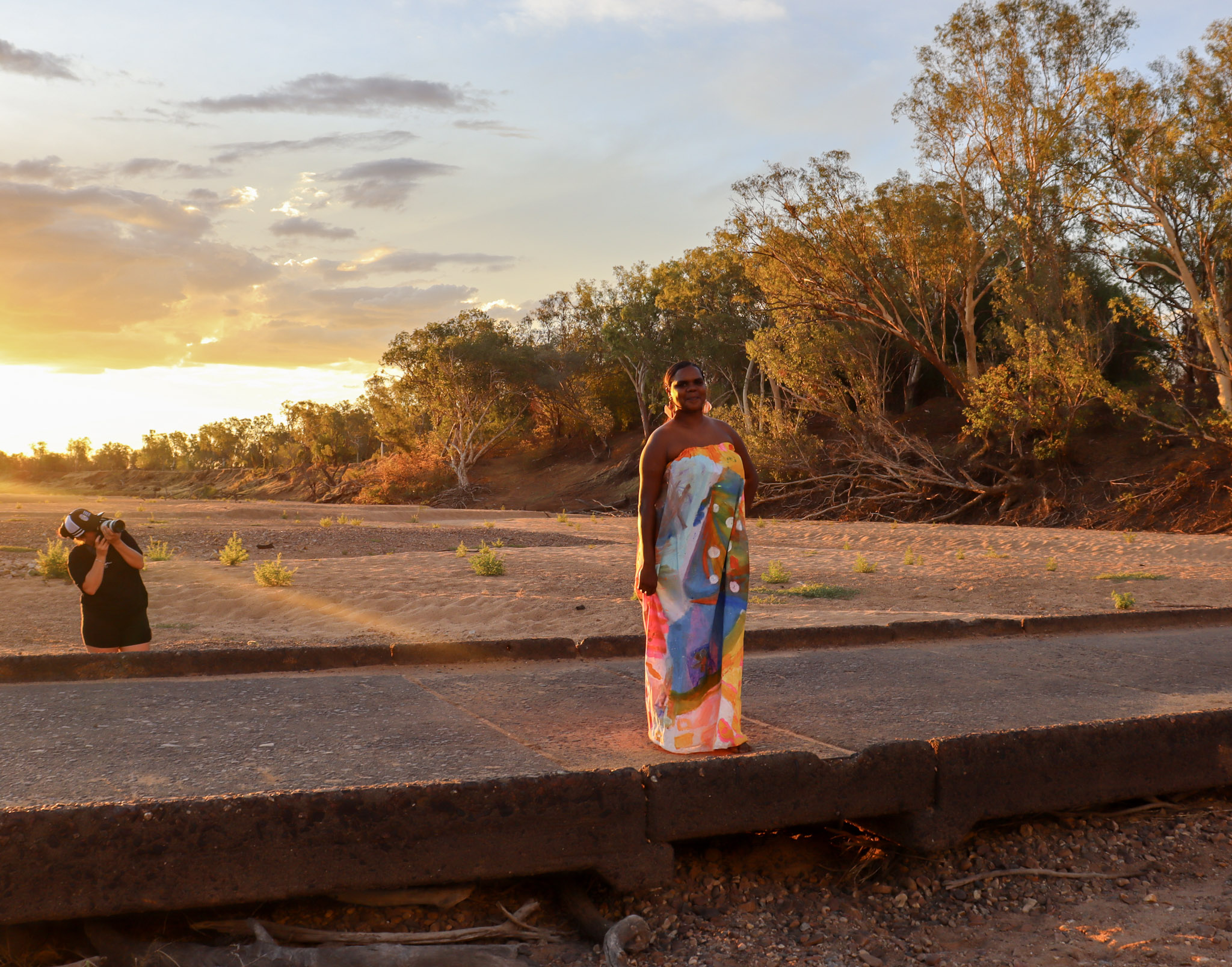
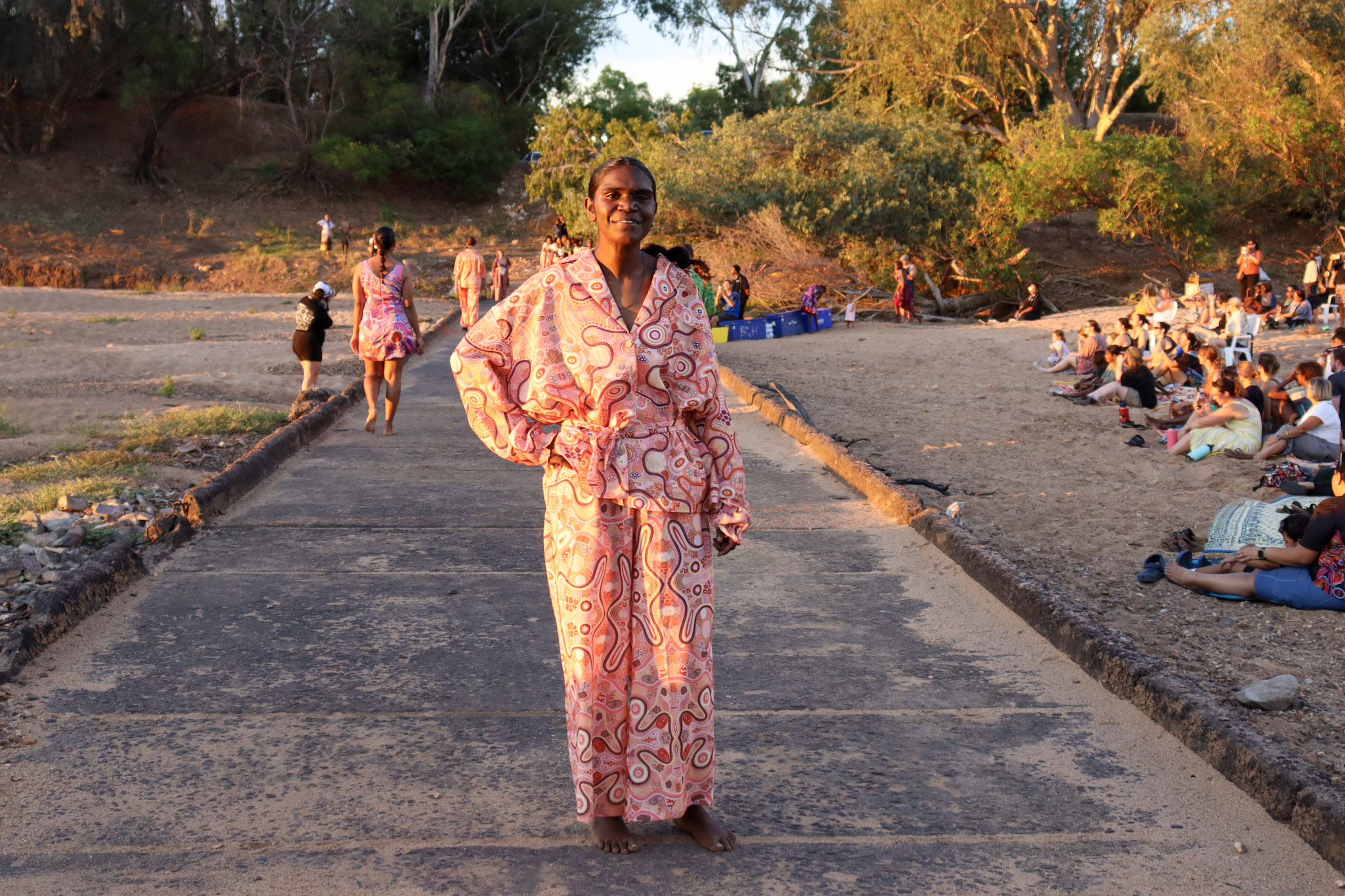
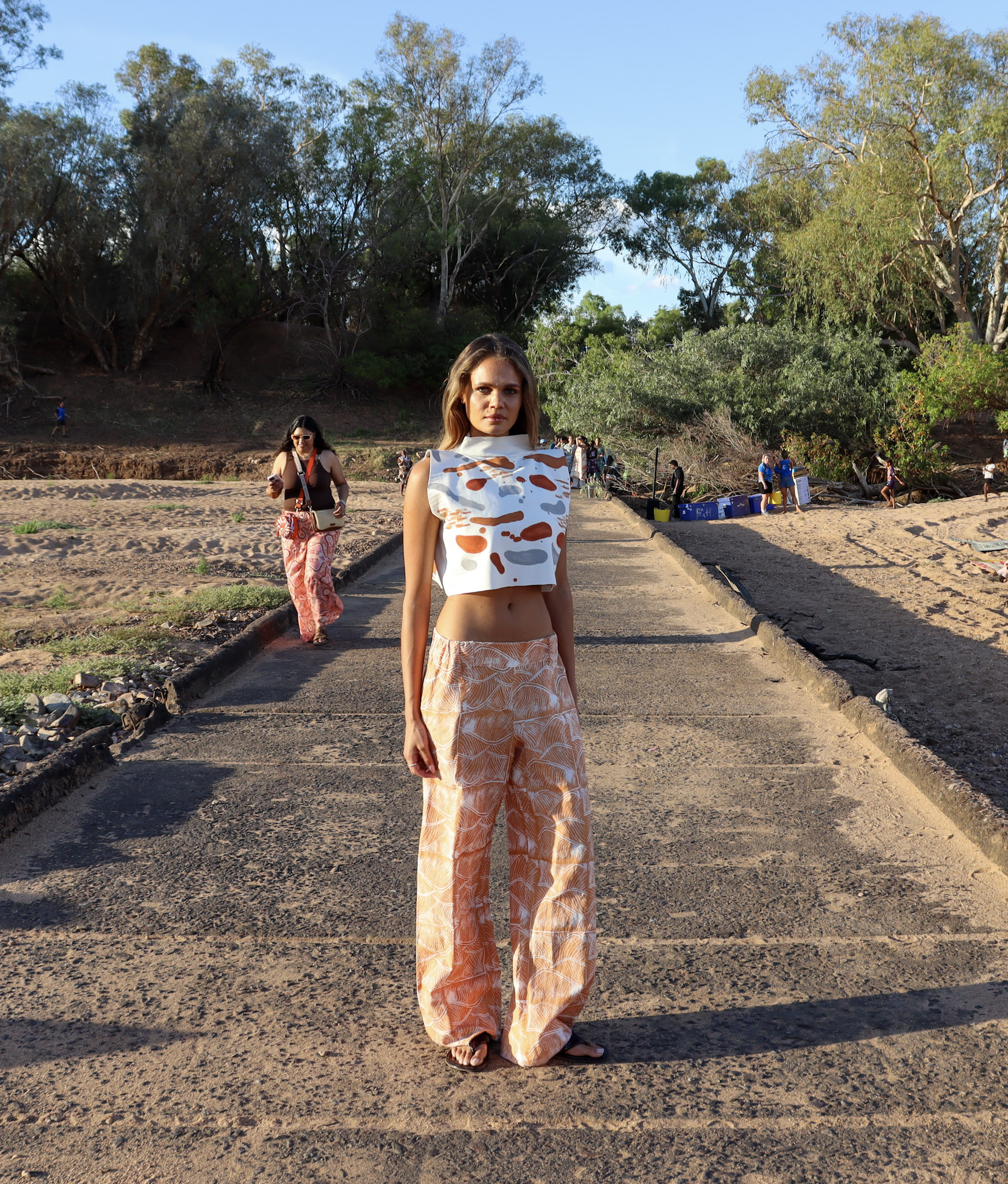
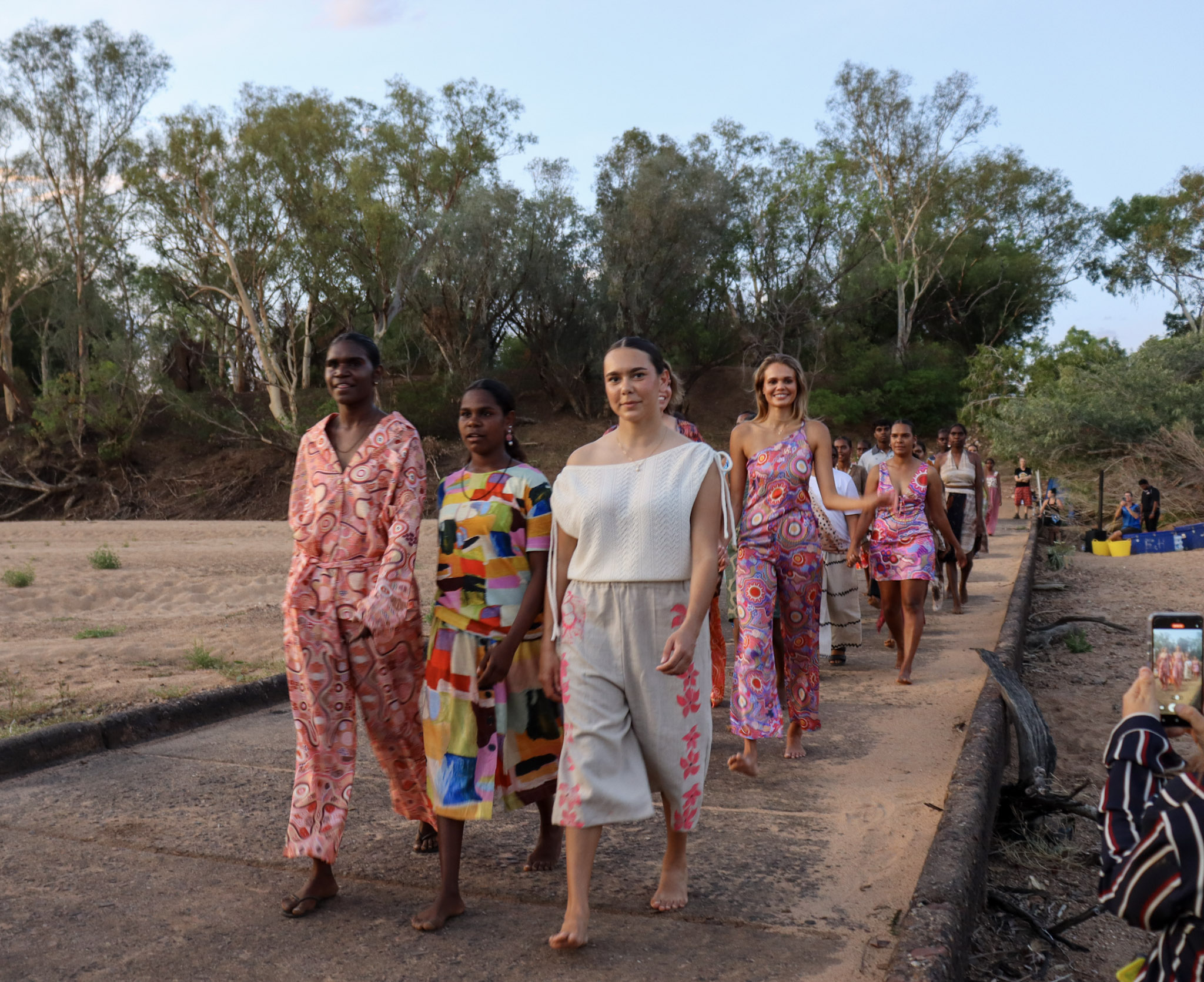
Orange afternoon light dapples the concrete of the Old Crossing Bridge as young Aboriginal women turn it into a runway, draped in garments created by local designers.
It's a striking scene.
Almost unimaginable on the same bridge that, nearly three years ago, lay beneath a once-in-a-century flood which devastated the Fitzroy Valley and cut off the town of Fitzroy Crossing in WA's Kimberley region.
The 2022-23 floods damaged about 240 properties and forced more than 1,500 people to evacuate in what became WA's worst-recorded flood.
Since then, much of the physical damage has been repaired, including the reconstruction of the Fitzroy Bridge.
The community is now investing in something longer-term: helping young women recover from the trauma the flood left behind.
Fitzroy Crossing's Camilla Sawford says she grew up with floods, but this time she knew something was different.
"When people ask if it was scary for the community, I say yes — it was," she said.
Ms Sawford remembers the stress rippling through families as the water rose and the scale of the damage became clear.
Through Marra Worra Worra Aboriginal Corporation's After the Flood fashion workshops, young women and girls affected by the disaster were given a space to be supported by women who understood their experiences.
The project was made possible through funding from the Australian and WA governments under the Disaster Recovery Funding Arrangements, with additional support from Kimberley Aboriginal Fashion Textiles and Art (KAFTA).
Over two days they worked with the KAFTA program, which develops First Nations designers, stylists and creatives across northern WA.
Day one focused on modelling, fashion and art tutorials at MWWAC's Night Space, while day two brought those new skills onto the runway.
Working alongside the KAFTA team were three mentors who grew up in Fitzroy Crossing: founder of Jaliyamiya swimwear Brodie George, founder of Litiyalla earrings Camilla Sawford and international model Billie-Jean Hamlett, each returning home to guide the girls through the workshops.
Before the program began, KAFTA artistic director Kartika Christophers sat on the floor of MWWAC's Night Space, meeting the girls at eye level.
She told them warmly but firmly: "We aren't doing shame.
She was naming something many young women in the Fitzroy Valley talk about - the feeling that expressing their femininity, or being visibly confident can draw unwanted attention or criticism.
It's also something Ms Sawford says "holds us back".
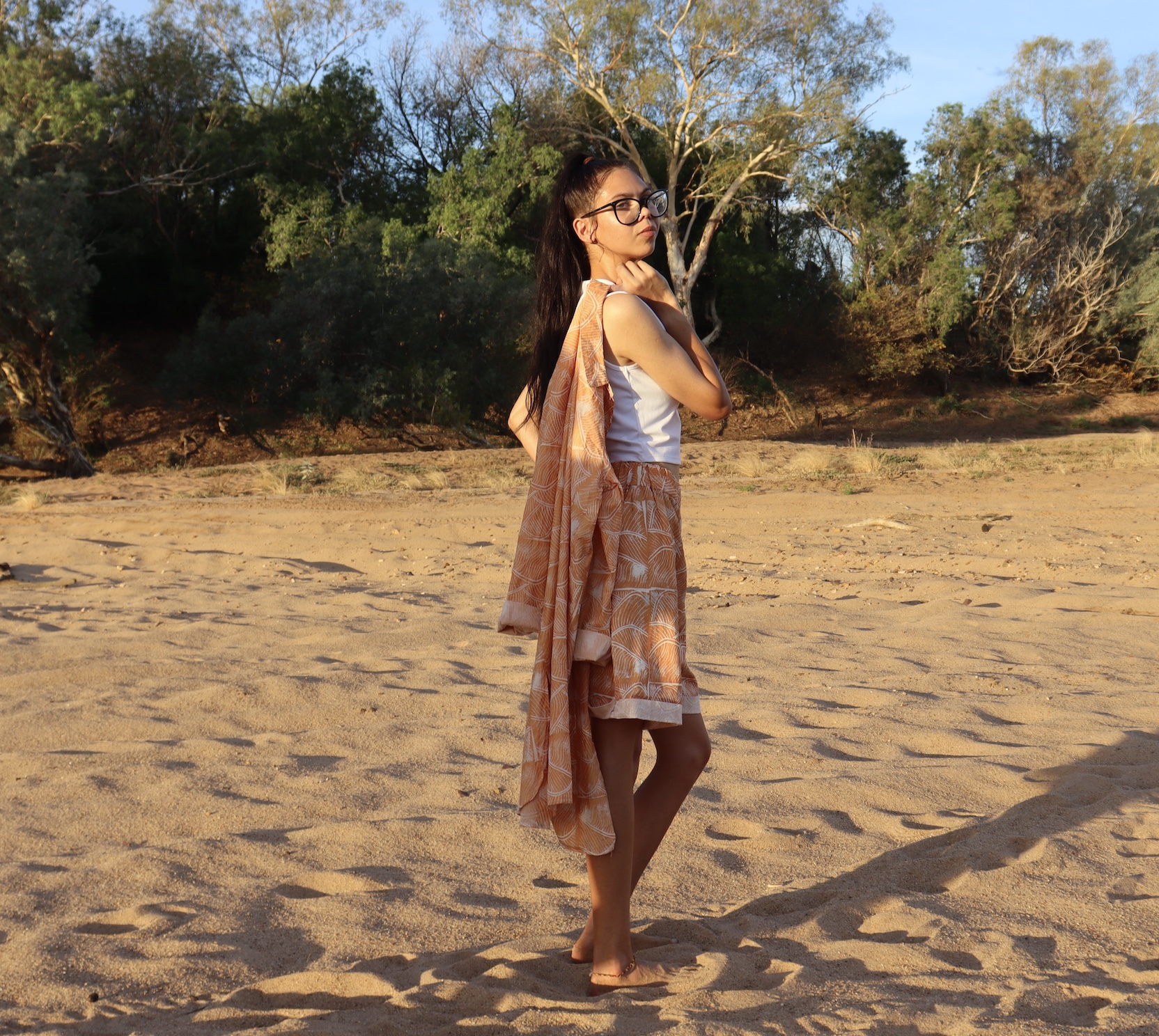
"We can't fully be seen or even experience things if we sit back and we go, 'No, we're too shame'," Ms Sawford said.
Ms Christophers praised the women for challenging shame by entering the night space to participate in the program.
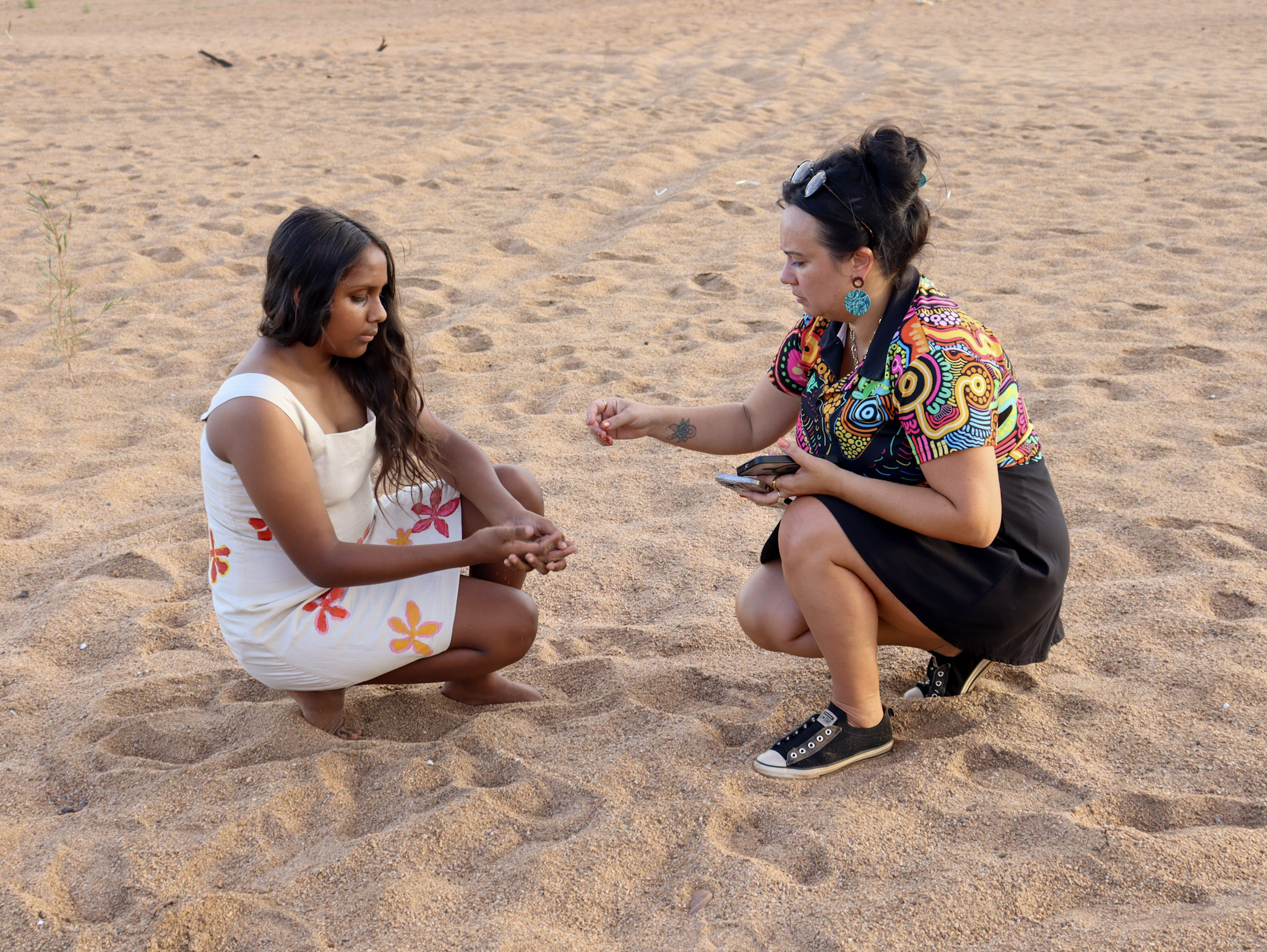
"It takes a lot of courage for our girls to walk through that doorway and be here," Ms Christophers said.
She said the skills the girls learnt weren't isolated to the runway, they were applicable to everyday life.
"There aren't a lot of programs out there that are promoting empowerment, beauty, hygiene, poise and confidence for our young women," she said.
"These are skills the girls don't even realise they're building, but they're capacity building. It means that when they're ready for job interviews, they have more confidence in how they hold themselves."
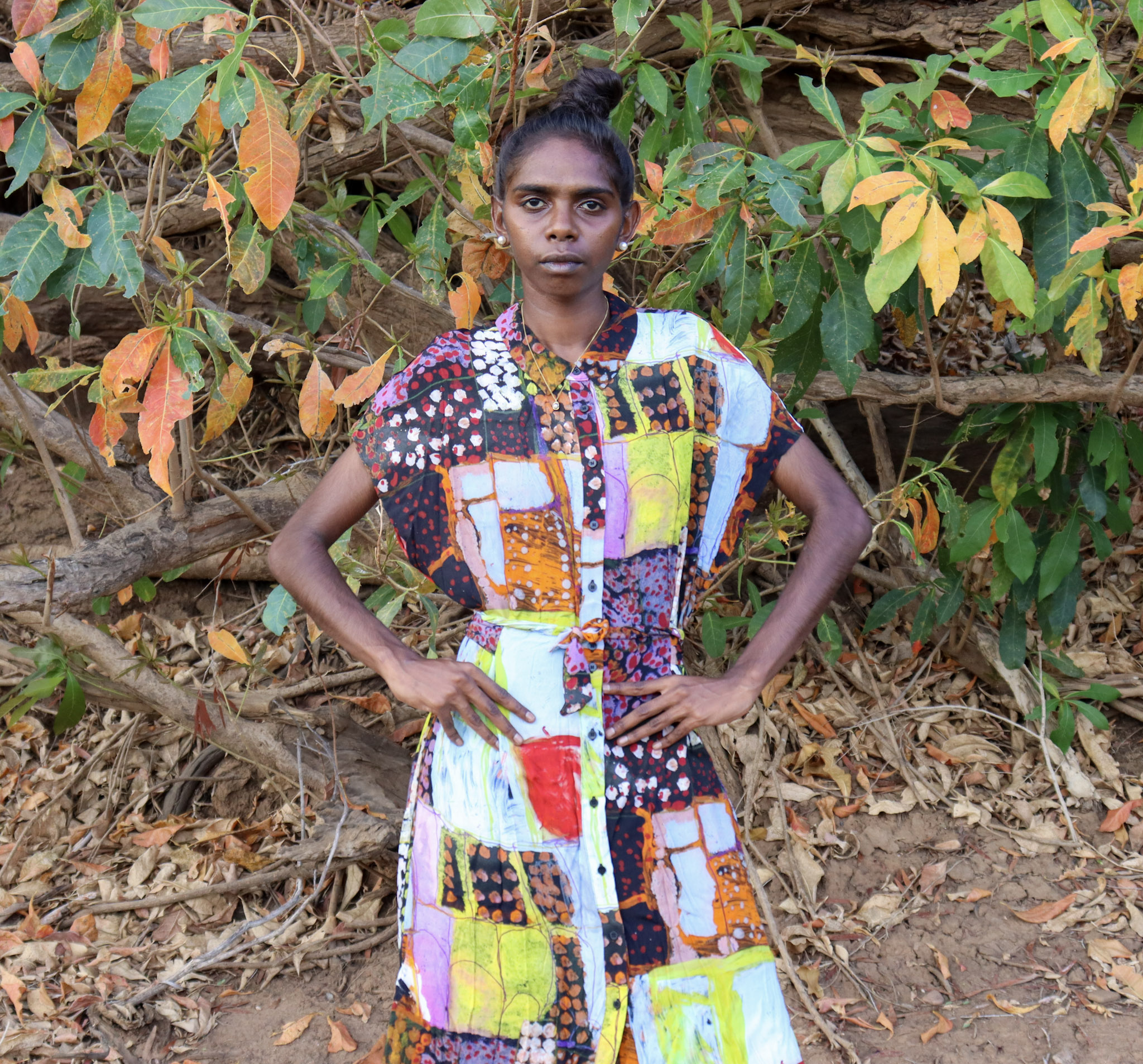
A woman who embodies this is Kahlia Rogers — a Night Space youth officer and 2024 National Indigenous Fashion Awards Young Achiever, who brought unmistakable elegance gliding down the runway when opening the show.
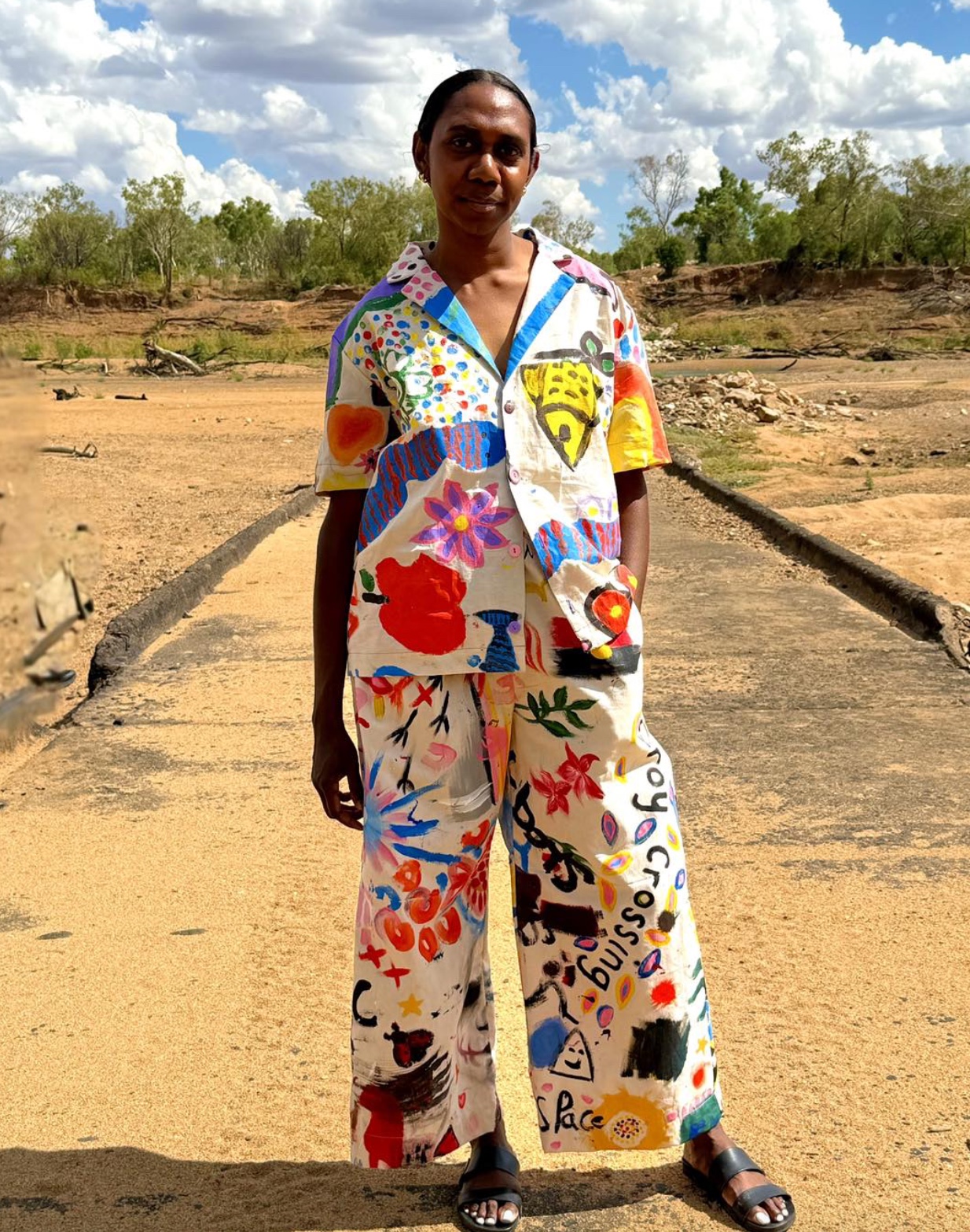
Ms Rogers walked in an outfit painted by children she mentors at the Night Space, their illustrations vivid against the backdrop of the bridge.
Moments later, those same girls followed her down the runway, expressing how strength moves between generations in the Fitzroy Valley.
Ms Rogers said the project was not only about self-empowerment but also an opportunity for the young women "to build each other up".
"It's a great way for the women to positively feed off each others energy, and boost creativity," she said.
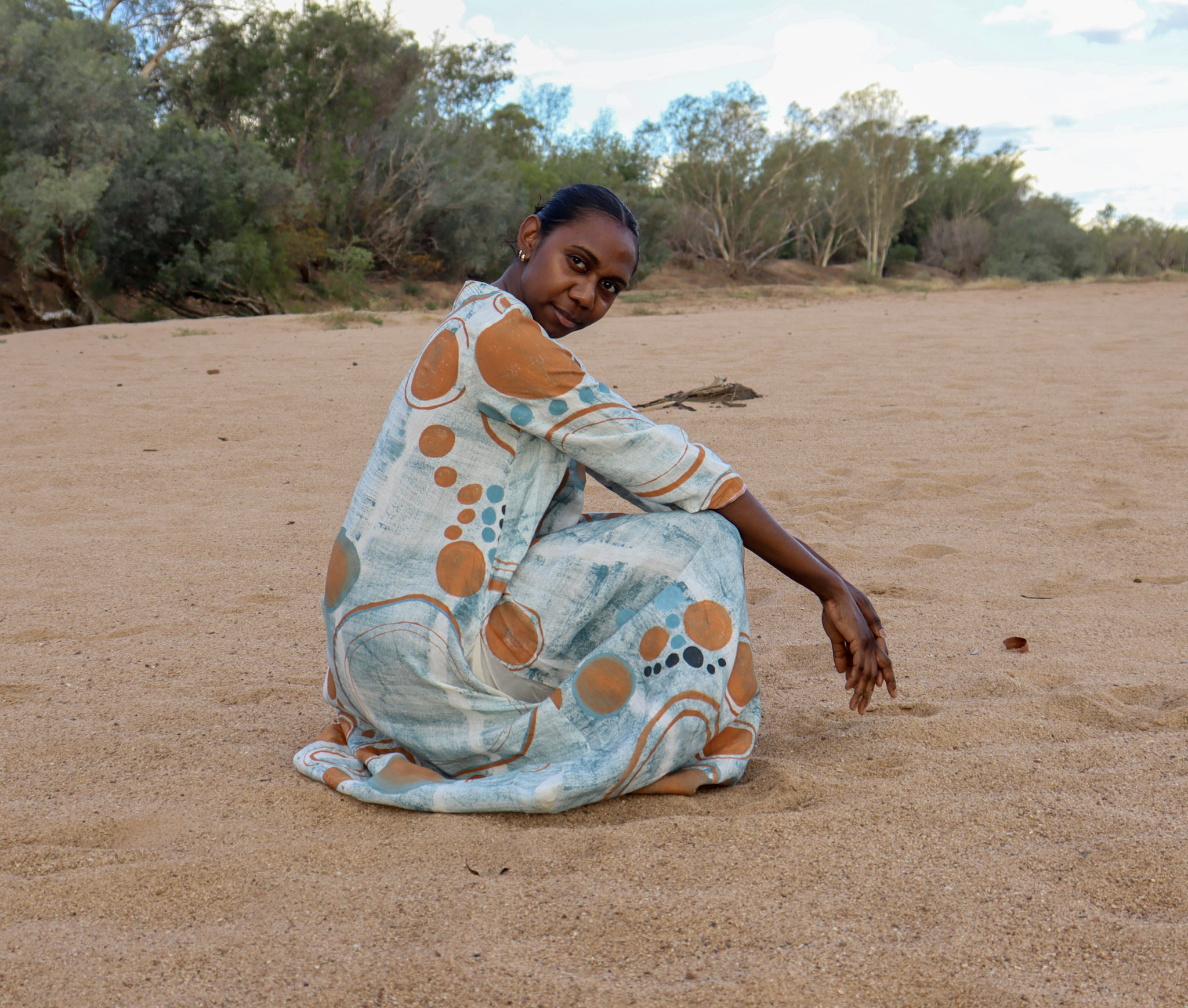
Among them was ten-year-old Jeneaqua, one of the youngest participants, who said she simply loved being with her friends and doing fashion by the river.
"I love fashion and I love being here with friends and family," she said.
"I like this modelling thing for girls, you can do hair and make-up and stuff, you get to go to old bridge and do fashion."