



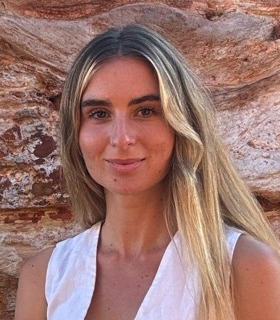

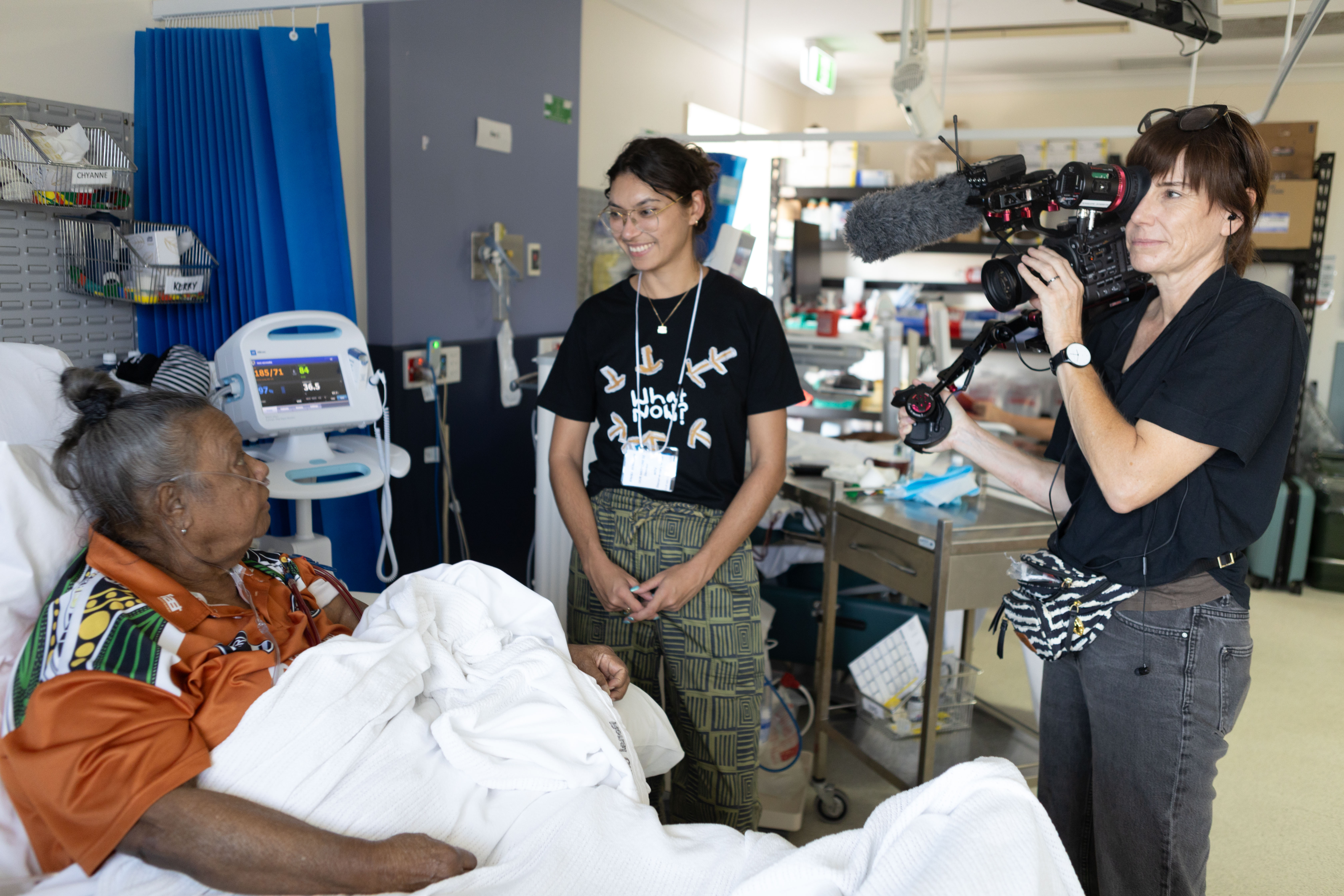
An Aboriginal Liaison Officer walks the halls of Armadale Health Service just outside Boorloo/Perth in season two of NITV's Our Medicine, her infectious laugh carrying beyond the rooms she visits.
The proud Noongar, Ballardong and Gnaala Karla woman, Marra Thorne speaks to the importance of her role for Aboriginal patients navigating the hospital system.
"As mob coming into these spaces, we feel like everything's against us, and we need to feel safe," Ms Thorne said.
Building on its first season, Our Medicine returns with an expanded second series, offering behind-the-scenes access to First Nations practitioners across hospitals, ambulance services and community-led healing centres across Australia.
The series centres culturally informed care and the way it is reshaping patient outcomes, placing Indigenous knowledge alongside Western medicine, directed by Noongar filmmaker Karla Hart and co-directed by Yawuru, Bardi and Kija filmmaker Kimba Benjamin.
Ms Thorne's emphasis on the need for First Nations staff is echoed throughout the season.
At Cairns Hospital, anaesthetic registrar and Pakana, Luna woman Dr Montanna Chugg meets her patient at eye level — a First Nations woman curled in pain, her body burdened by infections following a kidney transplant.
Dr Chugg, known as Monty, wears an Aboriginal flag on her name tag so patients know "I'm mob and I'm safe".
"When mob know I'm Indigenous, they know there are strengths within me that have been handed down — things you can't learn," she said.
Capturing this relationship between patients and practitioners navigating the Western health system was central to co-director Kimba Benjamin.
"If we can showcase how important it is to have our mob in these areas of health, that's key," Ms Benjamin told the National Indigenous Times.
Ms Benjamin, whose other work includes SBS's Warm Props, said the series also helps contextualise health disparities between Aboriginal and non-Aboriginal Australians.
"We have such outrageous health disparities, and we are really trying to show people how that is a residual impact of colonialism," she said.
Aboriginal and Torres Strait Islander Australians face an average life expectancy gap of about 8.6 years, driven by chronic disease, socioeconomic disadvantage and limited access to culturally safe healthcare, according to the Australian Institute of Health and Welfare.
Though it confronts poor health outcomes, Our Medicine season two also highlights how remote First Nations communities are taking their health into their own hands.
The series has sparked pride among viewers, particularly in remote communities often underrepresented in mainstream media, including Akeyulerre Healing Centre, 300 kilometres from Alice Springs, and Broome's Aboriginal Medical Service (BRAMS).
"People are drawn to seeing their communities on screen — recognising familiar faces and work and feeling both curious and affirmed in what they do," Ms Benjamin said.
Our Medicine season two is now streaming on NITV and SBS On Demand, with episodes also airing weekly on SBS.