






Ngurrara cultural leaders, performers and artists from Western Australia have presented the monumental Ngurrara Canvas II during the opening weekend of the 25th Biennale of Sydney, in what is expected to be the painting's final public showing away from Country.
A delegation of Ngurrara artists and cultural representatives travelled from the Great Sandy Desert in Western Australia to the Art Gallery of New South Wales on Sunday, performing rainmaking ceremonies before the Canvas as part of the Biennale program.
The ceremony recounts the journey of ancestral men, Wayampajarti and Kurtal, who travelled across the desert before transforming into Kalpurtu - powerful spirit snakes associated with rain and water.
New headdresses were also made for the special occasion.
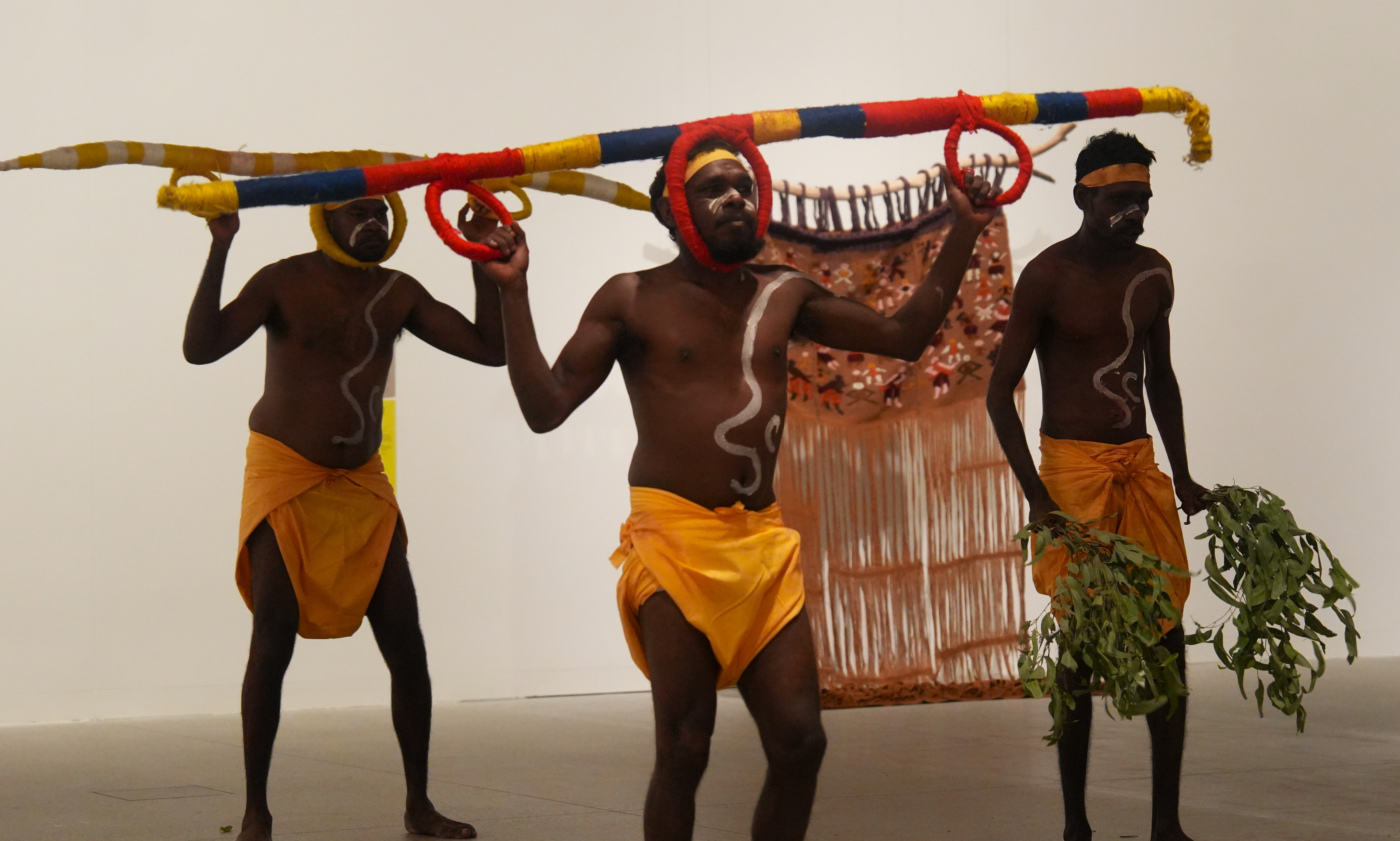
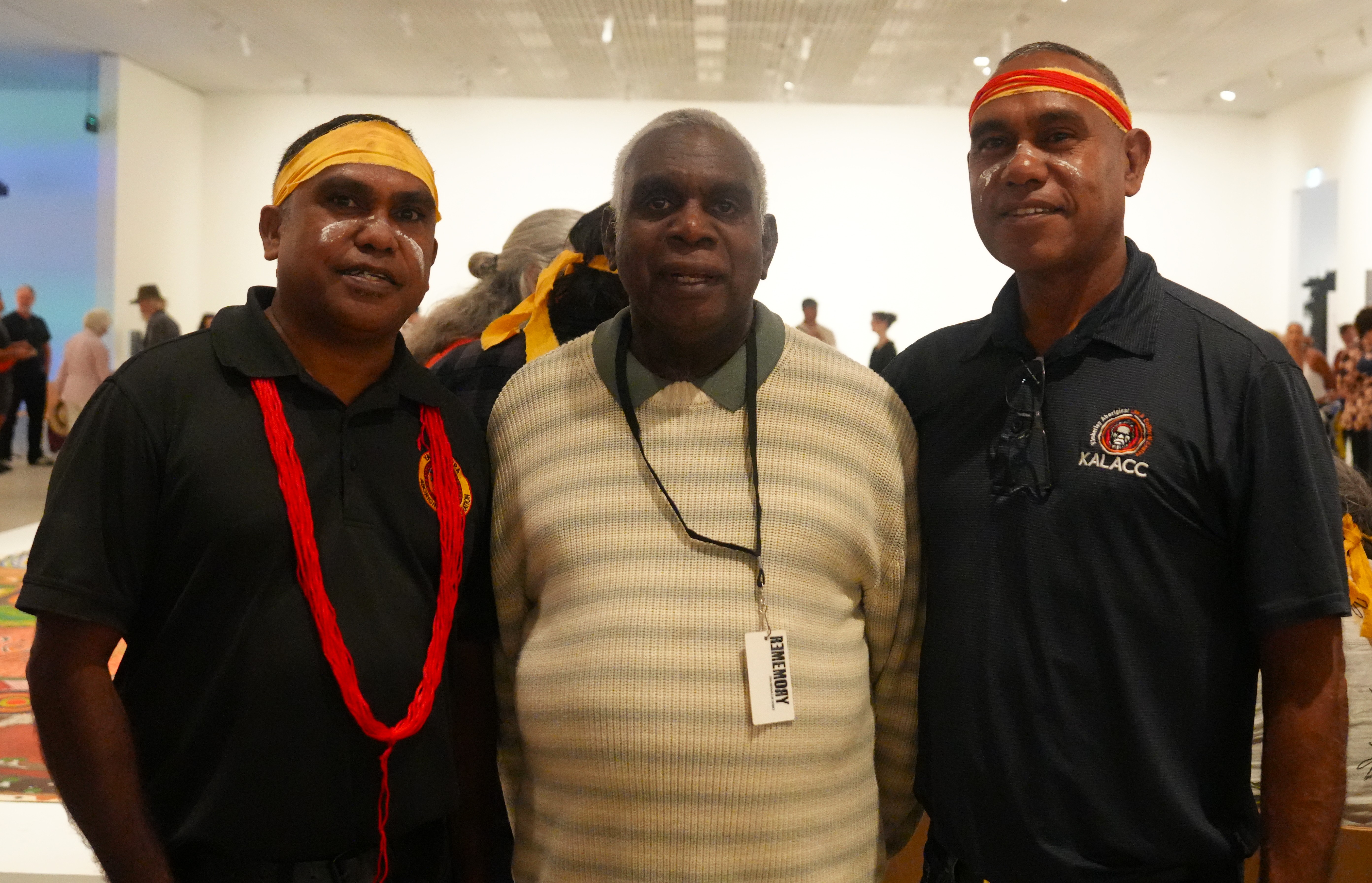
Murungkurr Terry Murray, a proud Walmajarri man, artist and coordinator of the Ngurrara Canvas Management Group, said presenting the work at the Biennale was an important moment for the Ngurrara community.
"It was really emotional and really stands out," Mr Murray told National Indigenous Times.
"I think everybody's honoured, and everybody's really excited because we're bringing in the next generation from the 43 artists," he continued.
"Everyone is connected through this big, amazing work and telling our stories to the wider world - that when we do business, we make rain and we dance and we connect with the land itself."
The Ngurrara Canvas II as a "living map"
Measuring ten metres by eight metres, the Ngurrara Canvas II was created in 1997 by 43 Ngurrara artists from four language groups - the Walmajarri, the Wangkajunga, the Mangala and the Juwaliny.
"The Canvas is a significant piece of painting of the Great Sandy Desert...It's a living map for the Ngurrara people," Mr Murray said.
The Canvas took over three weeks to complete, Mr Murray told National Indigenous Times, with artists travelling to Pirnini, Western Australia, to contribute to the painting.
It depicts a colourful network of Jila (permanent waters), songlines and dreaming tracks that connect the Ngurrara people across the Great Sandy Desert.
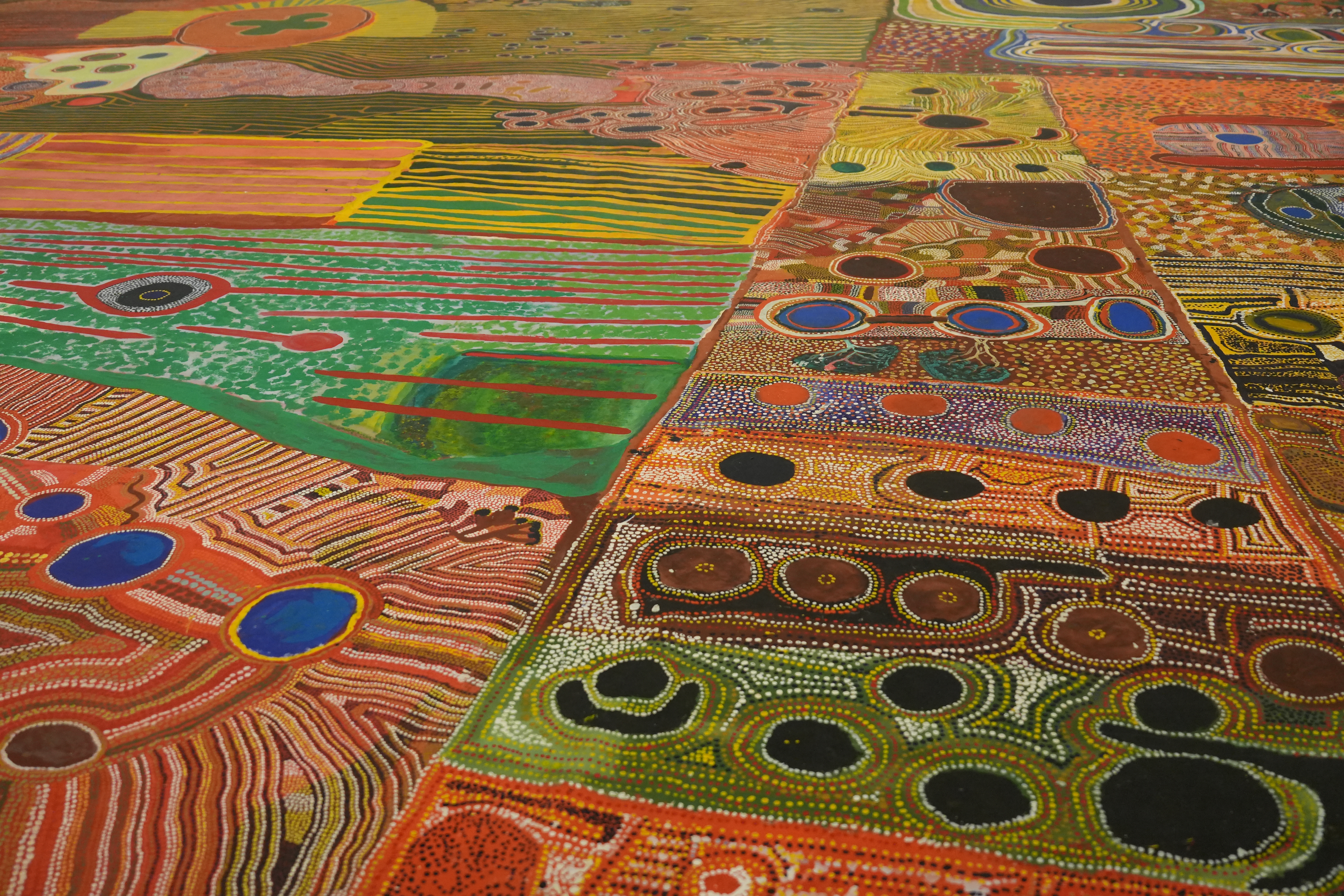
"They hold the song lines from the desert and from the Jila, which is the permanent water, and water is pretty precious in the desert," Mr Murray said.
"It's [also] about how people were connected to the land itself...and it's about all the family members coming together and the next generation."
At the time of creation, Mr Murray was only 19 - the youngest painter of the second Canvas alongside his Elders.
"Most of the artists have passed, and I think it's just five of us left, still remaining, and I'm the youngest...I was so lucky that I was the youngest artist," he said.
A Canvas rescued and preserved
The Ngurrara Canvas II has also endured challenges beyond the desert.
Following severe flooding in the Fitzroy region, the massive canvas was rescued from potential damage and safely housed at the Kimberley Land Council (KLC) office, ensuring its preservation for future generations.
"The Ngurrara canvas is an amazing piece of history," said KLC Chair, Anthony Watson.
"The Kimberley Land Council has supported keeping this artwork safe over many years, helping rescue it from the big floods, because it is a national treasure.
"Congratulations to all the Traditional Owners on this outstanding achievement. I hope more PBCs can map and share stories of Country this way."
The fight for Native Title
After its completion, Ngurrara Canvas II was presented to the National Native Title Tribunal in a landmark case demonstrating the Ngurrara people's connection to the Great Sandy Desert in 1997.
"When the idea came about, we were going through a process for determining Native Title, and for mob, walking off the desert, we were really low on literacy and English," Peter Murray, a proud Walmajarri man, Mr Murray's brother and Kimberley Aboriginal Law and Culture Centre CEO, said.
"So my ancestors decided to draw a painting, and this painting was created to fight for Native Title in the Great Sandy Desert. And each and every one of the artists told their story, by the painting."
The Ngurrara people's connection to their lands was later recognised through Native Title determinations in 2007 and 2012.
"It was evident from the material provided to the State Government in support of their claim that the Ngurrara claimants had maintained their culture and many of their traditions are still practised today," a 2007 statement by the Western Australian Government read.
The Canvas would then become an everlasting reminder of the successful reclamation of Country for the Ngurrara peoples. For Peter Murray, the Canvas is also a testament to culture, to the empowerment of his community.
"It tells a million stories," he said. "So we're working with the Ngurrara Canvas to strengthen culture, and from that, we empower them so they can tell their story by looking at that Canvas."