





Historic art works of more than 40 cultural authorities, artists, academics, researchers and other experts will be exhibited publicly for the first time in a free exhibition.
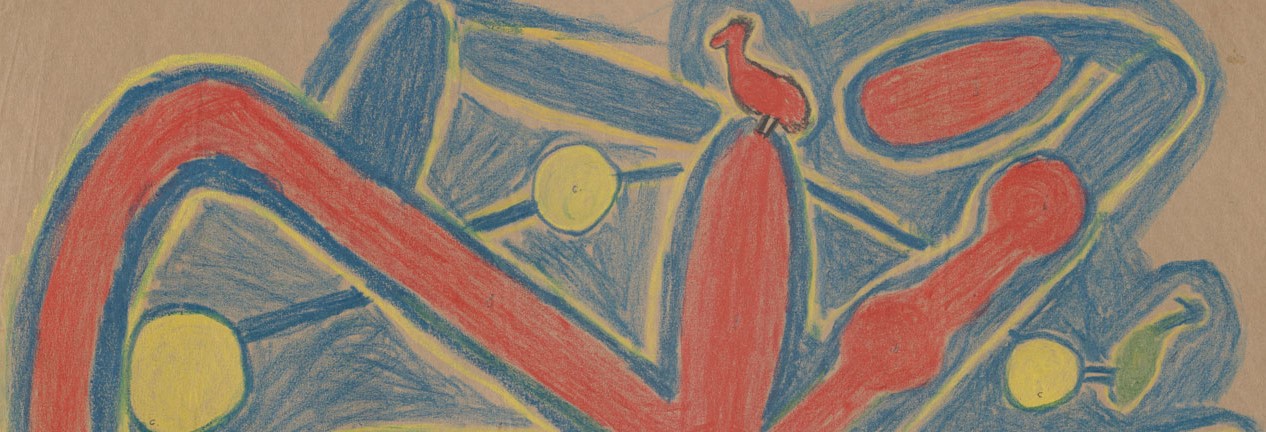
The roots of the Birrundudu Drawings collection began 80 years ago, when 16 Aboriginal men working at Birrundudu Station were commissioned to create an extraordinary set of 810 drawings.
Birrundudu Station sits 695km south-west of Katherine on the Western Australia-Northern Territory border and commissioned artists came from a diverse spread of cultural and language groups across both states.
Crayon and paper drawings captured cultural heritage, ancestral creation stories, knowledge of Country and regional ceremonies.
Now, after four years in the making, more than 100 of the drawings will be exhibited publicly for the first time in the collection Birrundudu Drawings, at the University of WA's Lawrence Wilson Art Gallery.
Commissioned by anthropologists Ronald and Catherine Berndt, the works were completed during an intensive three-month period and now regarded as a precursor to the renowned Western Desert art movement, which originated at Papunya in 1971.
Descendants of the artists and their affiliated communities in Balgo, Billiluna, Halls Creek, Kalkarindji (Wave Hill), Lajamanu, Yuendumu and Mparntwe (Alice Springs) were engaged during the four-year development process, with some families seeing the works of their descendants for the very first time, such as Paddy Padoon Jangala's grandson, Robert McKay.
"We didn't go looking for them," Mr McKay said.
"It's like they came looking for us."
Running from February 14 to April 4, 2026 at Lawrence Wilson Art Gallery, Birrundudu Drawings will also mark the 50th anniversary of the Berndt Museum, now an Indigenous-led cultural institution within UWA's School of Indigenous Studies.
Museum co-director Dr Jessyca Hutchens, a descendant of the Palyku people, said the collection of almost 1000 drawings was changing perceptions of Indigenous art.
"The re-engagement with these drawings has been actively shaping how we think about significant collections of Indigenous peoples' cultural heritage, how we should work with them and where we should be going," she said.
"The lessons we can draw from this vast archive, supported by other senior knowledge holders and their families and communities, is of profound importance."
Fellow museum co-director and Yamatji man Dr Stephen Gilchrist said the works were even more remarkable for being created at a time when so much Indigenous art was rapidly and deliberately being dispersed and destroyed.
"Now, their descendants and communities can bring story, song, place and ceremony back to life," he said.
The exhibition officially opens on February 13 in the university's Sunken Gardens, with a special performance, while a February 14 event would include talks with descendants, cultural authorities, artists, curators and researchers.
Artists featured in the exhibition include Bullwaddy Warlnu, Kampiny (Quartpot) Jakamarra, Kalangka (Jackie) Janama (Japanangka), Kulminy (Tommy) Jakamarra, Lariyari (Mick) Japangarti, Lefthand (Jampu) Jungarrayi, Muluntu (Billy) Julama, Mungalyurru Jampijinpa, Nipper Wanapiti Japaljarri, Paddy Padoon Jangala, Porgi Ratnya Jungurrayi, Ralnga (Old Charlie) Janjalngana Jampijinpa, Splinter Dardayi Yani Jangala, Wattie Upar Jampijinpa, Waranjiwarnu (Paddy) Japaljarri, Yariyari (Arthur) Jangari, Muluntu (Billy) Julama, Jimmy Tchooga.
More information about the exhibition is available online.