






A Renaissance-inspired dreamscape, handwoven dillybags made from British Museum maps, and a digital recording of Tiwi song and dance are among the works recognised in Australia's leading First Nations art awards.
Marri Ngarr artist Dr Ryan Presley has won the $100,000 Telstra Art Award, the major prize at the 2026 Telstra National Aboriginal and Torres Strait Islander Art Awards, for his oil painting Our lifestyle of tranquillity undisturbed.
Now in its 43rd year, Telstra NATSIAA unites established and emerging Aboriginal and Torres Strait Islander artists from all parts of Australia.
This year's winners span oil painting, sculpture, bark and hollow-log painting, works on paper and multimedia, reflecting the many ways culture and history are carried forward through contemporary art.
Mr Presley, born in Mparntwe/Alice Springs and based on Yugambeh Country, painted a reclining figure beside a dog and a rifle.
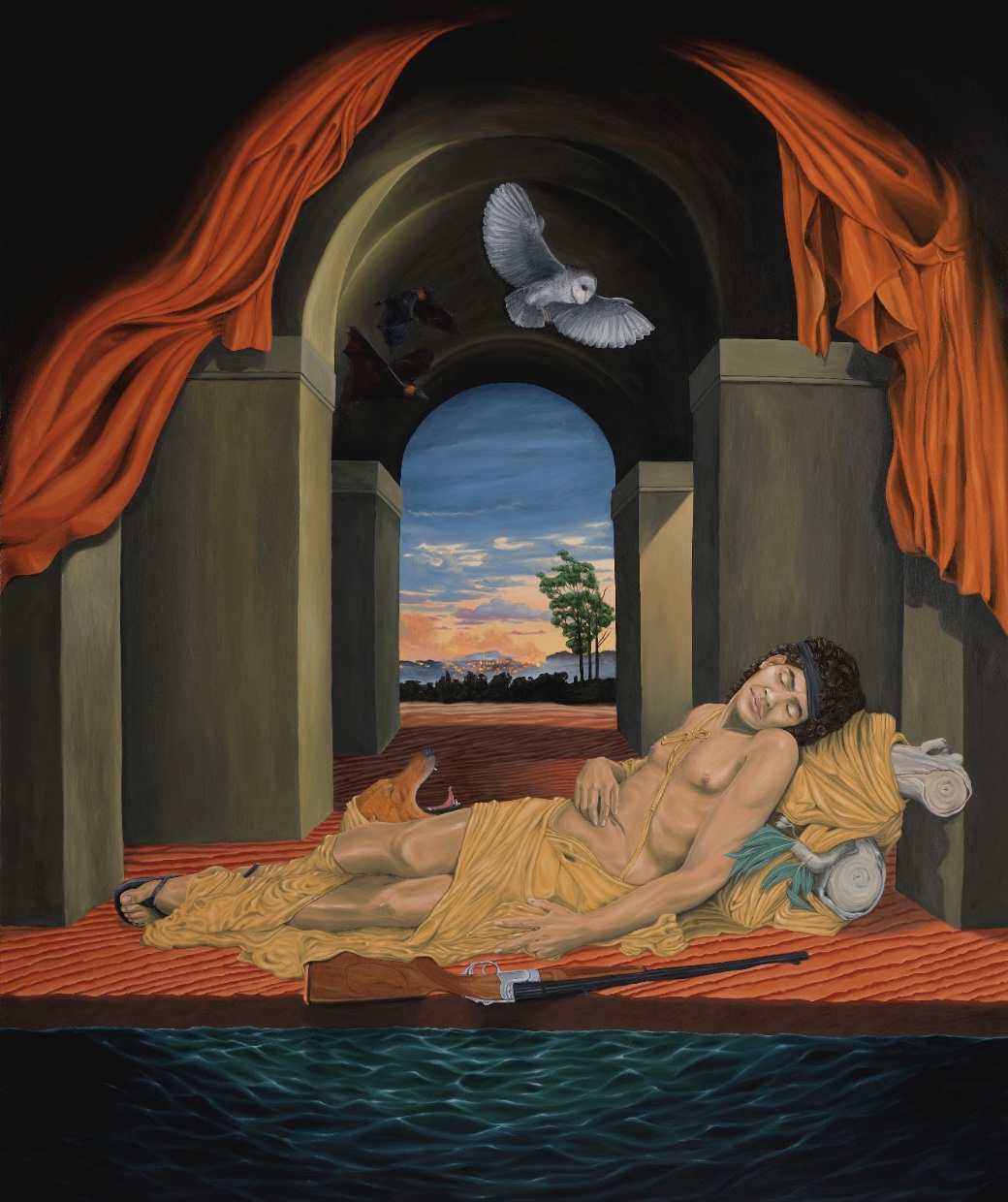
Dark water glints near the figure while a large bushfire burns in the distance, creating a scene that appears peaceful, though a tension can be felt in the undulating ripples.
Mr Presley said the work drew on Renaissance painting while reflecting current political and social tensions.
"Our lifestyle of tranquillity undisturbed appears as a dreamscape that mediates the Orwellian slogan: 'Who controls the past controls the future; who controls the present controls the past,'" he said.
Judges said the painting brought together cultural and art-historical references while prompting contemplation of past, present and future.
MAGNT director Adam Worrall praised the work's "technical precision".
"The artworks shared through Telstra NATSIAA showcase the breadth and diversity of contemporary Aboriginal and Torres Strait Islander art," he said.
Western Aranda artist Vanessa Inkamala won the $15,000 Telstra General Painting Award for Arrkurla Nukala / Lyaarta Ntema, painted on recycled road signs.
The work reflects how Inkamala's relationship with Tjoritja, the West MacDonnell Ranges, has changed over her lifetime.
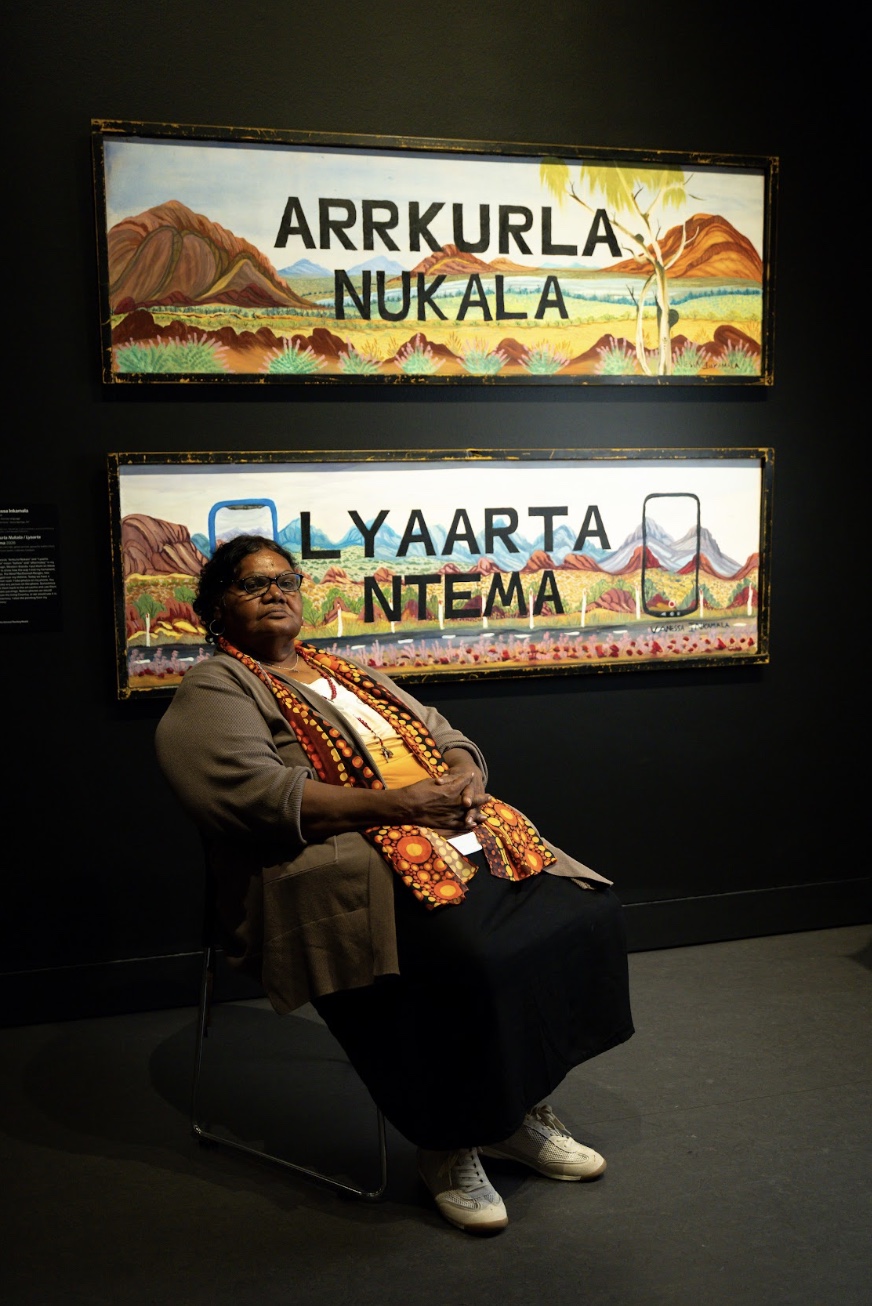
Ms Inkamala contrasts memories of travelling through Country before sealed roads and mobile phones with how technology now contributes to her practice.
"Today we have a bitumen road. I take photos on my phone," she said.
"Before phones we would just see the living Country, or we would see it in our memory."
Judges said her work honoured the creative language of her forebears while exploring technology's role in art.
Wulu Marawili's Garraŋali — Sanctuary was highly commended.
Barayuwa Munuŋgurr was awarded The Telstra Bark Painting Award for his work The hidden reef at Yarrinya, created with earth pigments on stringybark.
The painting carries a Munyuku clan story about ancestors who killed their brother, the whale Mirinyuŋu.
Consumed by greed for the whale's rich fat, they temporarily lost sight of their kinship obligations. After recognising what they had done, they threw their stone knives into the ocean, where they became the dangerous hidden reef known as Garapana.
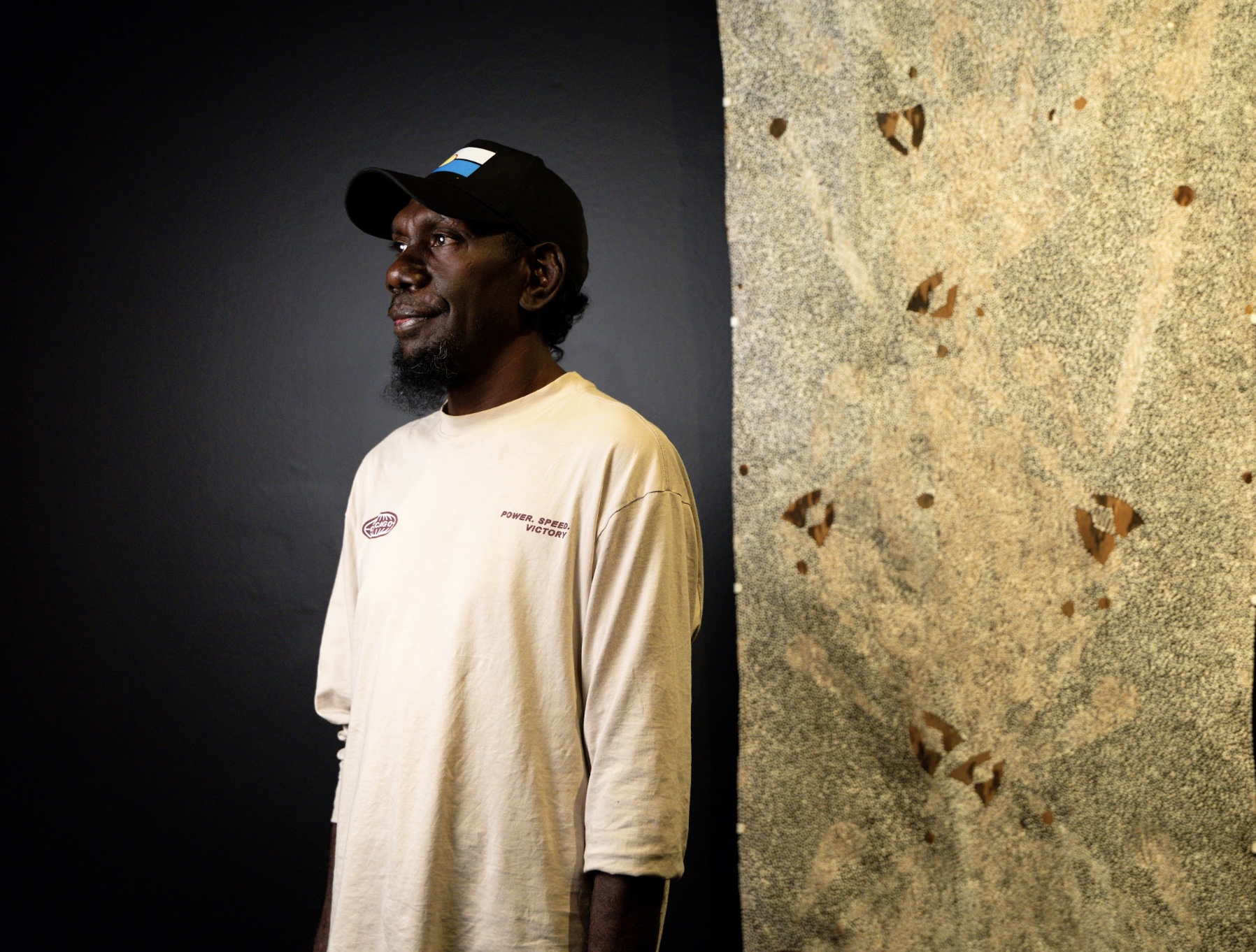
"Disguised within this design are the knives, limbs and bones of the whale made sacred with the essence of Mirinyuŋu," Mr Munuŋgurr said.
Judges praised the artist's choice to conceal and reveal narrative elements through painted designs and bark removal.
Maps gathered from the British Museum were transformed into six handwoven dillybags in Jenna Mayilema Lee's Taking back taken.
The Larrakia, KarraJarri and Wardaman artist won the $15,000 Telstra Work on Paper Award for the 4.5-metre installation, combining maps, book-binding thread, glue and wire.
Ms Lee collected the maps from the museum's Great Court and later asked friends and relatives to carry small stacks back to Australia.
.jpeg)
"This is not theft for theft's sake, but conceptual restitution, an act that asks: what does it mean to take from an institution built on taking?" Ms Lee said.
Judges described the work as quietly beautiful, addressing the effects of museums and collecting practices on communities whose belongings were removed.
Yolŋu artist Napuwarri Marawili won the Wandjuk Marika Memorial 3D Award for two carved and painted reef herons representing both bird and hunter.
The $15,000 award marks its 40th anniversary this year and commemorates Yolŋu artist and leader Wandjuk Marika OBE.
Marawili's work, Djambatj — Deadly hunter, carries the Maḏarrpa clan design associated with the saltwater of Yathikpa.
"Gany'tjurr is the Reef Heron totem of the Maḏarrpa clan," Mr Marawili said.
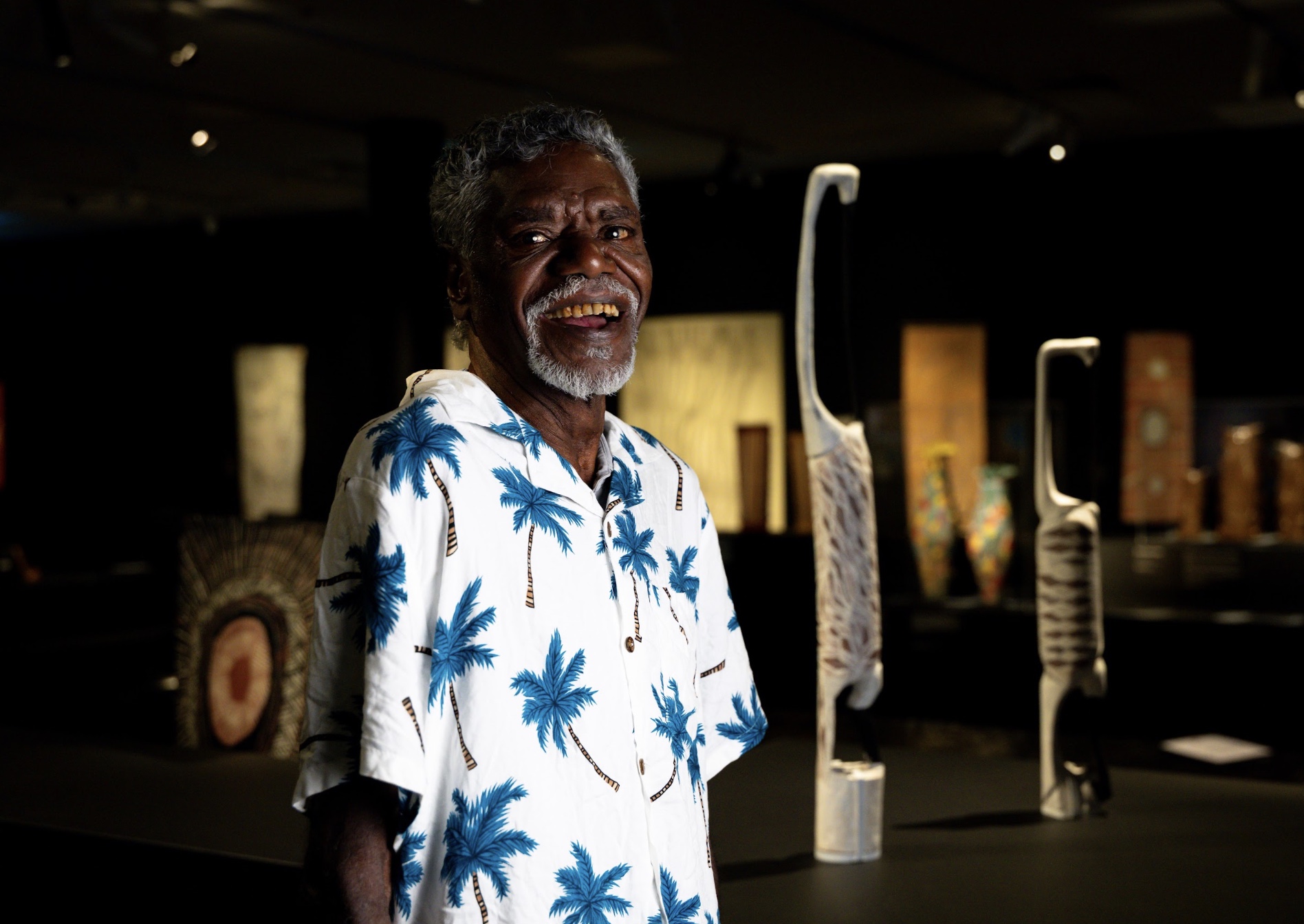
"The design shows the saltwater of Grindall Bay."
The sculpture connects Yolŋu hunting techniques and the reef heron, crouching as rippling water enters the shallows before striking.
Judges described the sculptures as transformative, combining traits of bird and Ancestor.
Guruwuy Murrinyina received the Telstra Emerging Artist Award for Prismatic arc, a towering hollow-log painted in earth pigments.
Murrinyina lives at Gäṉgan, a remote homeland inland from Blue Mud Bay in north-east Arnhem Land.
Her work carries the Galpu clan miny'tji associated with rainbows and the cyclonic power of Wititj, the Rainbow Serpent.
"The sun shining against the scales of the snake forms a prism of light like a rainbow," Ms Murrinyina said.
Telstra Emerging artist award winner Guruwuy Murrinyina with her work Prismatic arc.Image: Charlie Bliss.
Diagonal lines on the hollow pole represent trees knocked over as Wititj travels across Country, and the serpent's ribs.
Murrinyina learned by assisting her mother, acclaimed artist Malaluba Gumana, but began painting independently in 2022, after her mother's death and cultural protocols.
Judges said her detailed design showed confidence and sensitivity to the material and story.
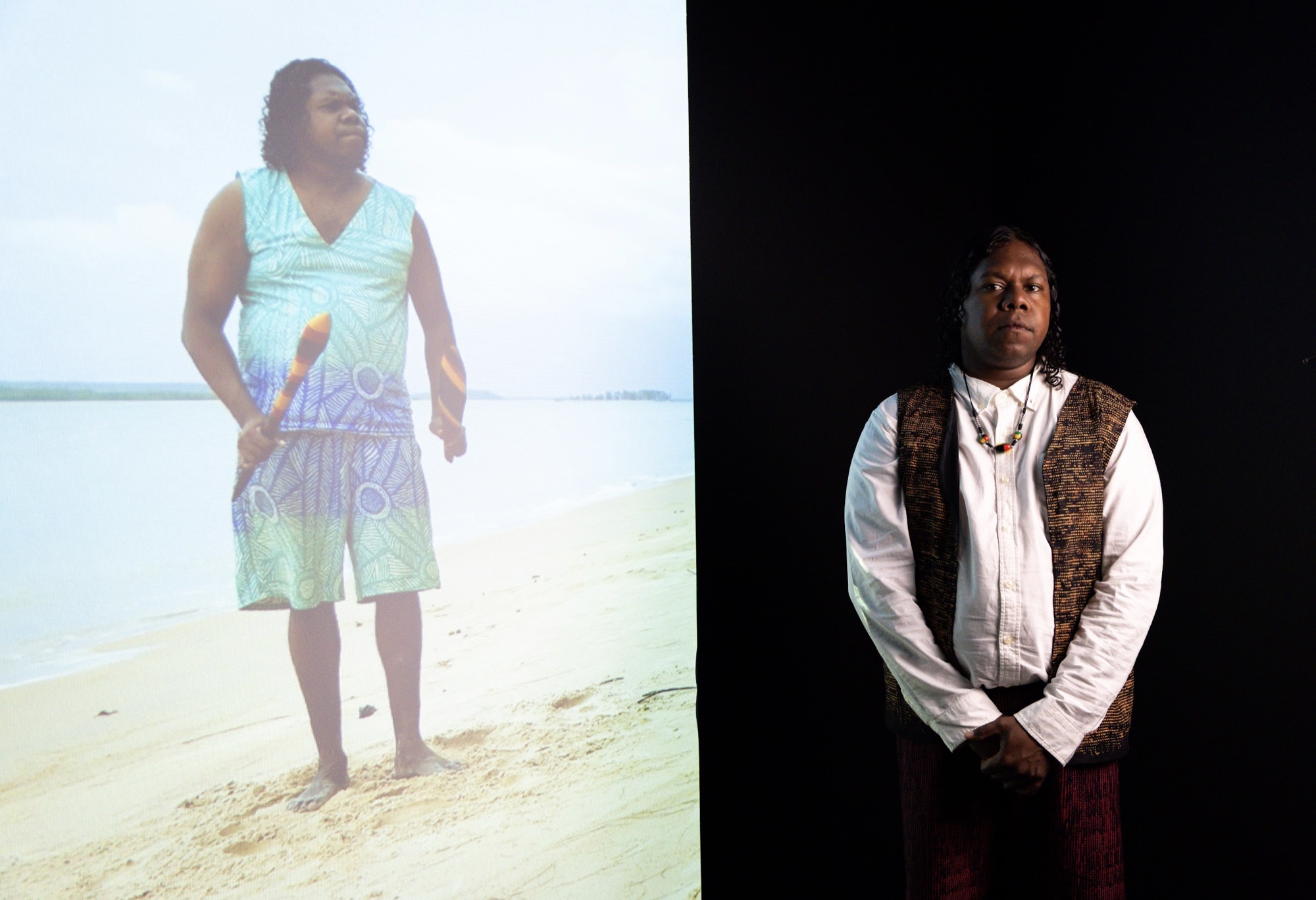
Tiwi artist and digital media practitioner Colin Heenan-Puruntatameri won the Telstra Multimedia Award for Ngirramini Ngini Amparruwu (The Story of the Widow).
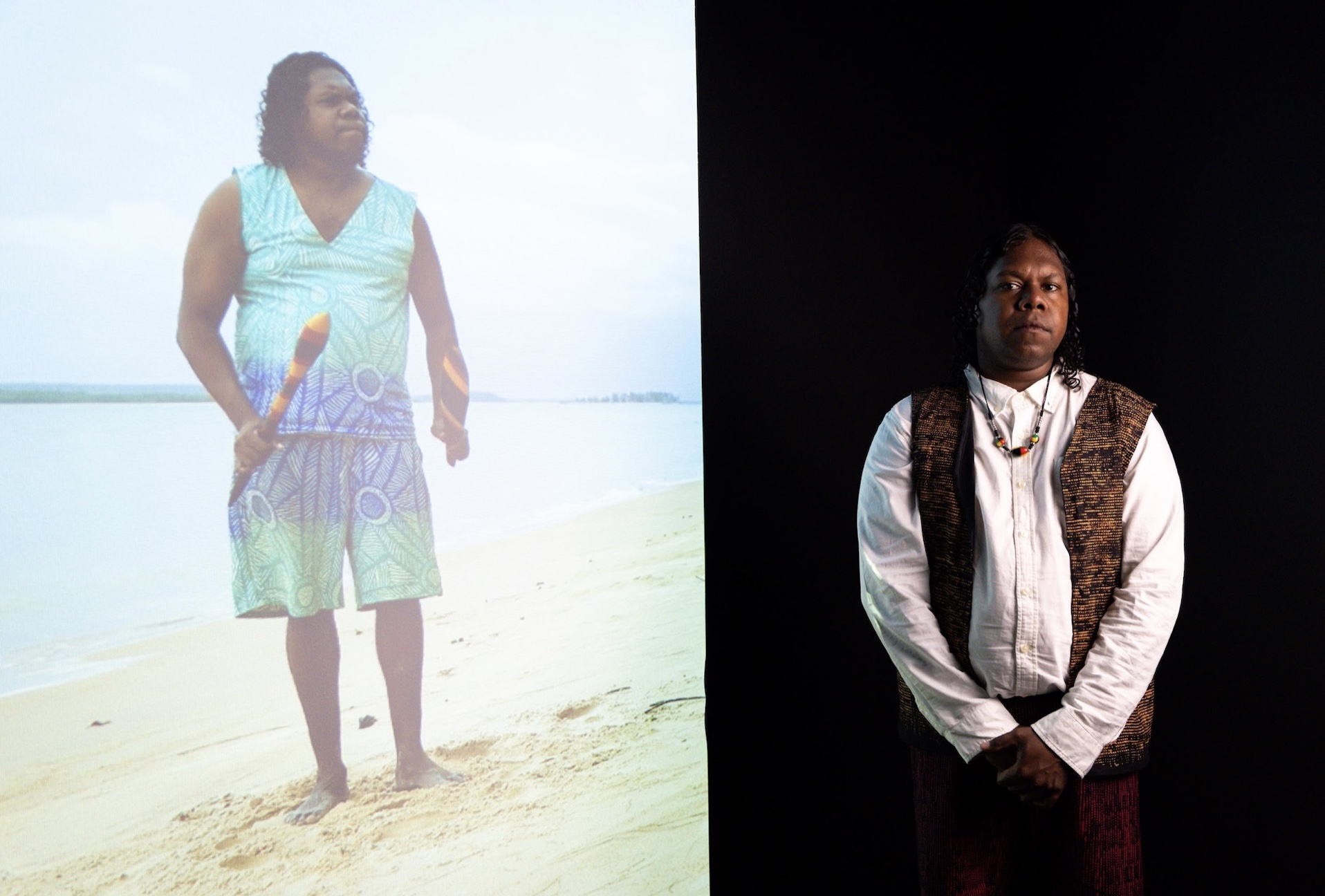
The video records the artist performing a chant created by his mother and a widow dance, accompanied by two carved ironwood fighting sticks.
"The Miyartuwi are looking at me wearing short shorts. Whose matriarch name is of Purrupuntingamo," Mr Heenan-Puruntatameri sings in the work.
Based in Milikapiti on Melville Island, Mr Heenan-Puruntatameri leads Wurrungura, the digital archive and media centre at Jilamara Arts.
His practice explores how performance, song and ceremony can be documented through contemporary technologies while remaining connected to cultural authority and collective knowledge.
Judges said community-created video could record traditional storytelling, song and dance, allowing new interpretations to emerge.
The winning works bridge tradition and innovation, connecting ancestral stories with new media and materials. The 2026 Telstra NATSIAA exhibition is on show at MAGNT Darwin until January 24, 2027.
Note: the author travelled to Darwin courtesy of Telstra.