




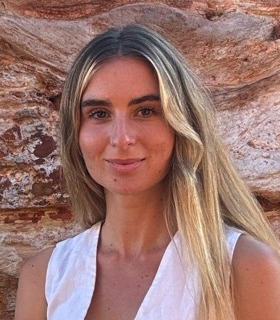

International model and proud Walmajarri, Gooniyandi, Wajarri and Yamatji woman Billie Jean Hamlet says she wishes the After the Flood Fashion Project existed when she was a girl growing up in Fitzroy Crossing.
The remote Aboriginal town is around 400km east of Broome, in WA's Kimberley region.
"Having an all-female space where girls can express themselves without judgement is so important. I would have loved something like that when I was growing up," she says.
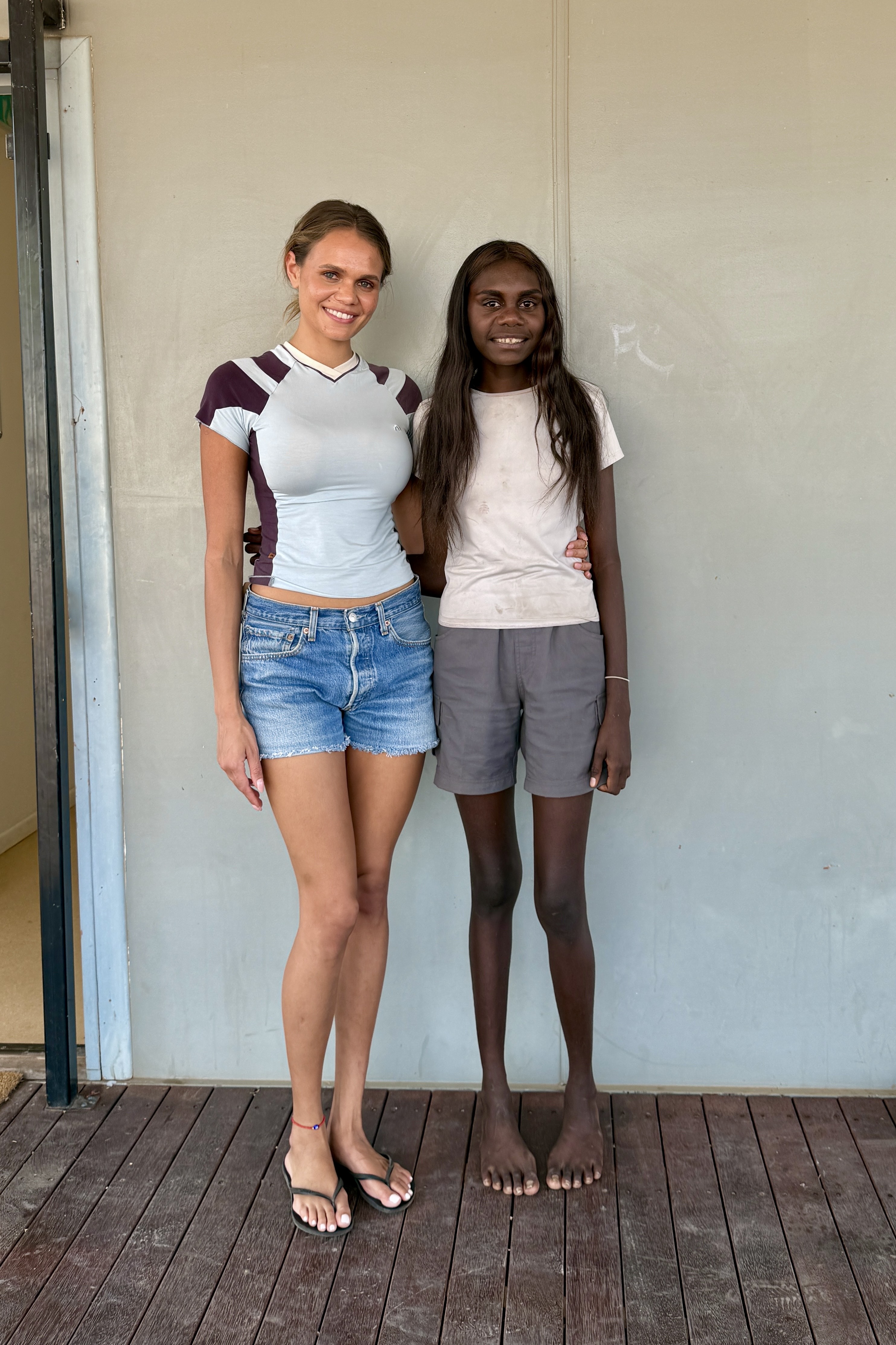
Billie returned home with Brodie George, founder of Jaliyamiya swimwear, and Camilla Sawford, founder of Litiyalla earrings, to run two days of fashion-and-wellbeing workshops for local teenage girls at The Night Space, operated by Marra Worra Worra Aboriginal Corporation.
The After the Flood program was initiated by Marra Worra Worra and jointly funded by the Australian and WA governments through the Disaster Recovery Funding Arrangements, part of flood-recovery support for the region.
In January 2023, record flooding tore through the Fitzroy, inundating communities and cutting key crossings.
While the bridge has been rebuilt, many families say the emotional fallout for young people has lingered.
Centred on building confidence, femininity, cultural safety and practical skills, the sessions drew 15 girls on day one and 18 on day two, all aged 10-17.
What looked like beauty basics was used deliberately as care and repair.
While Ms Hamlet taught skincare and makeup, every mask and brushed brow moved beyond pampering, into restoration, healing, and the building of self esteem.
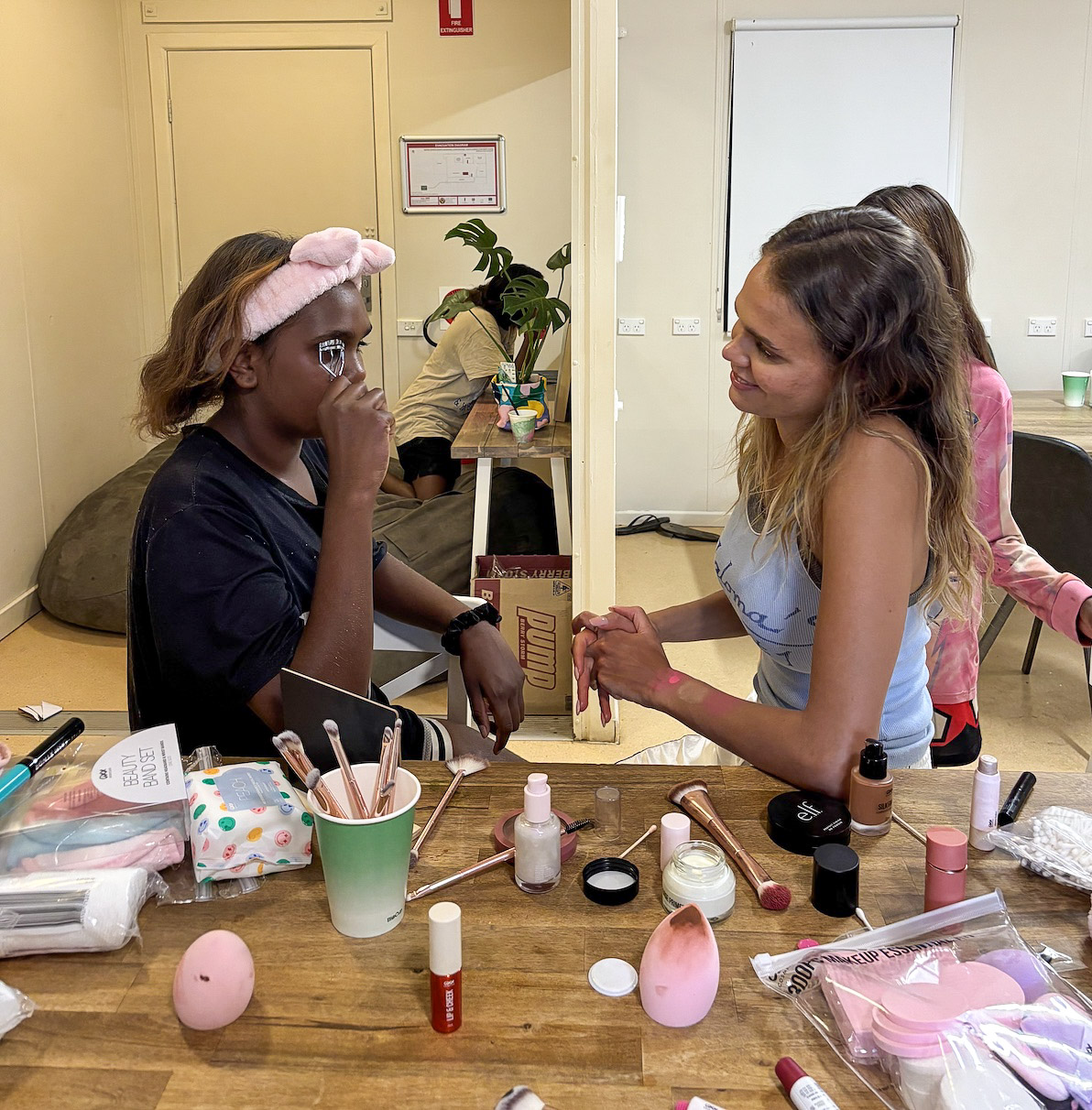
"Doing the girls' makeup, I couldn't help but look at their beautiful little faces and wonder about their stories and what they're exposed to," she said.
"I definitely saw myself in each and every one of them - and some were even my relatives."
Growing up in Fitzroy Crossing meant country - a meld of bush and desert that feels endless, centred on the deep, and at times volatile Fitzroy River.
It raised her in culture, and in "hard truths": domestic violence, substance use in the community, and tough, precarious housing.
Those realities haven't disappeared.
WA Police data shows more than a thousand family-violence-related offences were reported in the Kimberley between April and June 2025 - including about 350 serious assaults, 240 common assaults and almost 400 breaches of family-violence restraining orders.
"I don't think a lot of people realise, but growing up in an Indigenous, remote community is actually quite challenging. But there are also so many beautiful parts — like being connected to nature and culture, and being surrounded by your family."
Coming back was confronting but cathartic for Billie.
"There was an intention to help the girls feel beautiful and uplifted, but for me it was also about reconnecting with my inner child," Ms Hamlet said.
"I've come back with a sense of peace and joy and feel stronger than ever."
The desire to provide a female safe space has long driven her.
"In a town like Fitzroy there's not much for girls to do unless they're sporty. The boys have footy, fishing, hunting, but the girls didn't really have spaces to feel beautiful or express themselves."
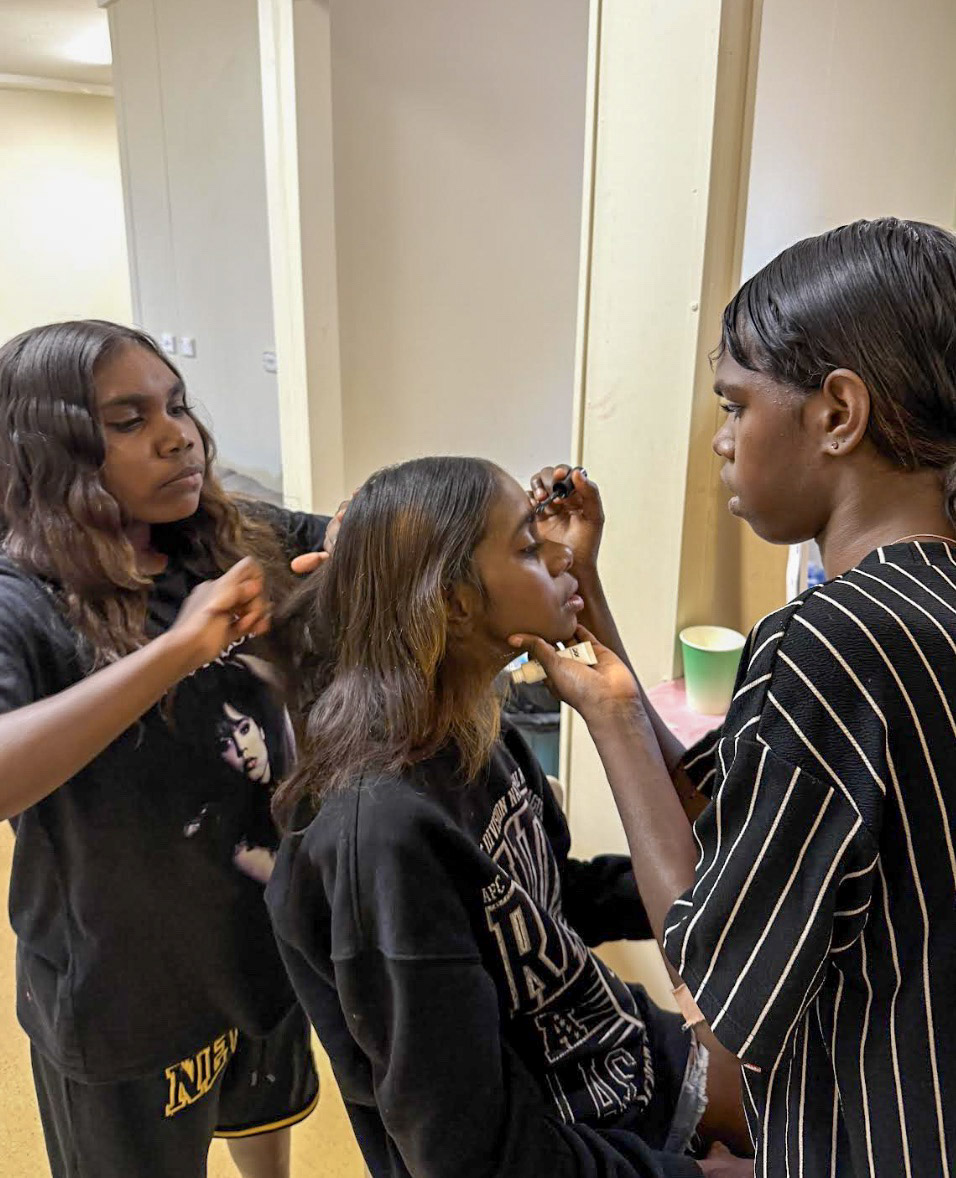
"That's why this project was so important, to show them they can do 'girly' things, feel confident and express their femininity freely."
It's a sentiment shared by proud Walmajarri, Gooniyandi woman Brodie, whose swimwear brand is rooted in female empowerment.
"I think girls in Fitzroy miss out on a lot. There are a lot of programs - particularly for boys and sport. I don't think there are many programs specifically for girls," she says.
"It's important to get people like myself who are in business - and I've got a background in beauty - to show them they can go down a few different paths. It doesn't have to be one path."
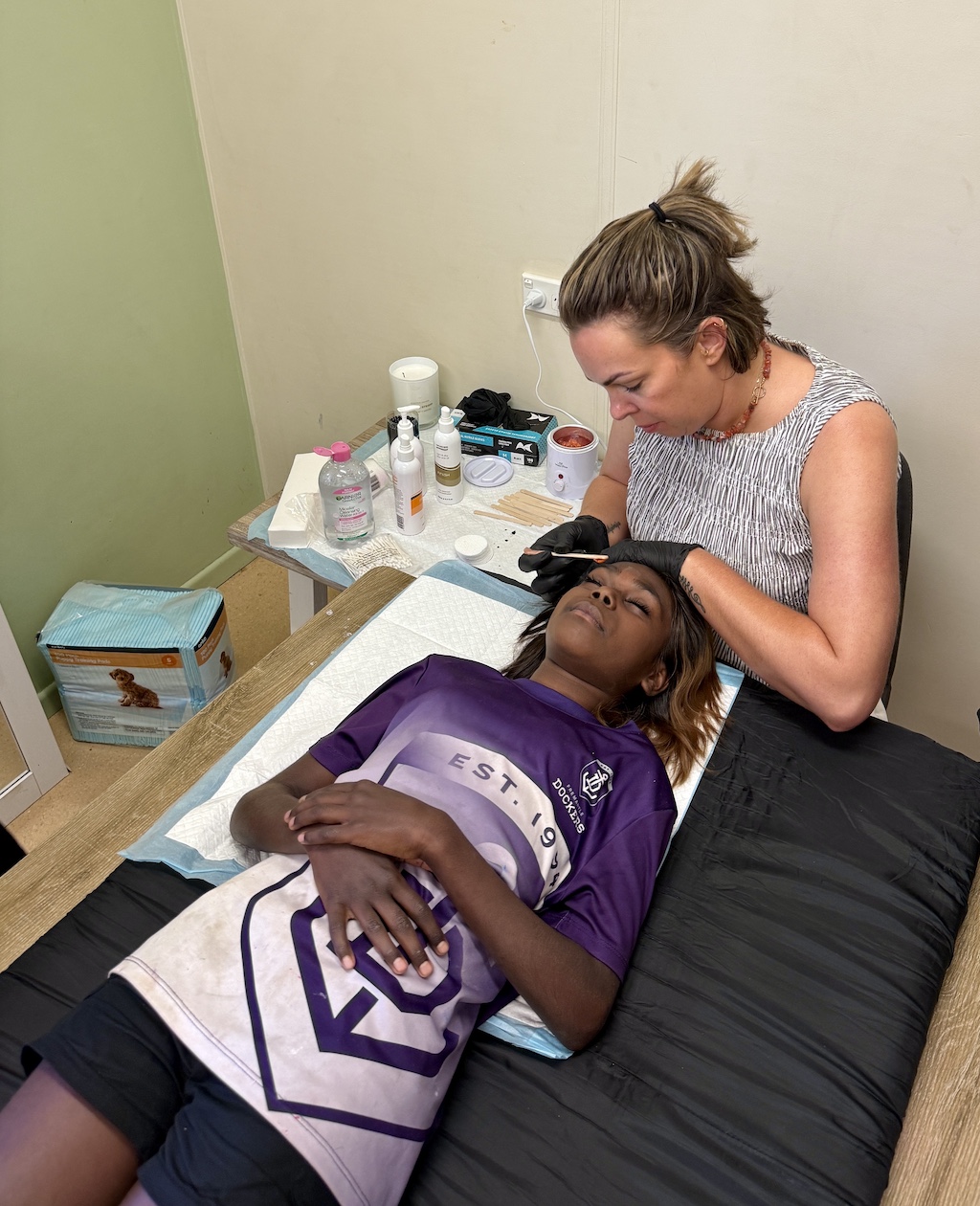
The young women soaked up the mentoring with one participant saying "I felt so inspired after hearing Brodie, Camilla and Billie's stories".
Another added: "I can be anything I want to be if I put my mind to it."
For proud Gooniyandi and Kija woman Camilla Sawford the tone in the room mattered as much as the techniques.
"I really stamped out the negative talk," Ms Sawford said.
"As Aboriginal people we like to make fun of each other — it can be a love language — but I said no: 'What do you think about her hair?' and changed the narrative to positive."
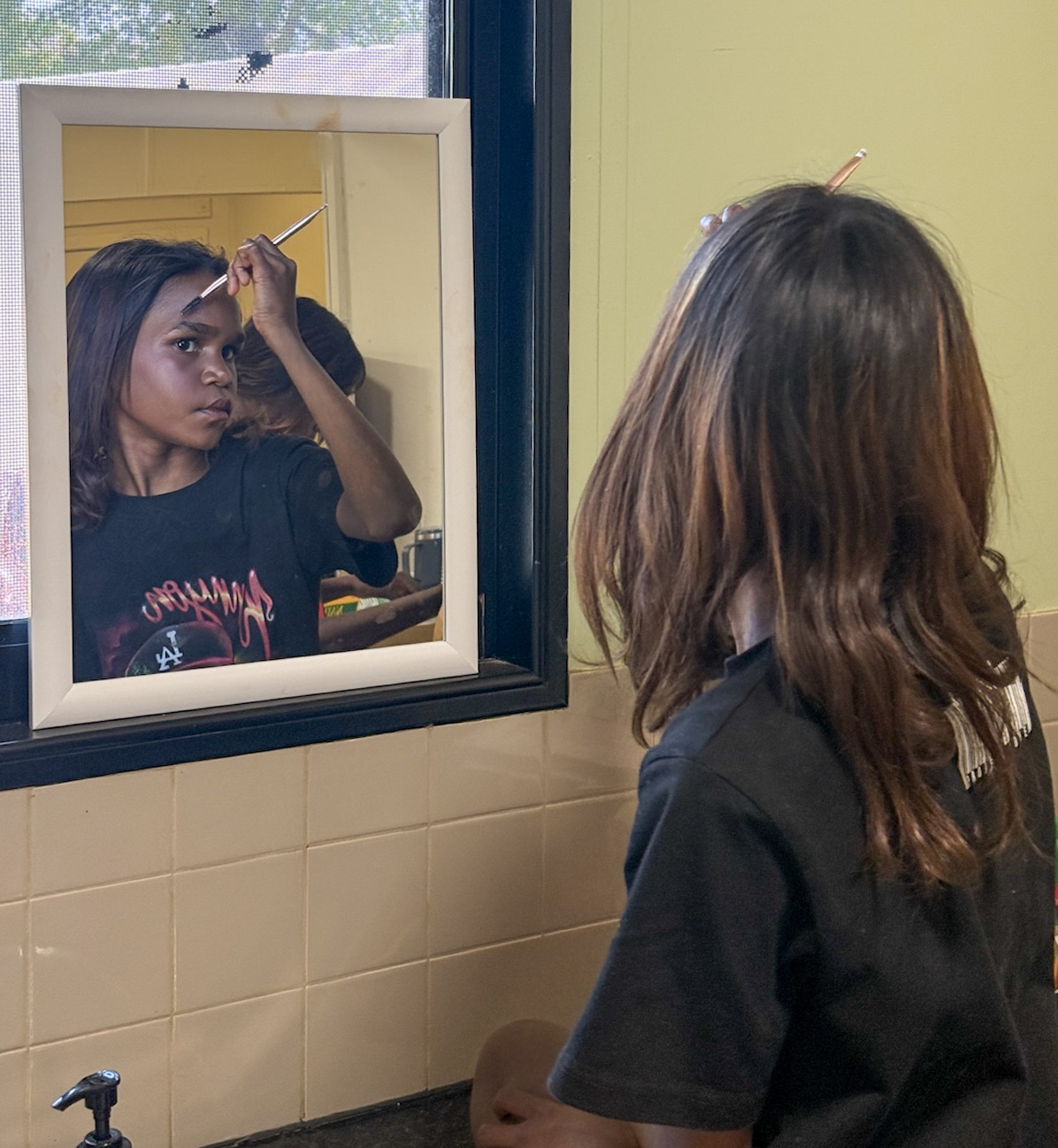
That insistence on self-respect is culturally significant, according to Ms George.
"For me - Walmajarri, Gooniyandi mob - we're very matriarchal," she said.
"We follow a matriarchal line. Women hold huge weight within our family. It's important to pass that on to the young girls - not that they have to hold that huge weight, but to understand how important they are in society and for their families."
Next month, the trio will return to Fitzroy Crossing for the After the Flood Fashion Show, where the girls' creations will shimmer under the evening light on the Old Crossing Bridge - the same bridge that once marked the height of the floods.
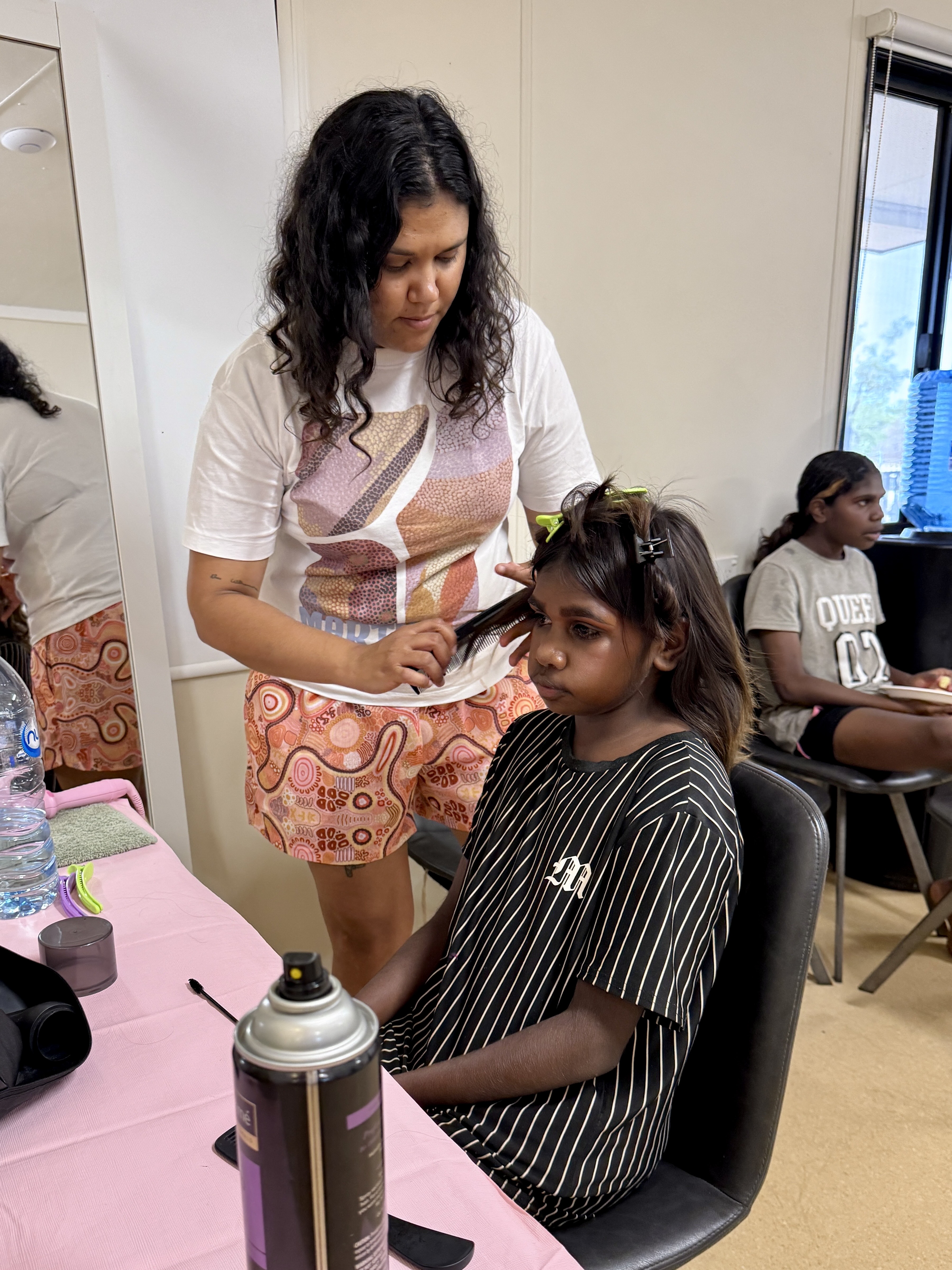
Head of Community Programs at MWWAC, Nicola Angell, said that the strong suite of youth programs currently delivered by MWW including the incredibly impactful Night Space provides a platform for the organisation to create community led and driven projects.
"This beautiful fashion project for girls and women is lifting everyone up," she said.
The event will bring together families, artists and mentors to celebrate what can rise from devastation.
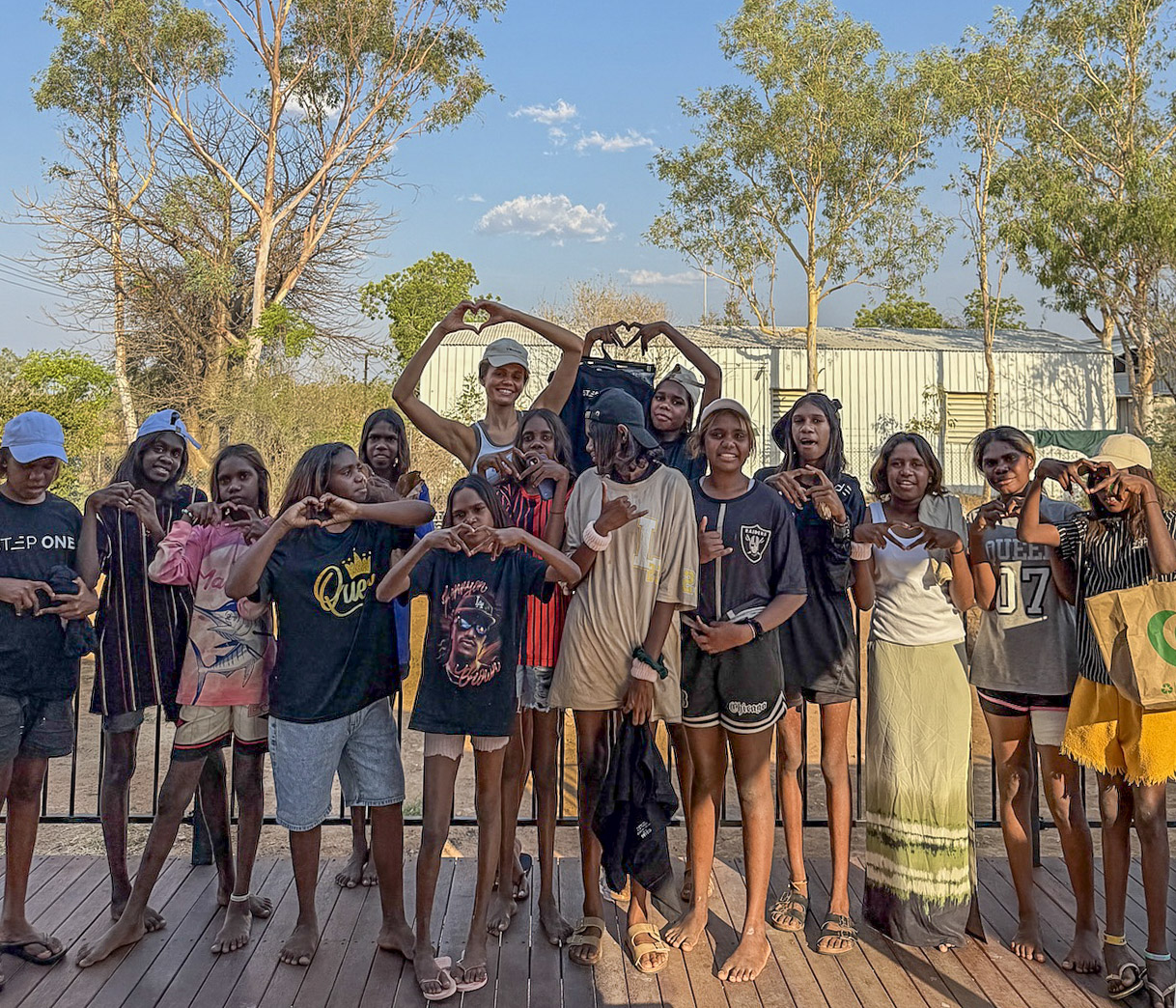
For Ms George, Ms Sawford and Ms Hamlet, it's more than a runway - it's a homecoming and a passing of the torch.
As Ms Hamlet said: "Having someone like me, Brodie and Camilla come back shows them that big dreams are possible. If I'd had that when I was young, it would've given me so much belief and hope."