





Thirty Aboriginal-owned businesses will trade at Carriageworks from 25 to 27 September for the second Australian Native Food Festival, with the weekend markets and café free to attend on registration.
Key points:
- The stalls sold out by Saturday afternoon last year. One producer drove 700km overnight for more stock and sold out again.
- Kylie Kwong with Aunty Beryl. Adam Liaw with Jennifer Wong. Bruce Pascoe with Mindy Woods. Nine demonstrations across two days.
- The Friday is closed to the public. If you buy, stock or manufacture, that is the day you want.
Anyone who came last year has one piece of advice for this one: get there early. All 22 businesses at the inaugural festival sold out of stock, most of them by the first afternoon.
"A lot of the business sold out of products in the first day, and some of them done a 700km round trip that afternoon to get more products to back up for the Sunday, and still sold out," said founder Sharon Winsor.
Organisers had planned for four to five thousand visitors across the weekend. Close to 10,000 came through, and the businesses trading took an estimated $225,000 between them over two days.
Friday is the trade day
The change for 2026 is a half day on Friday 25 September restricted to industry, government and buyers, added after operators who came last year asked for more than a market stall.
"One of the overwhelming interests and feedback was people wanting to know more about the industry," Winsor said.
It runs an industry discussion led by the First Nations Bushfood and Botanical Alliance Australia, with chairwoman Rayleen Brown fronting it, followed by a networking session built so buyers deal directly with owners rather than through an intermediary. The official opening and welcome ceremony follow that evening.
For anyone sourcing native ingredients, the pitch is bluntly commercial. Winsor built the festival because of one line she has fielded from buyers for most of 30 years.
"They all have said for years and years and years, they say to me, 'Oh, we tried to find an Aboriginal business, we couldn't find one.' So I was like, you know what, I'm going to get everyone together and they can come to us."
Aboriginal people own around 2 per cent of Australia's native food industry, and Aboriginal women less than half of that. Thirty suppliers in one room for a day is the largest concentration of them the sector gets.
What is on the floor
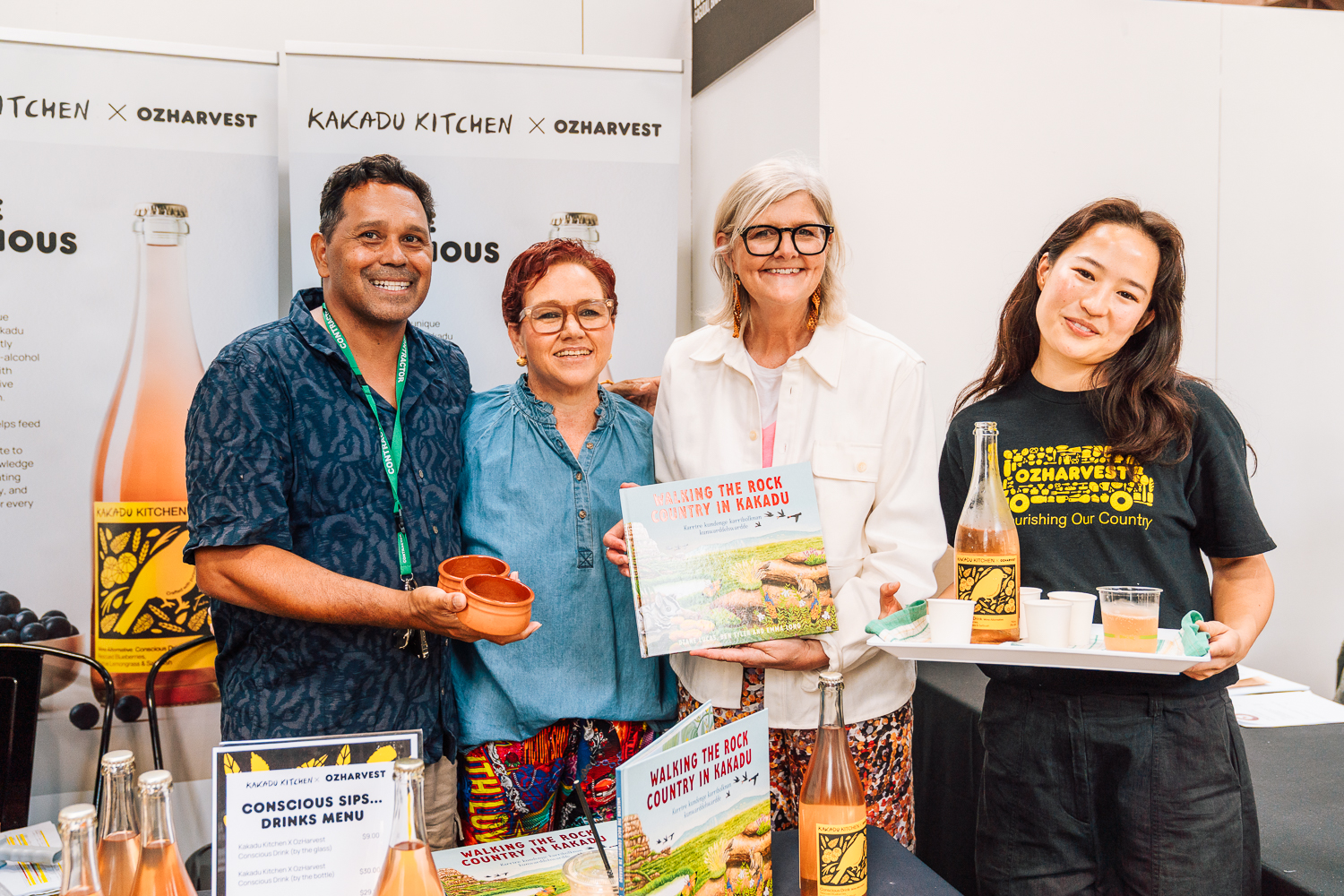
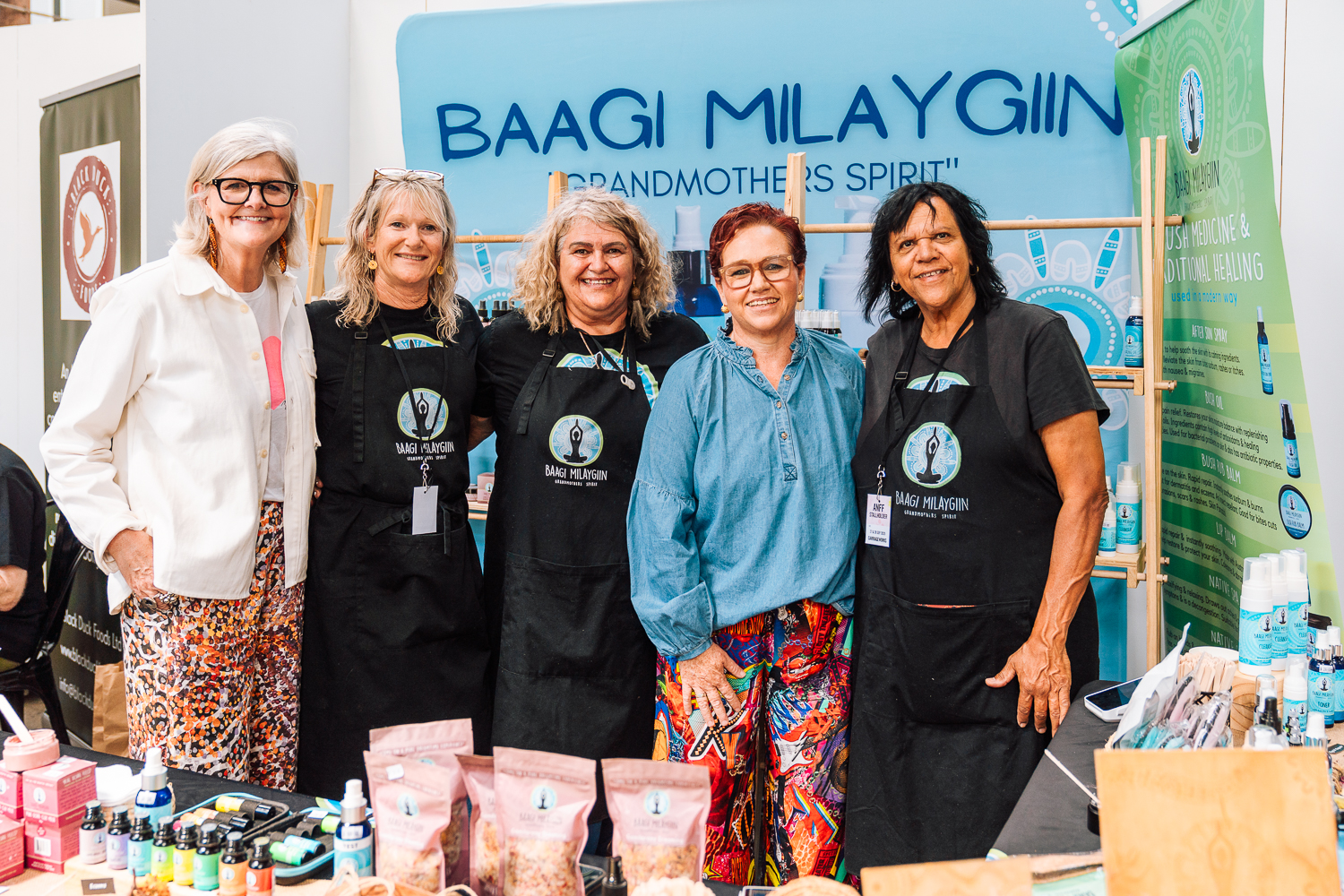
The stallholder list runs wider than most buyers expect from a native food market. Spirits and drinks come from Seven Seasons, Yaala Sparkling and Binjang Tea. Pantry and produce include Kakadu Kitchen, Kakadu Organics, Bakarindi Bush Food, Kaiyu Superfoods, Chocolate on Purpose and South Coast Seaweed. Skincare and botanicals bring Thirsty Turtl, First Nations Aromatherapy, Native Secrets and LORE Australia. IndigiGrow runs a nursery, so visitors can take a plant home and grow native food themselves.
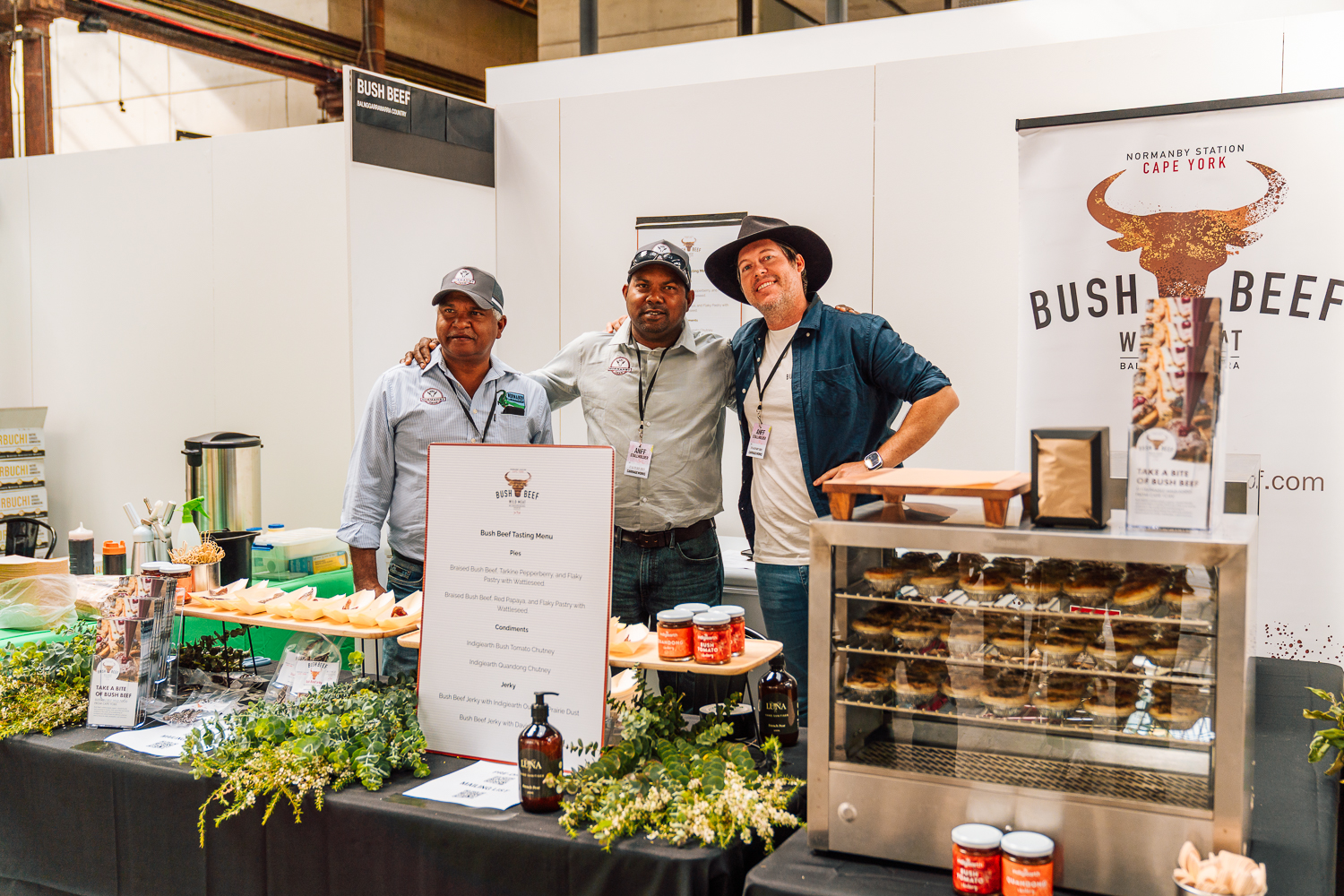
Seafood counts here too, and so does beef. Winsor recently visited Normanby Station in Cape York, where the Normanby Aboriginal Corporation and Balnggarrawarra Traditional Owners harvest the feral cattle that have been damaging sites and Country and sell the meat as Bush Beef.
"They've turned a problem into a solution by now producing wild beef products," she said, "and being able to support families and have wild beef on menus."
The demonstration program
Nine chef demonstrations run across the weekend on Track 8, each $59 plus booking fee, pairing Aboriginal cooks with chefs from other traditions.
Saturday opens with Nat Thaipun at 9.30am, then Kylie Kwong with Aunty Beryl Van-Oploo OAM at 11am, Karima Hazim with Rayleen Brown at 12.30pm, Jason Roberts with Zach Green at 2pm, and Bruce Pascoe with Mindy Woods at 3.30pm.
Sunday runs Lucy Tweed with Ben Tyler at 10.30am, Colin Fassnidge with Sharon Winsor at noon, Amber Doig with Kerrie Saunders at 1.30pm, and Adam Liaw with Jennifer Wong at 3pm.
The pairings drew questions in year one for putting non-Aboriginal chefs on stage. Winsor's answer is that the industry grows by bringing other people in.
"By pairing like Karima Hazim, a Lebanese chef, with Rayleen, to be able to share stories through food, was very powerful and bringing in different audiences," she said. She told the ABC last year the space "is here for everyone to embrace, but just to recognise and acknowledge where the knowledge is coming from".
Weaving workshops with Ngumpie Weaving run 10am and 2pm both days on Track 12 at $55 plus booking fee. Ngangkari healing treatment sessions with Pitjantjatjara healer Debbie Watson run from 9.15am to 5pm both days at $190 plus booking fee. The café trades native ingredients all weekend and costs nothing to walk into.
Why it exists
Winsor, a Ngemba Weilwan woman from north-west New South Wales, founded Indigiearth 30 years ago after a consultant's feasibility report told her bush foods did not belong in a restaurant or café and her business would never work. Last October she took the Bill Granger Trailblazer Award at the Good Food Guide Awards, which she said made her the first Aboriginal recipient.
Part of what drives the festival is what Winsor finds when she orders native ingredients elsewhere. She has called chefs out of their kitchens over what arrives at the table, including a dish where the wattleseed had been cut so far it had vanished.
"It was mixed with so much chocolate powder that you would never know that it was supposed to be wattleseed if you didn't know what the ingredients were," she said.
"Restaurants trying to cut the bottom line so much that there's no ingredient on there but still have it on the menu." She said an Indigenous food experience sits at the top of what international visitors want from Australia, which puts the cost of a bad first taste on every operator in the sector. "People not having any idea how much damage that does to our industry on such a big level. They're basically bastardising our industry for us."
She also rejects the language the sector inherited. Bush tucker, she said, "was a term that colonisers gave our food because they didn't understand our systems", carrying a suggestion of poor quality she grew up with directly. Growing up out bush around Pilliga, she hid what her family ate.
"I had to hide the fact that we were eating bush foods when we were going to school, because my parents got reported to the welfare because we were eating dirty food."
She ran the first festival without a budget and wore the operating costs herself. This year carries NSW Government support through Destination NSW, backing from the Department of Aboriginal Affairs, and sponsorship from ANZ, with Breville and AV1 returning for a second year. Stallholders paid a small fee towards running costs, and the register filled months ago.
"We got to back ourselves," Winsor said. "This is about the rise of all of our people, how we can protect and support each other in the process, and how we can grow the industry together. Everyone's welcome. Come and enjoy and be part of a growing industry."
Tickets: https://indigiearth.com.au/australian-native-food-festival/