





A State Library of NSW exhibition is offering a personal look at the life, family and career of Wailwan Murri photographer Mervyn Bishop.
'Mervyn Bishop: Close Up' brings together Bishop's best-known photographs with family images, cameras from his collection and excerpts from an oral history recorded by filmmaker Dean Saffron.
The exhibition draws from more than 200,000 images acquired by the State Library as part of Mr Bishop's complete photographic archive.
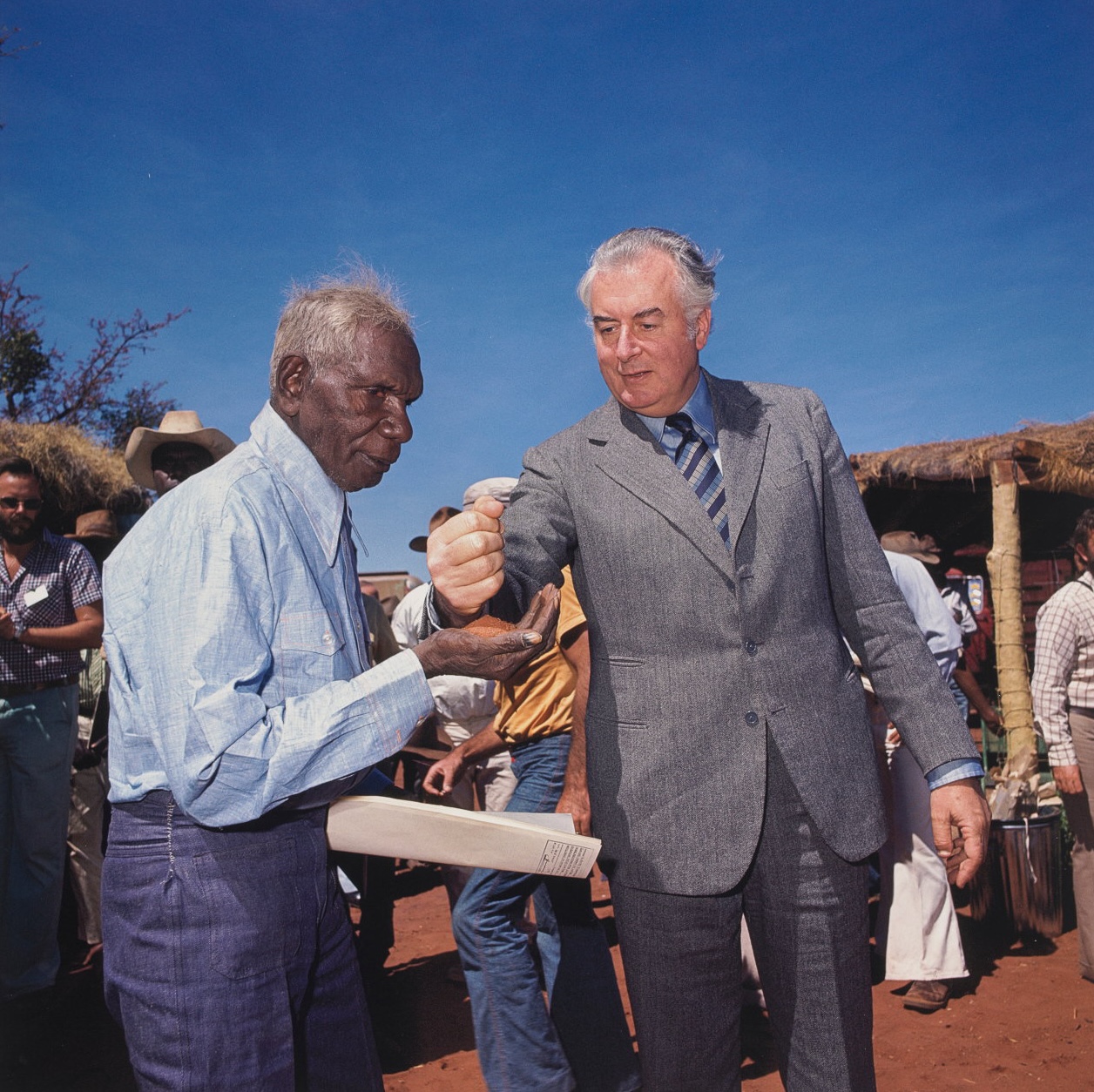
Among the works is Bishop's 1975 photograph of Prime Minister Gough Whitlam pouring soil into the hand of Gurindji Elder Vincent Lingiari at Wave Hill.
The image became one of the best-known photographs associated with the Aboriginal land rights movement, but the exhibition explores Mr Bishop's work beyond that moment.
Mr Bishop described the approach behind the photograph.
"I was just doing my job," he said.
"I wanted it to be a good picture with a nice blue sky."
The exhibition includes photographs of political leaders, entertainers and community figures, as well as images documenting everyday life in places Mr Bishop called home.
It also features family photographs and images of Brewarrina and its Indigenous community.
Mr Bishop's interest in photography was encouraged by his mother, Marjorie, an amateur photographer who recorded life in Brewarrina.
He bought his first camera in the late 1950s and held slide nights in the backyard by placing a white sheet over the Hills hoist and using a projector.
Local families and children would gather to watch the images.
"Half the street used to come along, and the local kids would see their little faces projected large on the sheet," Mr Bishop said.
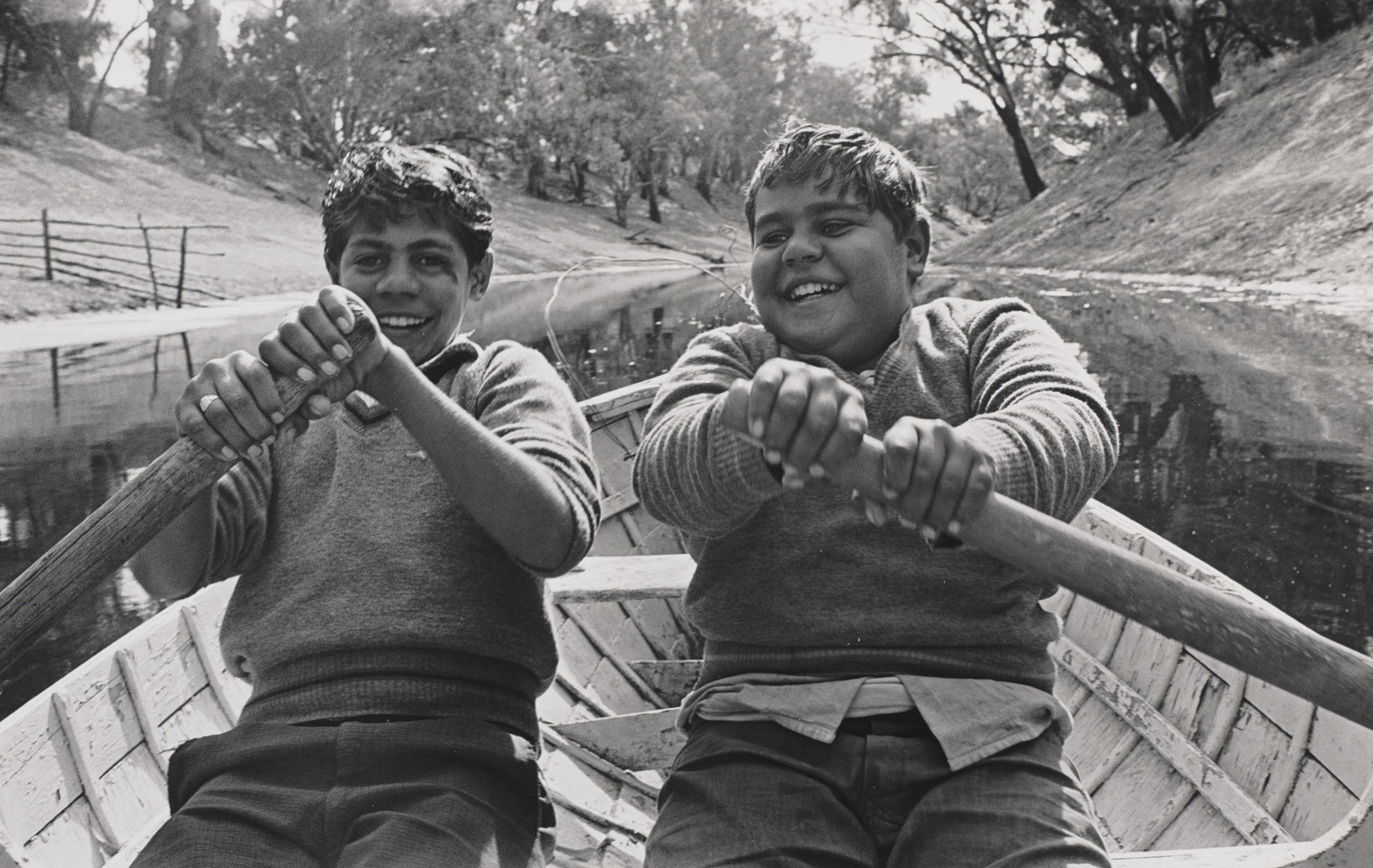
Mr Bishop's favourite photograph, showing his cousins Ralph and Jim in an old boat at Gundawera Station, is also included.
He joined The Sydney Morning Herald as a cadet photographer in 1963, becoming the first Aboriginal person to work on a metropolitan daily newspaper.
Four years after completing his cadetship, he received the Nikon-Walkley Australian Press Photographer of the Year award in 1971.
His career later included work as a public relations photographer for the federal Department of Aboriginal Affairs.
State Library specialist librarian and exhibition curator Ronald Briggs said acquiring Bishop's full archive reflected the historical value of his work.
"The Library rarely collects an entire archive of a single photographer — this is only the second, following Max Dupain, such is the documentary value of Mervyn Bishop's work, which covers many of the key people and events we associate with Aboriginal affairs over the years," Mr Briggs said.
"He took many iconic images — from land rights to Roy Orbison — yet few people know the man behind them."
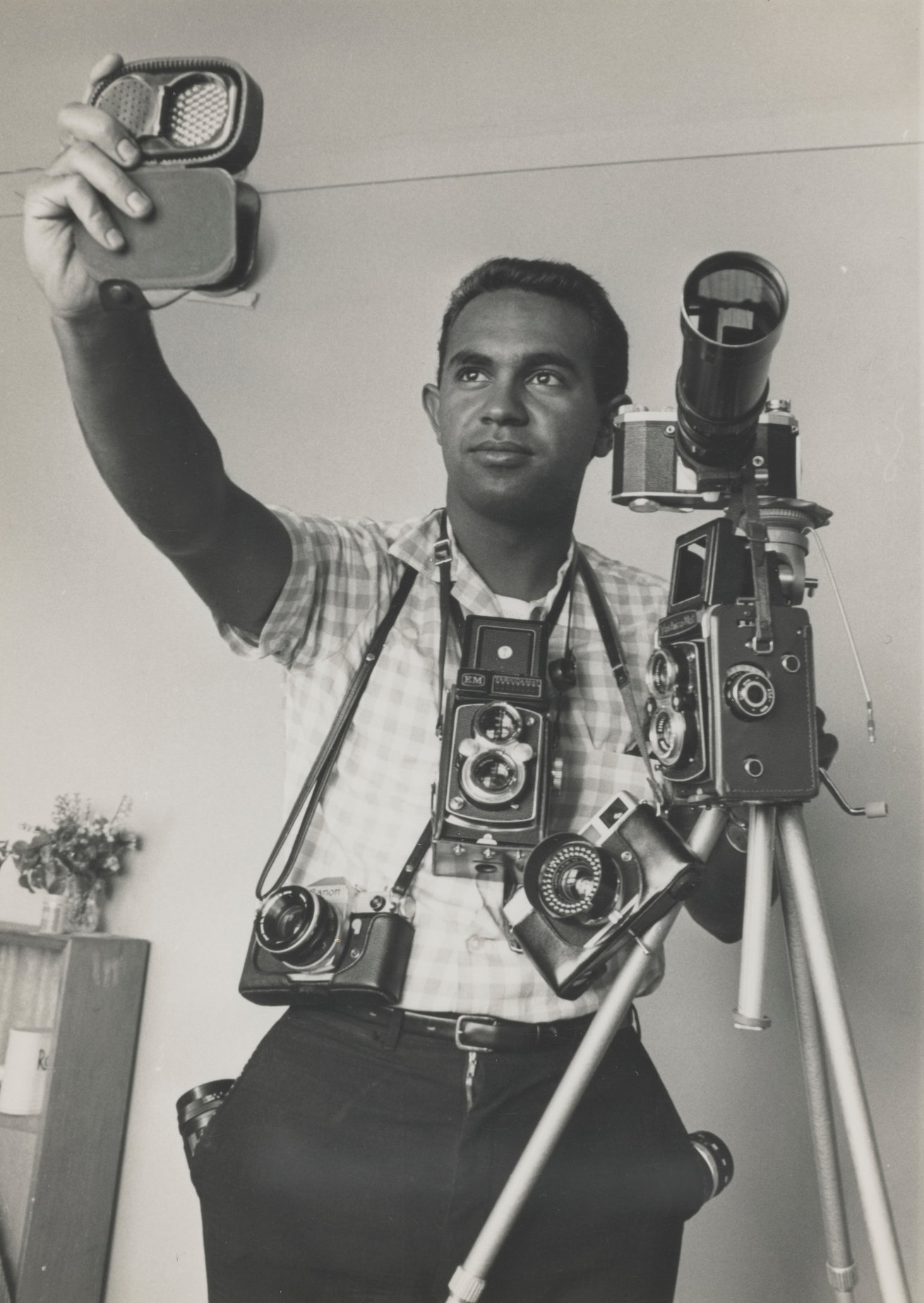
Visitors can view cameras from his personal collection and listen to recordings in which Bishop reflects on his life and work.
The exhibition is being presented as part of the State Library of NSW's 200th anniversary program.
The exhibition includes names and photographs of people who have died.