




'Momentum: Shaping Our World' has opened at FORM Gallery in Claremont, bringing together work that has positioned Aboriginal artists within major public spaces across Western Australia.
The exhibition reflects on FORM's 22-year history delivering cultural projects in regional and metropolitan areas, with a strong focus on its Land.Mark.Art program.
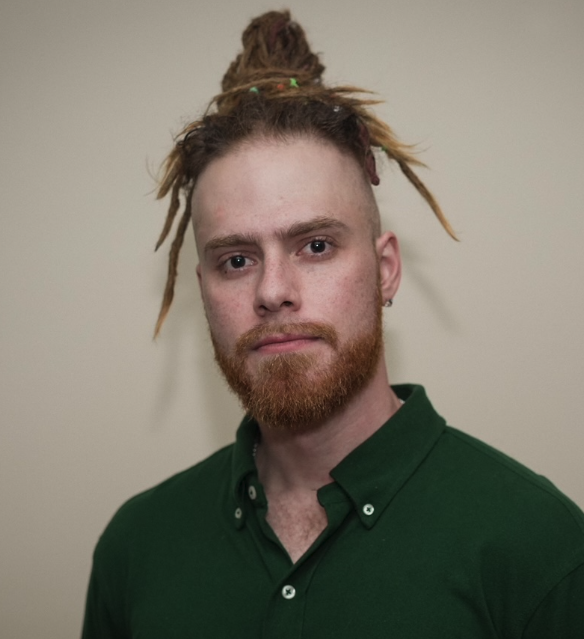
Bardi, Jawi Saltwater Aamba (man) Ron Bradfield Jnr is a Director of FORM and Chair of its Aboriginal and Islander Advisory Committee.
His involvement with FORM grew from a longstanding working relationship with CEO Tabitha McMullen and an earlier public art process that centred Noongar cultural authority.
"I started working extensively with FORM as a result of their appointment of a new CEO," Mr Bradfield said.
"Tabitha McMullan and I had worked together for another arts organisation for over four years and in that time then, Tabitha was responsible for putting in place the first First Nation led, selection process for public art, then looking to engage local Noongar artists, for an artwork that would sit in the middle of the new Perth city centre.
"Assisting Tabitha with that project became one of the first REAL opportunities I had to see from start to finish the will of another Australian looking to right a little wrong and hand over an arts opportunity to local Noongar community members and their cultural guidance."
He said that approach later shaped the creation of FORM's Aboriginal and Islander Advisory Committee and its role within the organisation.
"No business involving FORM engaging with First Nation peoples occurs without first checking in with local First Nation's peoples themselves and discussing their part in the entire process needed to complete a creative activity or project in that area," Mr Bradfield said.
"Our business starts with meaningful relationships first and they need to be maintained well above all things, to help good business to happen.
"It's incredibly rare for an all 'whitefella' organisation to allow it's cultural core to be guided by 'blackfellas' and rarer still to see this embodied across all levels of its business."
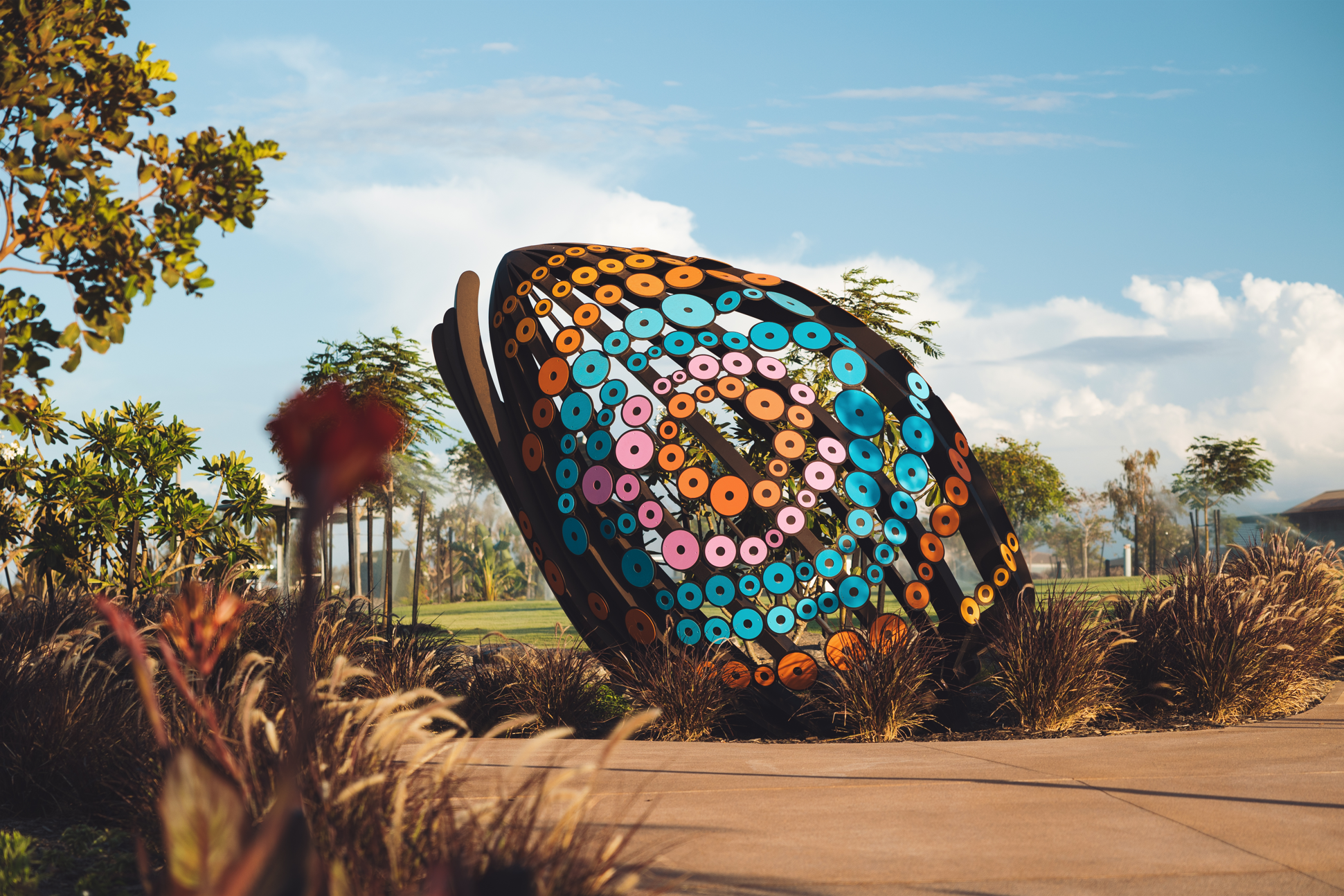
Since 2010, Land.Mark.Art has supported more than 80 Aboriginal artists across Perth and the Pilbara, delivered 71 public art commissions statewide and generated $8.8 million in paid professional commissions.
One of those artists is Noongar woman Laurel Nannup, who had been creating monoprints for years before connecting with the program.
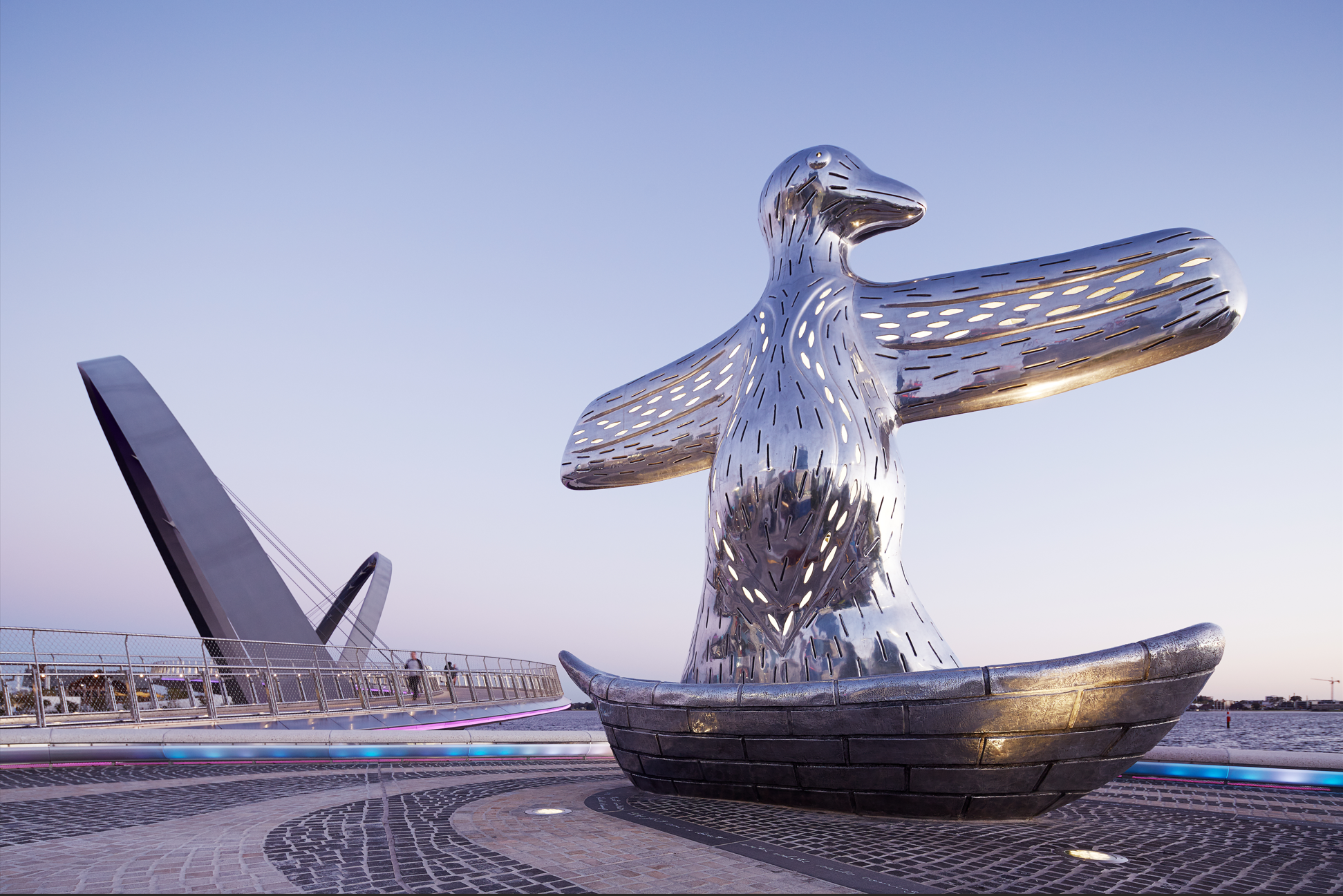
Through Land.Mark.Art, she accessed fabrication processes and industry partnerships that enabled her to realise First Contact, a five-metre polished aluminium sculpture at Elizabeth Quay capturing the moment European settlers first appeared on the horizon.
The maquette was later acquired by the National Museum of Australia for its permanent collection and Ms Nannup went on to deliver two further works at Optus Stadium.
At Optus Stadium, 12 Noongar artists delivered 12 of the 15 artworks across the precinct, establishing a cultural presence on Whadjuk Noongar Country experienced by millions each year.
At Spoilbank Marina in Marapikurrinya (Port Hedland), 10 Kariyarra, Ngarla and Yinjibarndi artists delivered nine permanent works following a three-year process shaped by artists and community from workshop to installation.
Kariyarra artist Beryl Ponce reflected on the importance of storytelling in her work.
"Painting is like telling stories... I want to make a story for the young ones," Ms Ponce said.
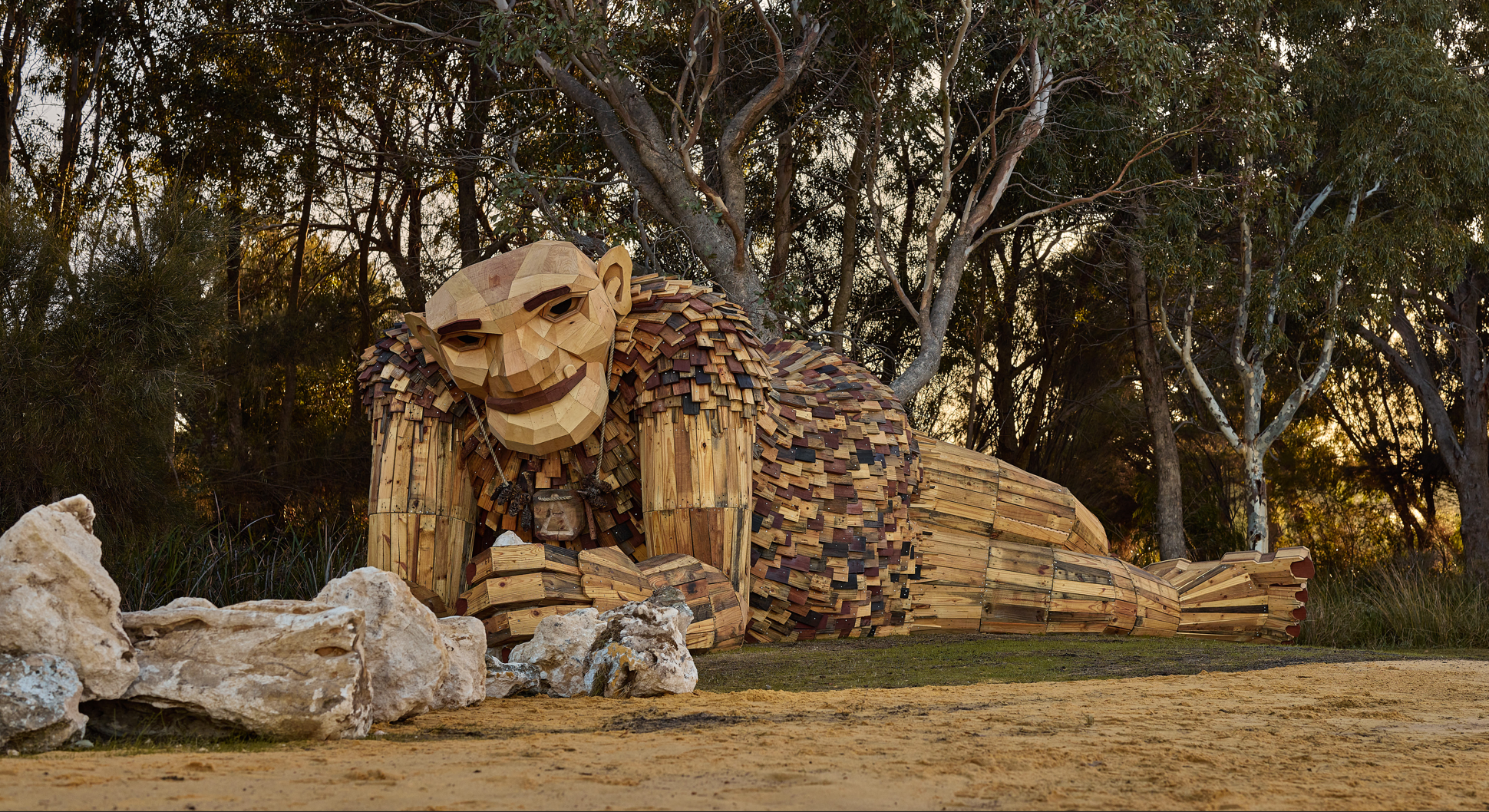
Land.Mark.Art operates on the principle that cultural authority sits with artists and their communities, including guidance from Bindjareb Elders on the Giants of Mandurah project.
Artist Tjyllyungoo (Lance Chadd) spoke about the significance of public representation.
"It's always been our dream to be represented out there with these public arts, specifically with significant sites in relation to our culture and spirituality," Tjyllyungoo said.
FORM CEO Tabitha McMullen said Aboriginal partnership is a key strategic pillar of the organisation's work across Western Australia.
She said the Land.Mark.Art program was developed to address structural barriers faced by Aboriginal artists in accessing large-scale commissions and industry systems.
"We know that Aboriginal artists have always had the stories and the cultural knowledge and the creative vision," Ms McMullen said.
"But what's been missing for them is the access and the opportunities to things like fabrication facilities, technology, industry networks and big commissions at scale.
"So Land.Mark Art was a program that we designed to bridge that gap."
She added fair payment and recognition of cultural knowledge are central to FORM's approach.
"That is a core guiding principle for any work we do with any artist... but I think particularly for Aboriginal artists, we recognise that their cultural knowledge is of immense value in and of itself," Ms McMullen said.
"Anytime we're engaging in Indigenous artists in any part of the process, whether it be professional development right at the beginning in terms of learning how to put together a concept for a major public artwork all the way through to creating a work, we make sure that they're compensated fairly for their time and for any knowledge that they're contributing to the project.
"So it's really important - making sure that not just if they're producing work, but what their intangible cultural contribution would be, that's fairly compensated."
Ms McMullen said long-term engagement and skill development are also built into the process.
"We take quite a long time in engaging with these artists before we even get them to design something," she said.
"So we're building skill sets and knowledge and building trust and relationships, which is a huge part of the process and in working with communities.
"So it's about trying to expand their knowledge and their networks so that they can have a long term sustainable expanding of their career rather than just a one off sculpture."
'Momentum: Shaping Our World' runs from 25 February to 26 March at FORM Gallery in Claremont.