





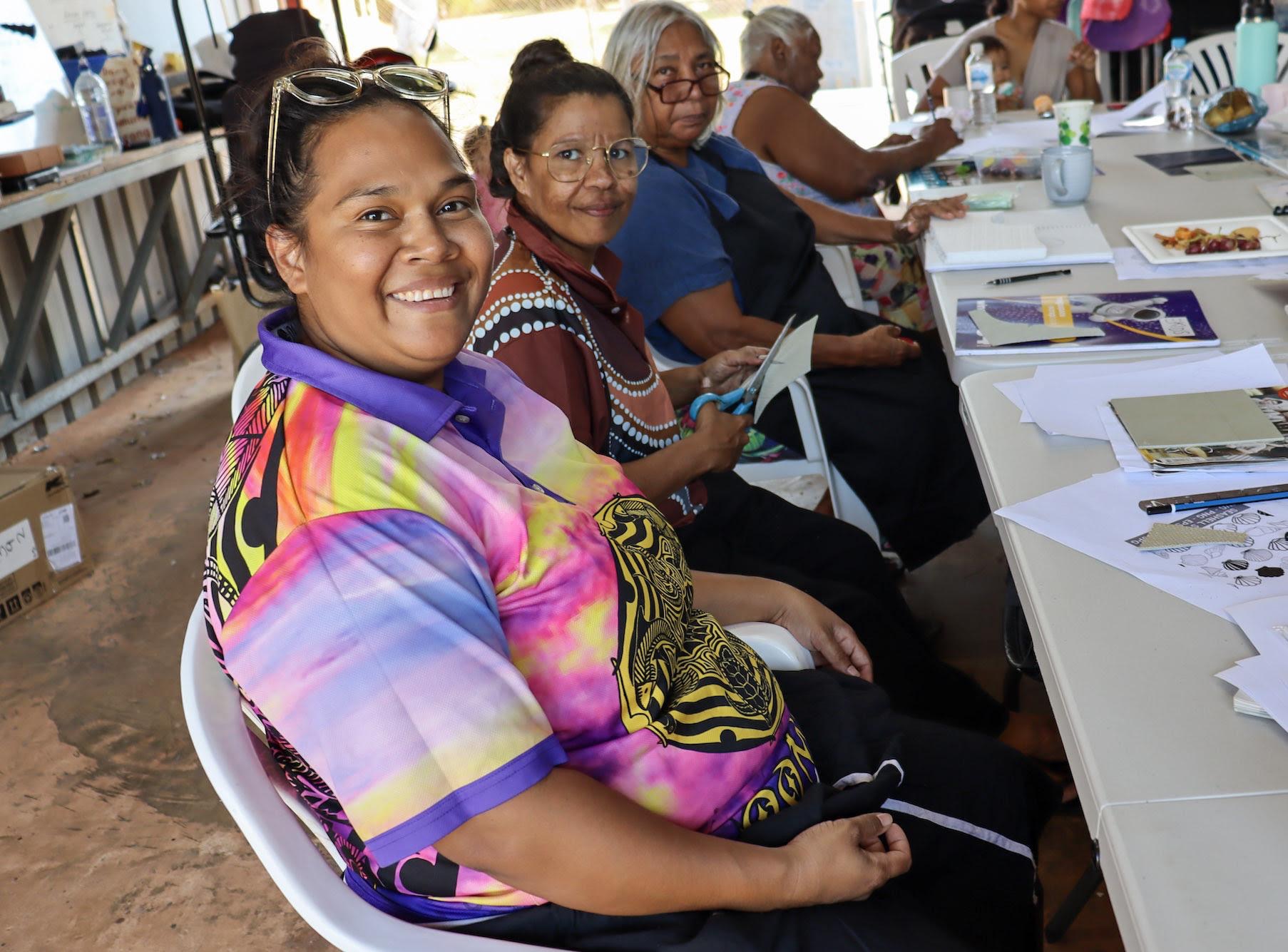
We are lucky with the wind today," Bardi man Russell Davey says, as women to his left carve etchings inside a light-filled warehouse.
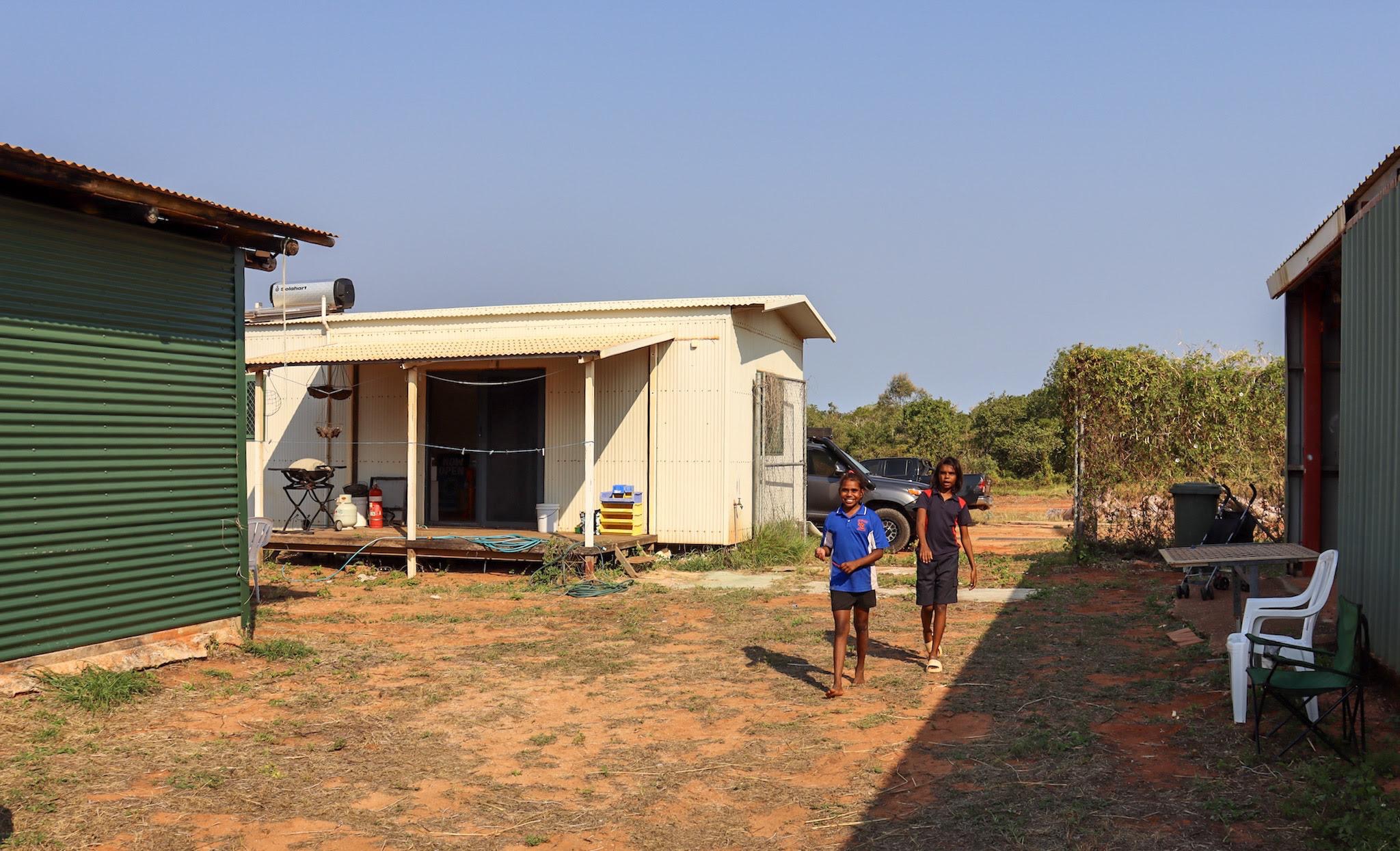
It is one of five buildings — including two studios, a gallery and a storage room — due to open next week as the Ingarlgalandij Art and Culture Hub in the remote Ardyaloon community, 220 kilometres north of Broome.
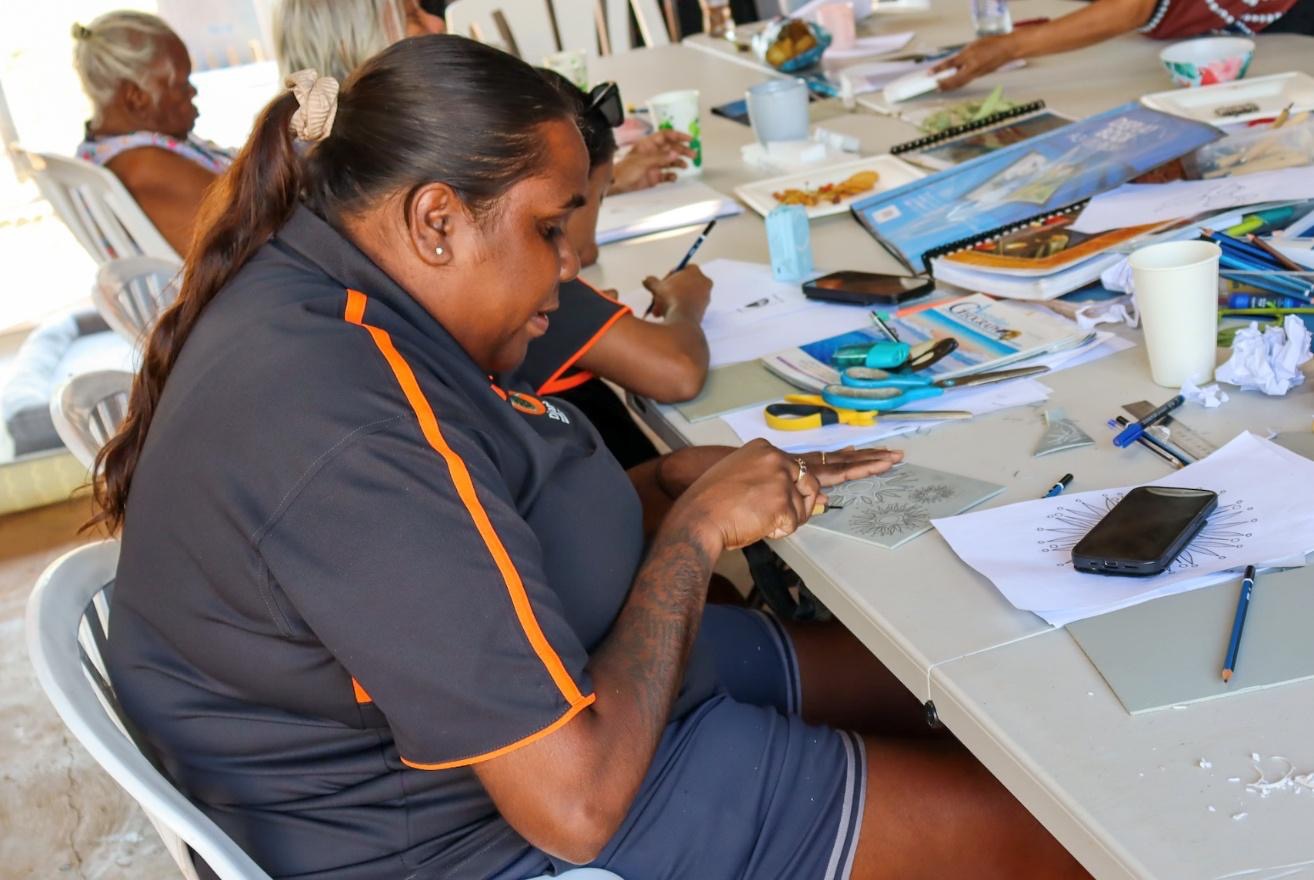
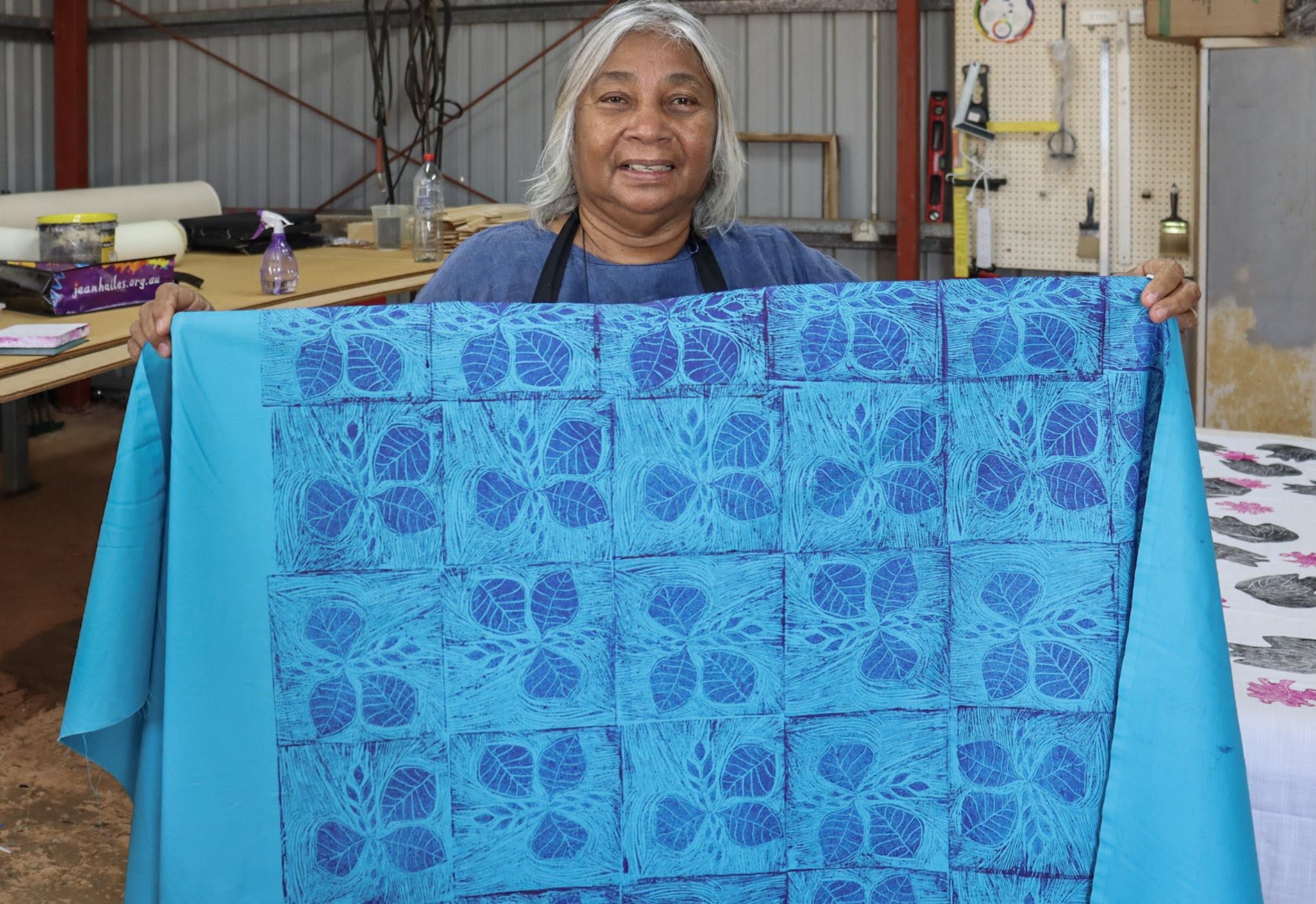
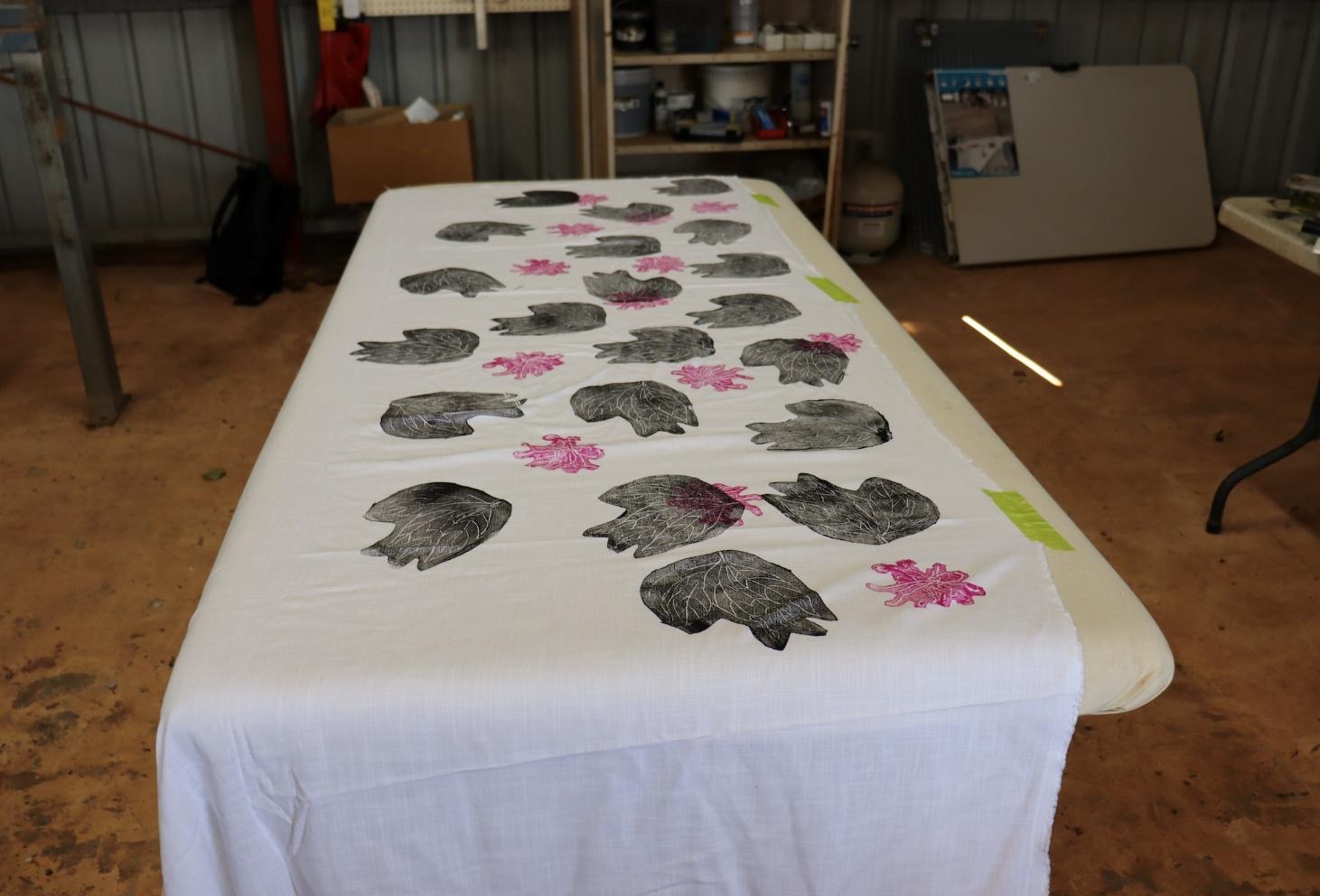
A breeze moves through the room, past chisels, paintbrushes and screen-printing tables, where women are putting paintings of bush foods onto fabric.
Mr Davey says the airflow makes a difference to the hands-on work of creating art.
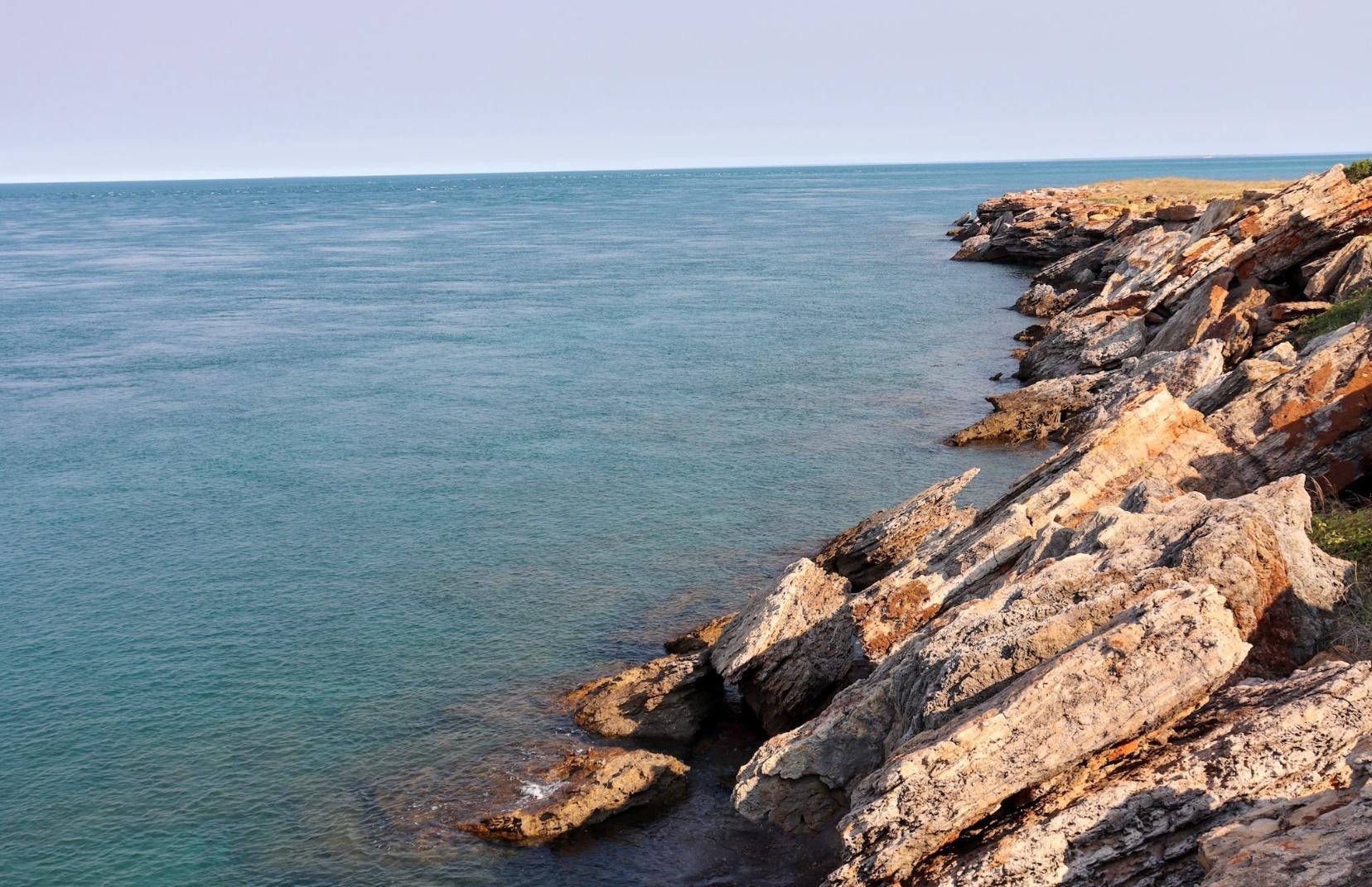
It's June and well into the dry season, but the sea breeze does not always carry through from the pindan-stained cliffs hugging the community like it did on the day National Indigenous Times visited.
"Sometimes we have to choose certain hours of the day to work, not only because it's uncomfortable but because it can negatively impact painting materials," Mr Davey said.
Limited funding means the small storage room is the only insulated, temperature-controlled space.
Aboriginal Art Centre Hub of WA (AACHWA) chief executive and proud Nyul Nyul and Bardi man, Chad Creighton, wants funding increased for art centres across the country, including in WA.
"I'd like to see it increase for all art centres in Australia, but yeah, definitely for WA art centres," Mr Creighton said.
He said art centres provided income for artists, but also supported language, culture and community wellbeing.
"People will often speak language and share language, and that way language retention is happening just naturally," Mr Creighton said.
"It's also about people's mental health, wanting to document culture in new ways and different mediums, and being able to express yourself and your identity through art in different ways."
As artworks are hung to dry, Bardi Elder Maureen Davey explains the vision for Ingarlgalandij Art and Culture Hub was previously promoted by her late husband and other community cultural leaders who have since passed.
"It was the old people that always wanted a culture centre here, like my late husband and his family," Mrs Davey said.
"The whole community wanted it, so it's really good we have finally got one going."
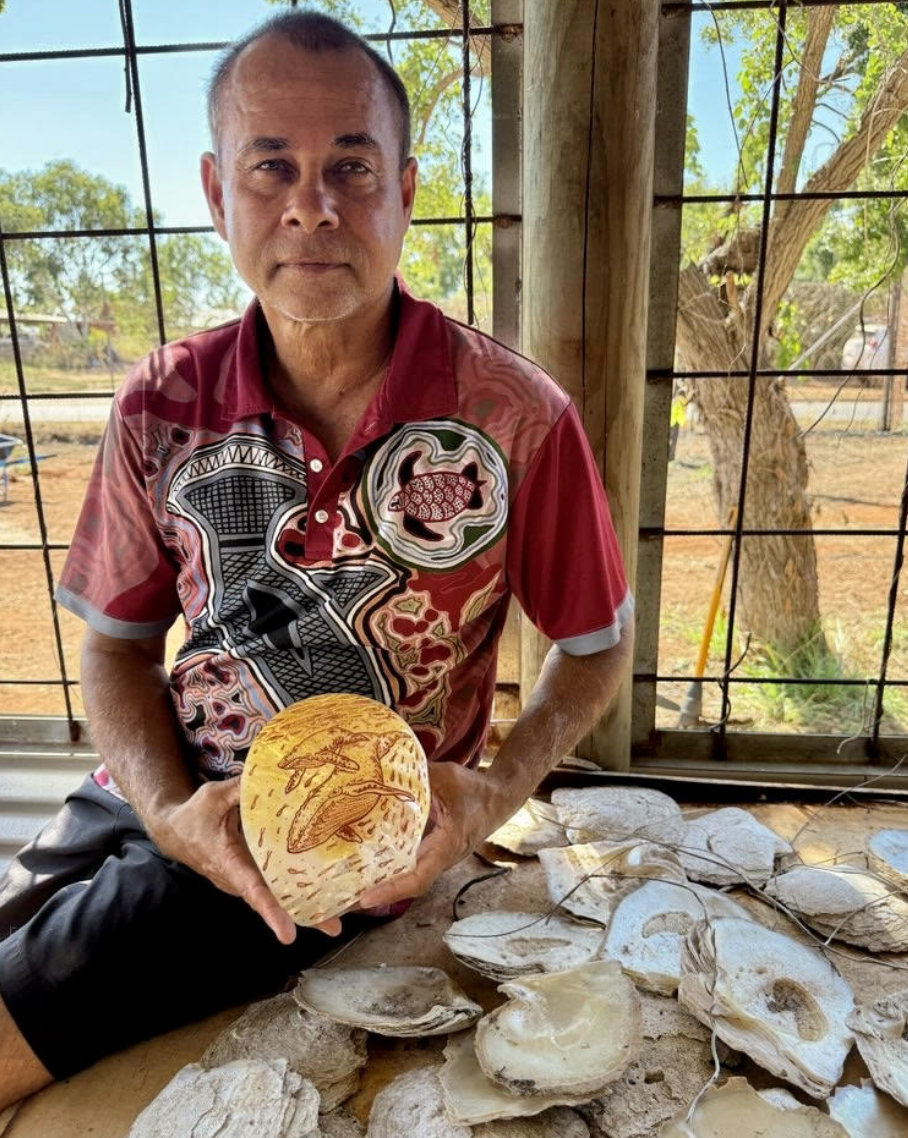
Ardyaloon remains a deeply cultural place, where ceremony is practised, Bardi and Jawi language are renewed, and the art created at the hub carries a history of customs and traditions that flourished long before colonisation.
"Pearl shell lines the reefs around Ardyaloon. Known as Goowarn in language, it features in many of the artists' work, Mr Davey said.
"This kind of Goowarn is unique to this part of the country. Our people have been using Goowarn for thousands of years."
Proud Bardi man and artist Ashley Hunter employs the art form to look back.
It allows him to capture the traditional way of life his father, grandfather and great-grandfather knew in Ardyaloon and surrounding Country.
"I like to see back through my art, on what life was like before," Mr Hunter said.
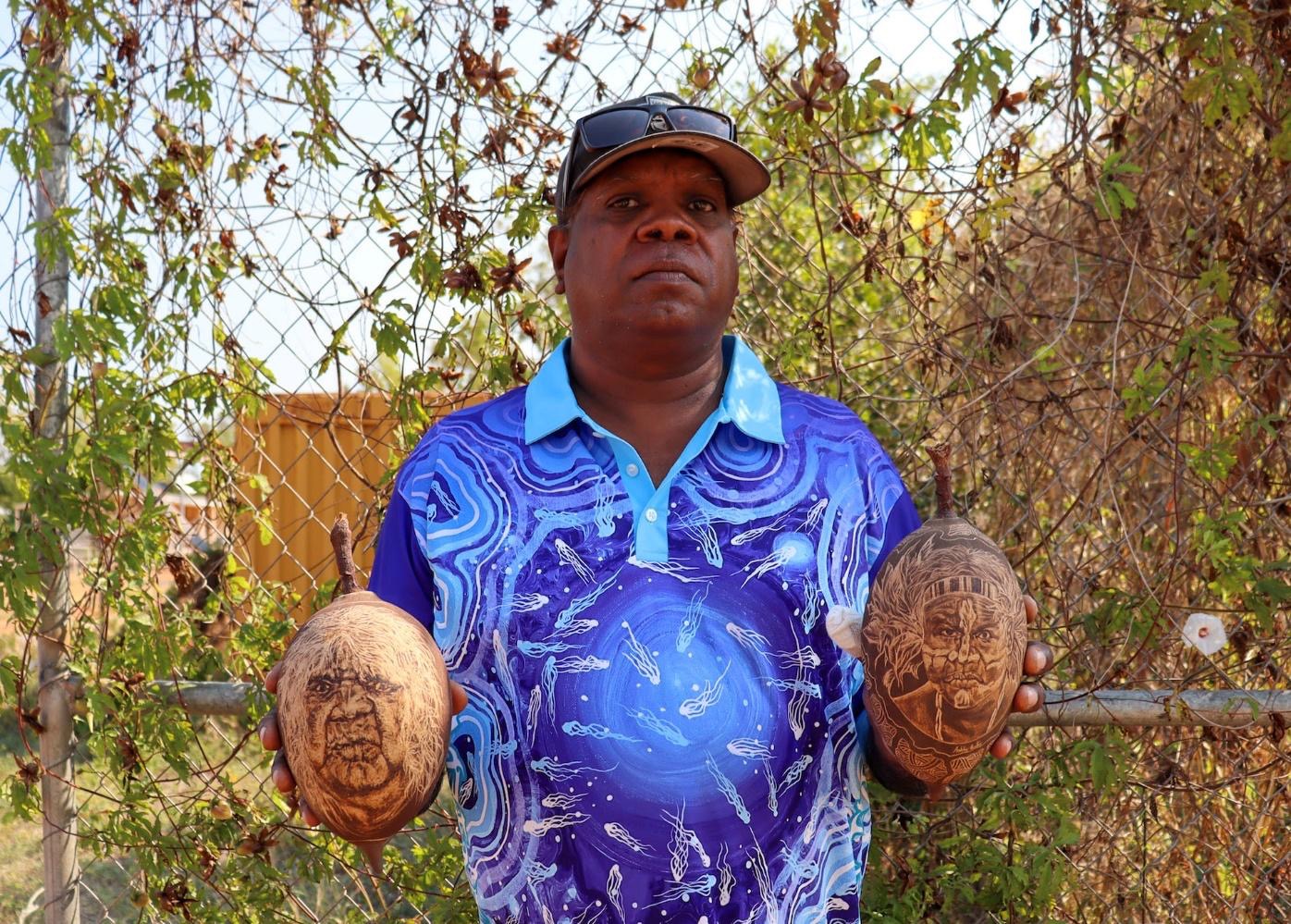
He shows an etching of a woman he has carved into boab wood. With contoured facial lines and staring eyes, the work appears almost photographic.
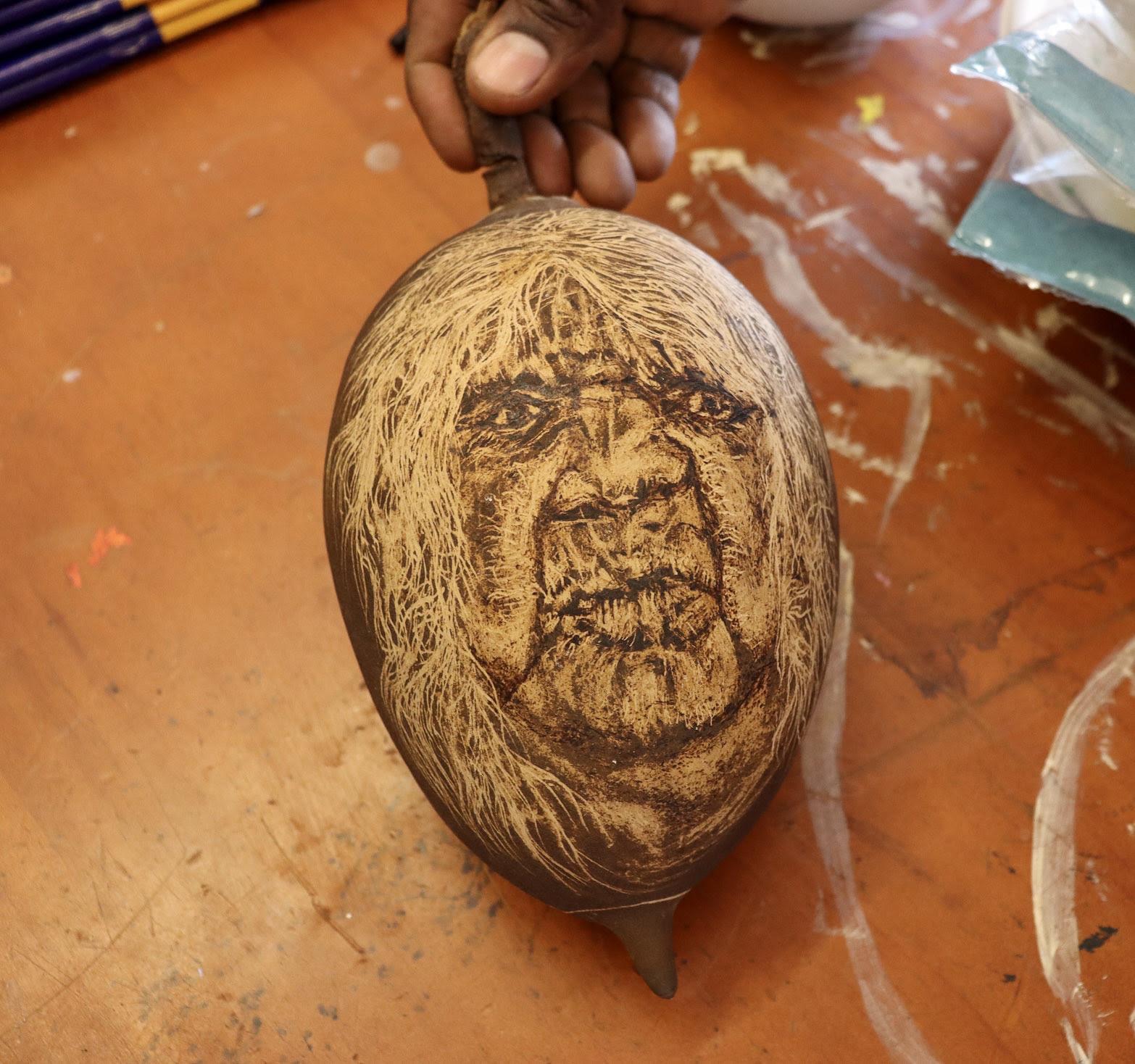
"It's an old woman, pre-colonisation, sitting down and teaching kids," Mr Hunter said. He made the artwork for the IOTA25 Exhibition in Fremantle, which will be available for viewing at the Ingarlgalandij Art and Culture Hub.
Mr Creighton says the opening of the hub carries particular significance.
He said Bardi artists and culture were already known nationally and internationally, but Bardi people had never had an art centre in their own community.
"Our Bardi artists and culture are known nationally and internationally, with people like Roy Wiggan and Aubrey Tigan represented in major institutions across Australia," he said.
"But we have never had an art centre in our own community that Bardi people can access and be part of."
For Acting General Manager and Ardyaloon council member Aggie Pigram, that is the purpose of the new hub.
"Our goal for the art and culture hub is about creating opportunities for artists and cultural practitioners, while building capacity in the community," Ms Pigram, a proud Yawuru and Bardi woman, said.
Our Marjas (cultural bosses) and knowledge holders such as Mr Davey carry significant cultural responsibilities but also have bills to pay.
"We want them to have a space where they can practise and teach the culture and language, through art, and economically benefit through the selling of that art," she said.
The desire to create an art and culture hub was so strong that Ms Pigram, Mr Davey, Mr Hunter and other community members spent four years voluntarily cleaning up the five abandoned buildings in the community, and building the art and culture hub from scratch.
"It took four years of cleaning up and building the art and culture hub, but we as a community did it," Mrs Davey said.
But as the community prepares to open the long-awaited hub, its board says Government funding still does not cover the basic costs of keeping the doors open.
The centre has secured federal funding through the Indigenous Visual Arts Industry Support program, however Ms Pigram said the money was limited and doesn't meet the cost of running a remote art centre.
She said Ingarlgalandij had received $80,000 a year (for 2 years), with $20,000 allocated to all operational costs, including utilities and art materials.
The remaining $60,000 was divided between three key roles: an arts worker, a studio coordinator and an art centre manager.
"That can only cover a part-time, or casual role on a short term contract," Ms Pigram said. So no real sustainability for the hub.
She said the funding was vital but was not enough to cover the full cost of keeping the hub open, paying staff properly or improving the buildings.
"It's all program-based funding," she said.
"There's no money for infrastructure or operational funding, like wages for staff or powering electricity for air conditioning."
A Federal Government spokesperson said the Indigenous Visual Arts Industry Support program provided about $33 million annually to support the Indigenous visual arts sector and could support minor infrastructure upgrades.
Ms Pigram said the hub had also received a $50,000 grant, as well as additional funding from the WA Government for mentorship, rather than core operating costs.
She said the mentorship funding would help build the skills of local Bardi people to take on leadership roles within the hub.
"We've always been, from day one, about building opportunities for our own people, Bardi people, Aboriginal people, to be in leadership positions," she said.
"We're fully Bardi owned and operated, and it's about building capacity in our mob in community to take on those roles."
A WA Government spokesperson confirmed the State had funded two applications from Ardyaloon Art and Culture Aboriginal Corporation, including $25,000 in 2024 for cultural activities, language and stories, and $50,000 in 2025 to support arts worker and artist training and professional development.
But Ms Pigram echoed Mr Creighton's notion that the art centre's impact transcends the art which is created and therefore should be funded adequately.
"We're not just doing art," she said. "We're doing art, culture, language — that's about preservation of the culture."
The role art centres play in the physical, mental and cultural wellbeing of remote Aboriginal communities was explored by proud Bidjara woman, Professor Maree Meredith in her thesis, Mapping the health promotion benefits of art centres on the Anangu Pitjantjatjara Yankunytjatjara (APY) Lands.
"The art centre accommodates the social, spiritual, economic and cultural imperatives of mob in community. It nurtures what needs to be nurtured, bringing it all together in a holistic model of health," Professor Meredith told National Indigenous Times.
She said art centres could provide a safe cultural space, particularly when being on Country was difficult.
"While nothing replaces being on Country, during the current cost-of-living crisis — when high fuel prices limit access — the art centre remains a vital space," she said.
"It enables elders and cultural leaders to continue expressing and preserving their connections to Country through painting culture, Country and kin."
But in Ardyaloon, the kind of cultural and community work Professor Meredith describes will be put on hold for about six months during the wet season, when temperatures can push towards 40 degrees and humidity above 70 per cent makes art making near impossible without air conditioning.
"It's a shame," Ms Pigram said. "The wet season is our quietest time, so that's when we as a community could have created the most."
Still, Ms Pigram said the years of volunteer work that brought Ingarlgalandij to life and reflected community determination to make the hub happen.
She said the benefits following from the art hub's existence would reach beyond the artists working inside its buildings, extending in particular to young people growing up in Ardyaloon and the Dampier Peninsula.
"Having our young people stand strong and proud in who they are anchors them and keeps them culturally safe in the world, to then go out and be better leaders and stronger people for themselves," Ms Pigram said.
"It's all about our liyarn — keeping that at the centre and our culture as part of their identity, who they are and where they come from.
"We're capturing that and building them up in this space, keeping them anchored in their roots to then go out and share that with the world."