






The artistry of First Nations women working with natural materials including woven fibres, bark and paper, underpins a new exhibition at the University of Sydney's Chau Chak Wing Museum.
Fibre Optics: First Nations Women in Fibre brings together for the first time 58 works from three distinct regions: Arnhem Land, Northern Territory; Zenadth Kes (the Torres Strait), Queensland; and Boggabilla, New South Wales.
The exhibition's common thread is the use of natural materials, the fibres of Country, by women artists.
"Fibre works, and weaving in particular, can often be relegated to the realms of craft work," said Chau Chak Wing Museum senior curator Marika Duczynski.
"There's not always an appreciation for the technicality, time, and the depth of knowledge that goes into making them.
"The Yolŋu (East Arnhem Land) tradition of basket weaving, for instance, is never just about making a basket. It may be a utilitarian tool but many layers of knowledge lie beneath its creation.
"People can look at a basket and perhaps not appreciate its symbolism or see it as a masterwork."
Artists featured include Helen Ganalmirriwuy Garrawurra, Ruth Nalmakarra, Mary Dhapalany, Angela Torenbeek, Laurie Baymarrwaŋa, Robyn Djuŋiny Malibirr, Leonie Binge and Joy Duncan. Most works come from the museum's existing collections.
"This exhibition presents the incredible technicality and array of natural materials First Nations women bring to the artistic world," said Duczynski.
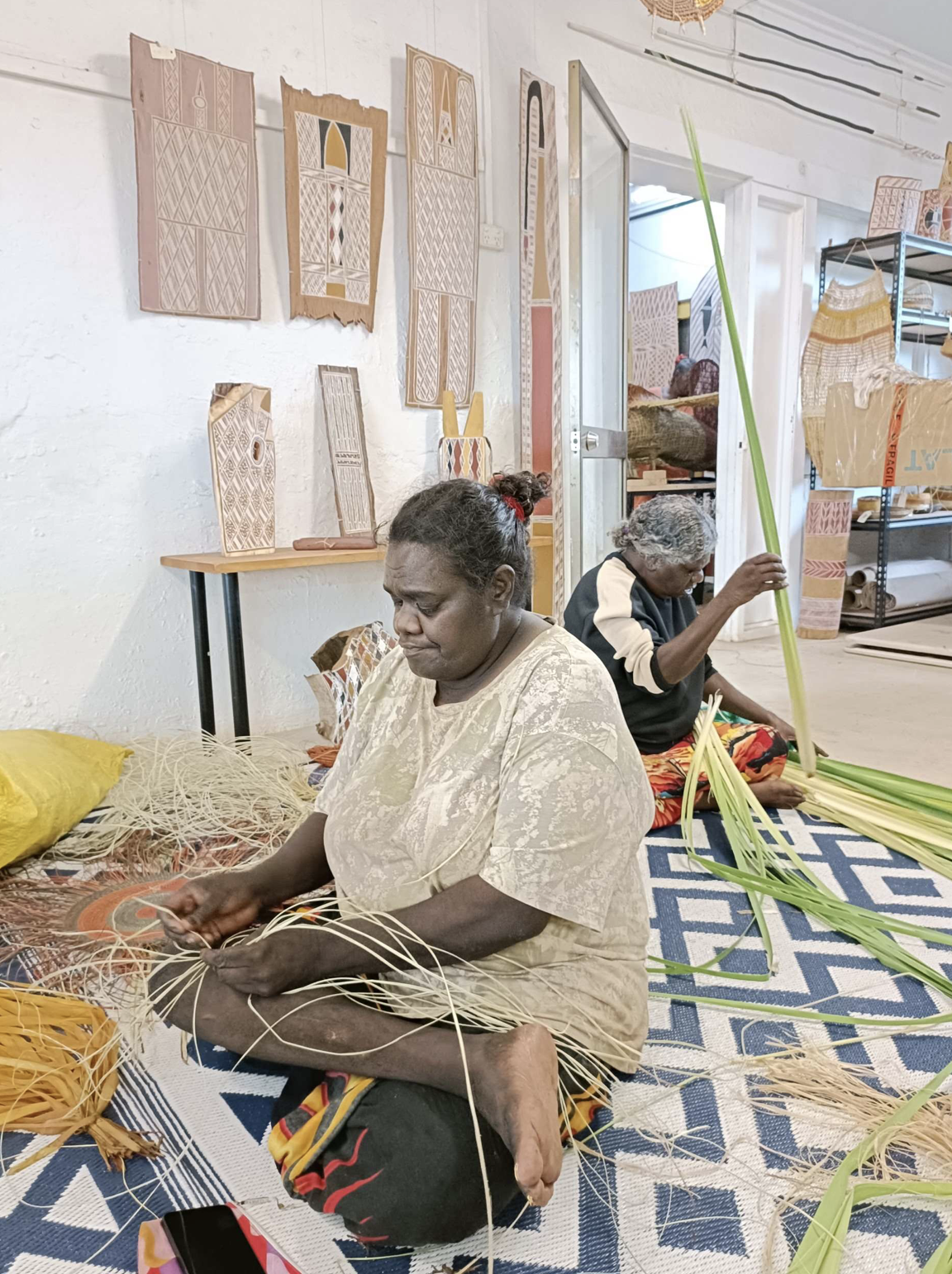
Fibre Optics includes works from the acclaimed Euraba Artists in North-West NSW that survived a fire in the artists' workshop at the end of 2025.
More than half of the collective's archive of works, created on paper made from locally sourced cotton, were destroyed in the fire that swept through its base in Boggabilla.
Aunty May Hinch and eight other founding members began the Euraba Artists as a social enterprise in 1999, creating a pulping process whereby offcuts from the region's thriving cotton industry become handmade paper. Inks made using the same process and coloured rags are used to paint on this locally made medium.
The collective grew to become the Euraba Paper Company, collaborating with commercial presses, featuring in the 18th Biennale of Sydney. It is the only First Nations group making work using these techniques.
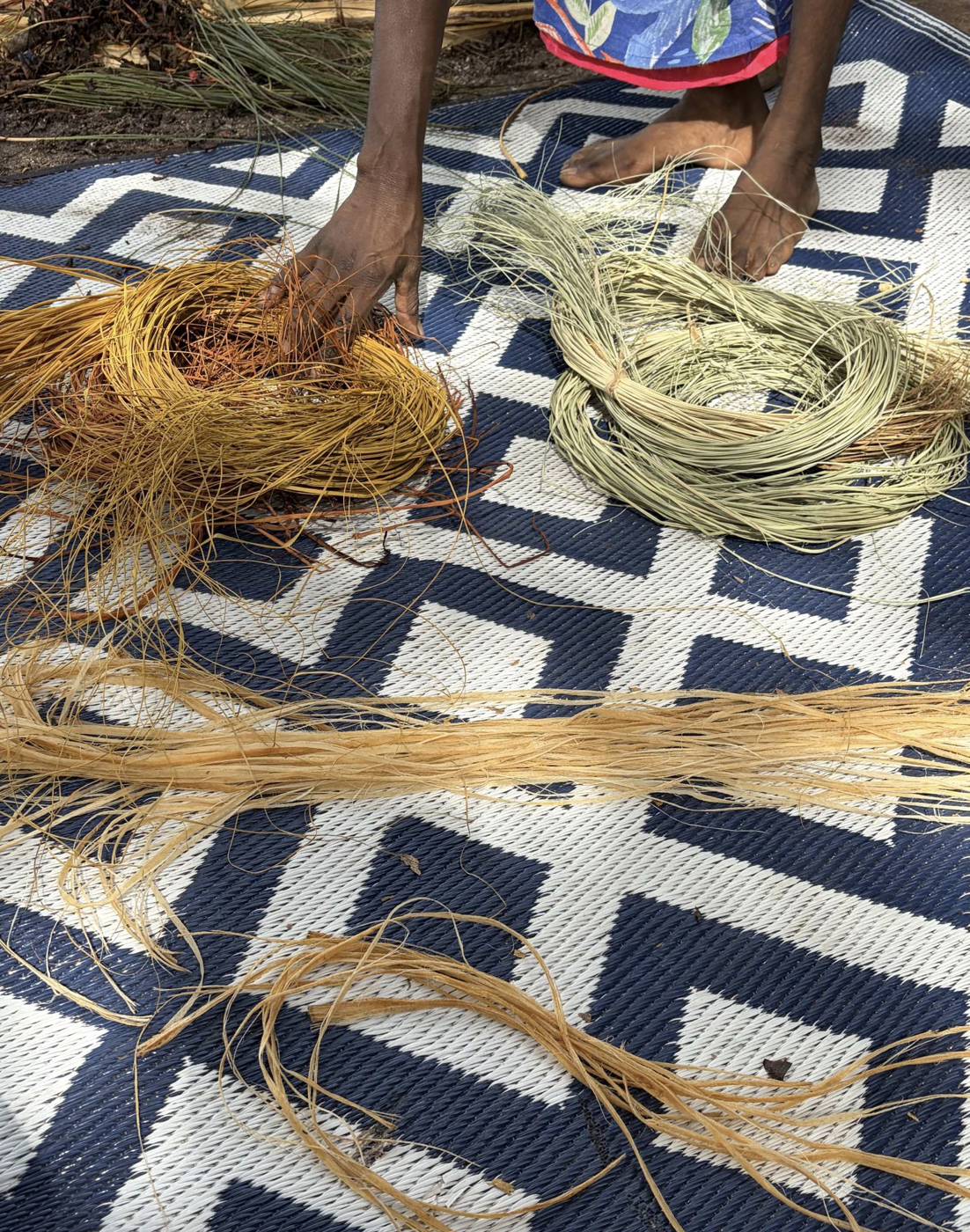
Elizabeth Rukarriwuy Garrawurra^ sorts gunga (pandanus) for dyeing at Milingimbi Art and Culture, 2026. (Image: Chau Chak Wing Museum)
Yolŋu men's cultural and artistic practices have long been celebrated in the Eurocentric art world, while Yolŋu women's practices have received far less attention until recent decades. Women's fibre practices, such as weaving, are now taking centre stage.
Fibre Optics features weavings, bark paintings, dupun (burial poles), yam digging sticks, fish traps and body adornments made by Yolŋu women.
"The works included in Fibre Optics demonstrate the breadth of artistry and technical skills held by Yolŋu women artists from East Arnhem Land," said Duczynski.
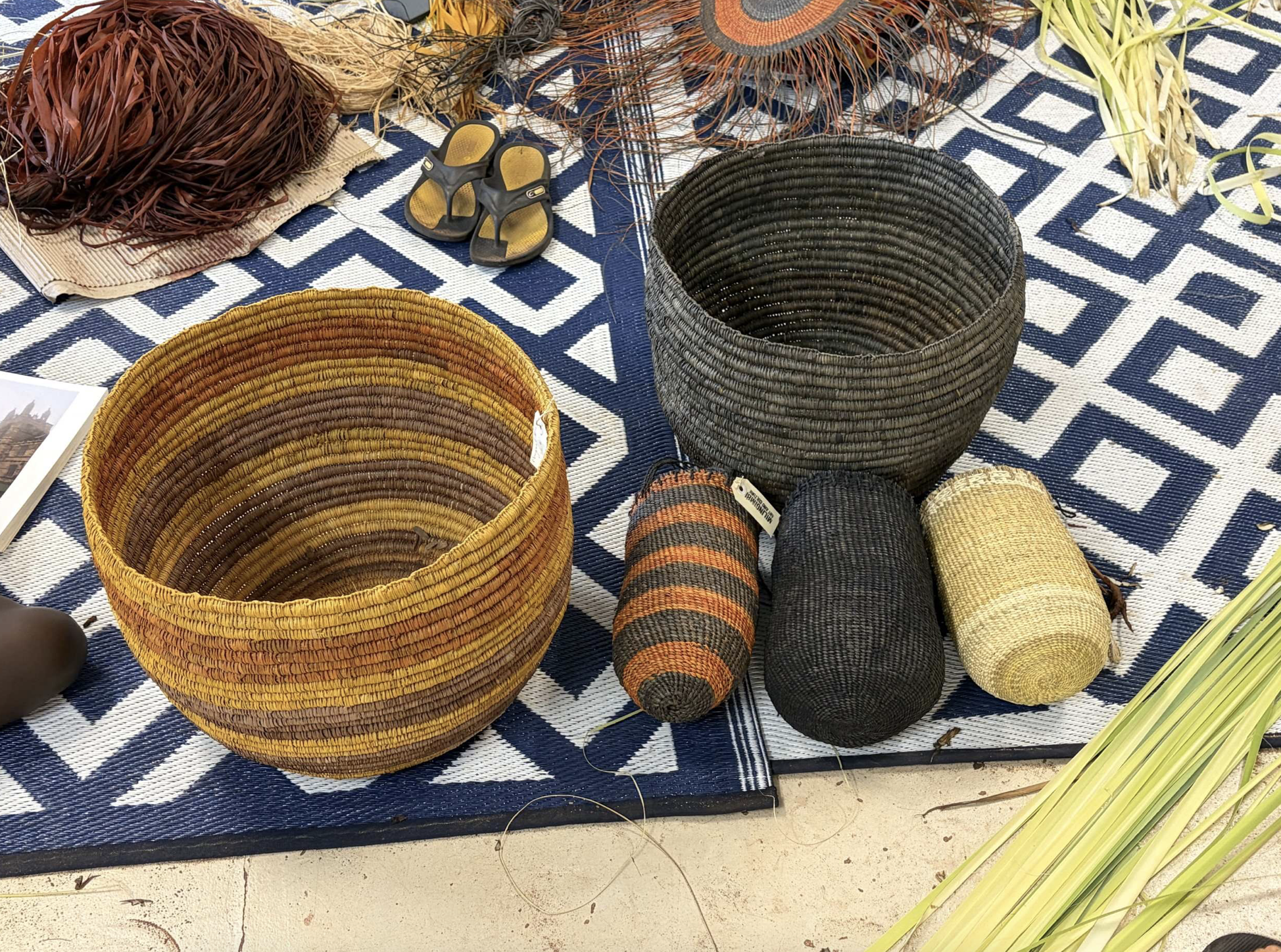
Dyed bathi (baskets) and miṉḏirr (conical baskets) at Milingimbi Art and Culture, 2026. (Image: Chau Chak Wing Museum)
Artworks/objects from Zenadth Kes (the name adopted by its people to redefine the European term Torres Strait) showcase both old and new weaving practices through the display of cultural items.
These include a delicate nesur (grass skirt) with hibiscus flowers dating to the mid-1800s.
Elsewhere, two vibrant contemporary sculptures using reclaimed ghost nets (abandoned fishing nets) send powerful messages about sustainability and draw attention to an acute threat to marine wildlife and environments.
Fibre Optics is open at the Chau Chak Wing Museum from the 15th of August 2026 until the 1st of August 2027 .